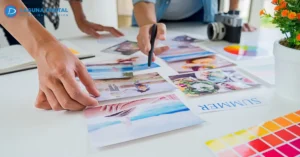



We live in a world that is overwhelmingly digital. We scroll through thousands of images a day on tiny screens, often forgetting them the moment our thumb flicks upward. However, in my years of working with business owners to build their visual identities, I have noticed a shift. Smart brands are realizing that to truly stand out in a saturated feed, they need to occupy physical space. They need something tangible that a customer can hold, see on a wall, or flip through. This is where professional Photo Printing becomes a strategic asset rather than just a production task.
When a potential client walks into your lobby, picks up your portfolio, or sees your product imagery displayed at a trade show, they are making instant judgments about your competence. A pixelated, washed-out image printed on flimsy paper signals a lack of attention to detail. Conversely, a sharp, vibrant, high-definition print signals quality, stability, and professionalism. It tells the viewer that you care about how you present yourself, which implies you will care about how you handle their business.
Enhancing brand visibility isn’t just about slapping a logo on everything; it is about controlling the visual narrative. High-quality prints act as permanent ambassadors for your brand. They don’t disappear when the browser tab closes. Whether it is a large-format installation or a set of product sell-sheets, physical prints create an emotional connection that digital pixels simply struggle to replicate.
The Role of Resolution in Perceived Brand Value
One of the most frequent conversations I have with clients revolves around image quality. There is a common misconception that if a photo looks good on an iPhone, it will look good blown up on a wall. Unfortunately, that is rarely the case. Resolution is the currency of credibility in print marketing. When an image is printed professionally, every detail is exposed.
If a customer walks up to a display and sees jagged edges or blurry text, the “magic” of the brand is broken. It creates a subconscious feeling of cheapness. On the other hand, crisp, high-resolution imagery commands respect. It draws the eye and holds attention. This is why we emphasize the importance of starting with the highest quality source files. The clarity of your print is a direct reflection of the clarity of your brand’s promise.
To achieve this level of fidelity, we rely on advanced Digital Printing technology. Unlike standard office printers, professional digital presses use color management systems that ensure the red in your logo is the exact red your audience recognizes. Consistency builds trust, and high-fidelity printing ensures that your brand looks as professional in person as it does on your website.
Choosing the Right Paper and Finish for Impact
The visual aspect of a print is only half the story; the tactile experience is equally important. When I hand a client a finished product, I watch them touch the paper before they even read the text. The weight, texture, and finish of the paper communicate volumes about the brand’s personality. This is a nuance that many businesses overlook, yet it is a powerful tool for differentiation.
For example, a high-gloss finish is fantastic for food and beverage brands because it makes colors appear wet and vibrant, stimulating appetite. However, for a law firm or an architectural studio, a matte or satin finish on heavy cardstock often works better. It feels understated, sophisticated, and expensive. The lack of glare allows the viewer to focus on the details of the image without distraction.
We guide our clients through these choices because the medium is part of the message. If you are unsure about the technical side of things, learning the basics of getting high-quality photo printing can save you a lot of time and money. Understanding how paper absorbs ink and reflects light helps us work together to create a final piece that accurately represents the vibe of your business.
From Single Prints to Comprehensive Portfolios
While a single poster can grab attention, a collection of images tells a story. For businesses like interior designers, real estate agents, and photographers, a single loose print isn’t enough to close a deal. You need to present a body of work. This is where the concept of the coffee table book or professional portfolio comes into play as a sales tool.
Imagine the difference between swiping through an iPad gallery versus handing a client a professionally bound book of your best work. The book has weight and permanence. It invites the client to sit down, slow down, and engage with your brand on a deeper level. We often utilize Book Printing services to help companies create lookbooks and catalogs that serve as high-end leave-behinds.
These bound collections do more than display photos; they curate an experience. They allow you to control the pacing of how a client views your products. A well-printed portfolio suggests that your work is worthy of being archived and displayed, elevating your services from a commodity to a luxury.
Large Format Printing for Environmental Branding
Brand visibility also extends to the physical environment where you conduct business. If you have an office, a showroom, or a retail space, the walls are prime real estate. Leaving them bare or worse, decorating them with generic store-bought art is a missed opportunity. Custom photo printing allows you to turn your workspace into an immersive brand experience.
We have worked with companies to create wall-sized murals that depict their history, their manufacturing process, or the lifestyle their products enable. These large-format prints do double duty: they impress visiting clients and they instill pride in employees. It turns a dry office into a vibrant culture hub.
However, longevity is key here. Environmental graphics are exposed to light and air 24/7. Using archival inks and high-quality substrates ensures that your brand doesn’t fade over time. If you are interested in the longevity of your displays, reading up on preserving memories in high definition offers great insight into why archival quality matters for business assets.
FAQs
Why do my printed photos look darker than they do on my screen?
This is the most common question in the industry. Screens emit light (RGB), making images appear bright and vibrant. Paper reflects light (CMYK), which naturally looks slightly flatter and darker. Professional printers adjust for this “dot gain” and color shift, but it is always a good idea to slightly brighten your images before sending them to print to compensate for the difference.
Can I use photos from my smartphone for large banners?
It depends on the lighting and the phone model. Modern smartphones take incredible photos, but they often lack the sensor size needed for very large formats. A phone photo might look great as an 8×10 print, but if you blow it up to a 6-foot banner, you might see noise or graininess. We always recommend checking the file resolution at 100% scale before committing to a large print.
What is the difference between DPI and PPI?
DPI (Dots Per Inch) refers to the printer’s resolution, while PPI (Pixels Per Inch) refers to the digital file’s resolution. For a high-quality photo printing, we generally look for a file that is 300 PPI. If you grab an image off a website, it is usually 72 PPI, which will look pixelated and blurry when printed. Always use the original, full-size file for the best results.
Conclusion
In a fleeting digital landscape, physical photo printing offers something rare: permanence. It anchors your brand in the real world, providing a tactile validation of your quality and professionalism. From the texture of the paper to the accuracy of the colors, every detail contributes to how your business is perceived by the market.
Investing in high-quality photo printing is not just an expense; it is an investment in your brand’s reputation. Whether you are creating a wall mural, a product catalog, or a simple set of flyers, the quality of the output reflects the quality of your organization. At Laguna Digital, we understand the nuances of bringing digital images to life. We are here to help you navigate the technical details so that your brand remains visible, vibrant, and unforgettable.