


Being deeply embedded in the California creative scene, I have had countless conversations with artists who are standing at a pivotal crossroads. They have poured their soul into a canvas, the paint has finally dried, and a buyer has just purchased the original. It’s a moment of triumph, but it’s often followed by a moment of panic: How do I sell this image again? This is where the nuanced world of Art Reproduction comes into play, and the choices you make here can define your business model for years to come.
For many of our clients, the debate between digital reproduction and hand-painted copies isn’t just about technology; it is about preserving the emotional integrity of their work while trying to make a living. California is a unique market from the high-end galleries in Laguna Beach to the eclectic studios in San Francisco and collectors here have specific expectations. In this guide, I want to walk you through the reality of both methods, moving past the technical jargon to look at what actually works for working artists and businesses today.
Why High-Quality Digital Giclée is Taking Over California Galleries
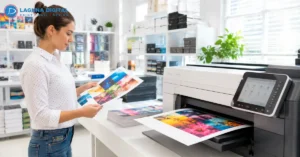
Over the last decade, I’ve watched the stigma surrounding digital prints vanish, provided the quality is professional. We aren’t talking about standard office copies here; we are talking about museum-quality giclée prints. The primary reason this method has become the standard in California is consistency. When you are dealing with digital printing, you have the ability to produce an edition of 50 or 100 prints that are identical to the master file.
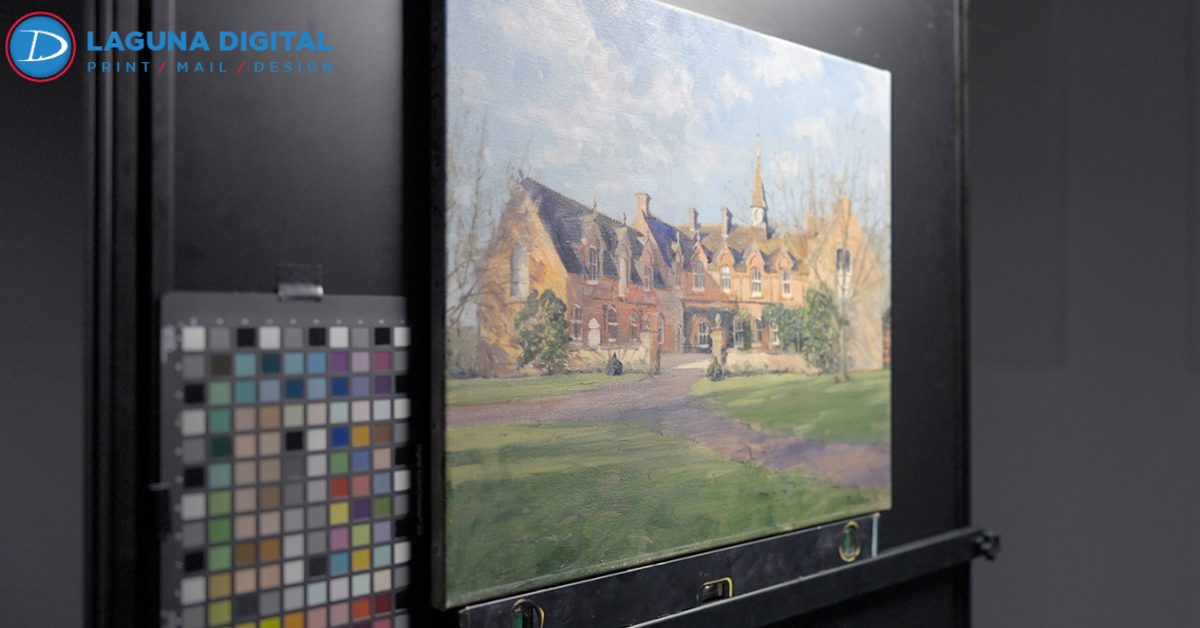
The process begins with the capture. Many artists don’t realize that a reproduction is only as good as the initial scan. If you take a photo with a smartphone, no amount of editing will save the large-format print. This is why we emphasize professional capture techniques. You can learn more about how large format scanning works to understand why lighting and resolution are critical for capturing the depth of oil or the transparency of watercolor.
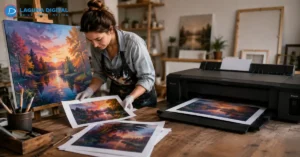
From a business perspective, digital allows for print-on-demand. I often advise clients who are just starting out not to inventory thousands of dollars worth of prints. With digital workflows, you can print one or two as they sell. This agility is crucial in a state where rent is high and storage space is at a premium. It allows you to test the market with different images without the risk of sinking time into hand-painting a copy that might not sell immediately.
When Hand-Painted Copies Make Sense for Your Portfolio
While digital dominance is undeniable, there is still a romantic and practical place for hand-painted reproductions. I have worked with artists who call these original variants. This involves the artist, or a studio assistant, manually painting the image again. This is obviously time-consuming and expensive, but it offers something a printer cannot: physical texture and uniqueness.
However, the cons here are significant for a scaling business. I recall a client who committed to hand-painting twenty copies of a popular seascape. halfway through, they were burnt out, bored of the subject, and actually losing money when calculating their hourly rate. Hand-painted reproductions are best reserved for high-ticket commissions where the buyer demands an original surface.
There is also the aspect of archival safety to consider. When you digitize art, the original can be stored safely away while the digital file does the work. If you are constantly handling the original to make manual copies or using it as a reference in a messy studio, you risk damage. Understanding preservation through reproduction is vital for artists who view their original canvases as retirement assets that need to be protected.
Scaling Your Art for Commercial Spaces and Merchandise
The biggest shift we are seeing in the California market is the demand for art in commercial sectors. Interior designers for hotels, corporate offices, and luxury staging companies rarely want a single original; they want 50 pieces that fit a specific color palette and size. This is where hand-painted reproduction fails to meet logistical needs.
If you are looking to get your work into these lucrative environments, digital is the only scalable path. We often help artists prepare their files specifically for commercial and office spaces, ensuring the colors match branding requirements and the sizing fits expansive lobby walls.
Furthermore, once you have a high-resolution digital master, your revenue streams expand beyond wall art. Many of our successful clients use their scans to create high-quality catalogs or coffee table portfolios. Professional Book Printing allows an artist to present a retrospective of their work to potential galleries or collectors, serving as a premium business card that a hand-painted canvas simply cannot replicate.
Analyzing the Cost-Benefit Ratio for Independent Artists
Let’s have an honest conversation about money. As a service provider, I see the invoices, and I know the margins. If you choose hand-painted reproduction, your cost is your time plus materials. If you sell a hand-painted copy for $2,000, but it took you 40 hours to paint, you are earning a modest hourly wage, not building a passive income asset.
Contrast that with digital reproduction. You pay a one-time fee for a high-resolution scan and color correction. After that, your cost is strictly the per-unit printing cost. If you sell a giclée for $500 and it costs $100 to print, you make $400 profit in the time it takes to send an email. For most California artists trying to survive the cost of living here, the digital route offers a path to financial stability that allows them to spend their free time creating new art, rather than copying old work.
FAQs
Is a giclée print considered real art by collectors?
Yes, absolutely. In the modern art market, especially in California, limited edition giclée prints are the industry standard for reproduction. When signed and numbered by the artist, they hold significant value. The key is communicating the quality using archival inks and acid-free papers to the buyer so they understand they are buying a piece meant to last generations.
Can digital reproduction capture the texture of thick oil paint?
This is a common concern. While a digital print is physically flat, professional lighting during the scanning process captures the shadows and highlights of the brushstrokes. This creates a trompe l’oeil (trick of the eye) effect where the texture looks incredibly 3D, even though the paper is smooth. For real texture, some artists add hand-embellishments (clear gel or paint) on top of a canvas print.
Conclusion
Deciding between digital and hand-painted reproduction ultimately depends on your business goals. If you want to create exclusive, high-priced variants and enjoy the process of repainting, the manual route has its place. However, if your goal is to scale your business, reach a wider audience, and protect your originals while generating passive income, high-quality digital reproduction is the clear winner for most California artists.
At Laguna Digital, we have guided countless artists through this transition. We understand that your art is personal, and trusting someone to reproduce it requires confidence. Whether you need a single scan or a full exhibition printed, understanding these options helps you retain control over your career and your legacy.