
There is a specific kind of relief I see on a client’s face when they finally hold a physical copy of their book. Whether it is a corporate training manual, a self-published novel, or a high-end photography portfolio, the journey from a PDF file to a bound publication is often more stressful than writing the content itself. For many authors and business owners in California, the technical barriers of Book Printing can feel overwhelming, but it doesn’t have to be a complicated ordeal if you understand the process.
The landscape of printing has changed drastically over the last decade, shifting away from massive minimum orders to more agile, high-quality solutions. In my years working with local creatives and companies, I’ve noticed that most printing nightmares stem from a lack of communication or unrealistic expectations about file preparation. This guide shows you exactly how to get your book made, cuts through the jargon, and helps you make decisions that fit your budget and timeline.
Understanding Digital vs. Offset for Your Project
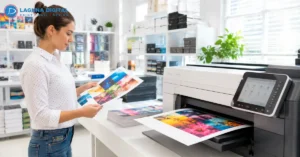
One of the first conversations we have with any new client revolves around quantity. In the past, if you didn’t want to print 1,000 copies, you were out of luck. Today, modern digital printing has revolutionized this. If you are a business needing 50 annual reports or an author testing the market with 200 copies, digital is likely your best path. It allows for incredible sharpness and consistency without the expensive “setup costs” associated with traditional offset printing plates.
However, choosing digital doesn’t mean sacrificing quality. I have seen digital presses produce black-and-white text that rivals the crispness of major publishing houses. The key is knowing your end goal. If you are looking to distribute tens of thousands of copies nationally, offset is still king for unit cost. But for the vast majority of California professionals and independent creators we work with, digital offers the flexibility to print what you need, when you need it, without filling your garage with unsold inventory.
The Critical Role of Image Quality and Formatting
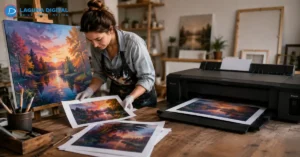
If your book is purely text, your main concern is fonts and margins. But if you are producing a coffee table book, a catalog, or an art portfolio, the stakes are much higher. We frequently work with artists who are shocked when their vibrant on-screen images look dull on paper. This is usually a color management issue. High-end books often require the same attention to detail used in Art reproduction, ensuring that the visual experience on the page matches the original artwork or product.
The most common mistake I see is low-resolution anxiety. Clients often pull images from their websites to use in print, not realizing that web quality (72 DPI) looks pixelated and blurry on paper (which requires 300 DPI). Before you send your files to any printer, ensure your images are high-resolution and your layout includes bleed that extra 1/8th of an inch of artwork that extends beyond the trim line. Catching these errors early prevents costly delays and reprints down the road.
Managing Timelines and Expectations
We live in an era of “next-day delivery,” which often skews expectations for custom manufacturing. Real book printing is a physical craft involving drying times, binding glues, and trimming. While digital technology is fast, quality control cannot be rushed. It is vital to plan your launch date with a buffer. You can read more here about how long book printing takes to get a realistic sense of production schedules, from the moment you submit files to the day the boxes arrive.
I always advise clients to factor in time for a physical proof. A soft proof (PDF on your screen) is fine for checking typos, but it won’t tell you how the paper feels or how the cover laminate looks. Seeing one physical copy before pressing the button on the full run is the best insurance policy you can buy. It gives you the peace of mind that the final product will meet the high standards of the California market.
Selecting the Right Binding for the Job
The way your book is bound says a lot about its purpose. Perfect binding is the industry standard for paperbacks it uses a strong adhesive to glue the pages to the spine, creating that professional, bookstore-shelf look. It is ideal for novels, catalogs, and thicker corporate documents. However, it requires a minimum spine width, so it might not work for very thin booklets.
For thinner publications like event programs, quarterly reports, or comic books, saddle stitching (stapling along the fold) is often the more practical and cost-effective choice. We also see a high demand for coil or wire-o binding for manuals and cookbooks because they lay completely flat when open. Choosing the right binding isn’t just aesthetic; it’s about user experience. Think about how your reader will physically use the book before you commit to a style.
FAQs
What is the difference between a proof and the final print?
A proof shows a preliminary version of your book so you can check for errors. A hard proof gives you a physical copy printed on the paper stock you selected. It lets you verify color accuracy, image resolution, and margin alignment. We strongly recommend ordering hard proofs for image-heavy books to avoid surprises in the final run.
Do I need an ISBN for my book?
If you plan to sell your book in bookstores or on Amazon, yes, you need an ISBN (International Standard Book Number). If you are printing a family genealogy, a corporate internal manual, or a portfolio for personal use, you do not need one. As a printer, we don’t assign ISBNs; you must acquire them through the official agency (Bowker in the US), but we can certainly place the barcode on your cover artwork for you.
Conclusion
Printing a book is a milestone, whether it is for business growth or personal expression. It marks the transition from an idea to a tangible object that you can share, sell, or preserve. The technical aspects of paper weights, bleed lines, and binding types may feel foreign, but the right partner can help you navigate them easily. You don’t need to be a print expert; you just need clear communication and a team that cares about the outcome.
At Laguna Digital, we believe that every book project deserves professional attention, regardless of the quantity. We’ve helped many California authors and businesses create products they’re proud of. Preparing your files right and knowing your options makes printing a smooth part of your creative process.