

There is a distinct mixture of excitement and terror that comes with handing over a finished manuscript to a printer. I have seen it in the eyes of countless authors, business owners, and creative directors who walk through our doors. You have spent months, perhaps years, agonizing over every sentence, every image crop, and every design element. Now, you have to trust a machine and the people operating it to turn that digital dream into a physical reality. It is a massive leap of faith.
Finding the right partner is about much more than just comparing price per unit or promised delivery dates. It is about finding a team that understands the emotional and financial weight of what you are creating. When you begin your search for the Book Printing Services, you aren’t just looking for ink on paper; you are looking for a guardian for your work. In my years in this industry, I’ve learned that the difference between a passable book and a professional one almost always comes down to communication, experience, and a printer who cares enough to catch mistakes before the presses run.
Defining Quality in Modern Digital Printing
One of the most persistent myths I encounter is the idea that digital printing cannot match the quality of traditional offset printing. Ten or fifteen years ago, that might have been true. Today, however, high-end production printers have bridged that gap significantly. But here is the catch: the technology is only as good as the technician calibrating it. A reliable service provider checks color profiles, analyzes ink density, and ensures that the machinery is tuned specifically for the paper stock you have chosen.
This attention to detail is critical when utilizing digital printing. Unlike the massive runs of offset printing, digital allows for shorter runs with incredible sharpness and consistency. But short run shouldn’t mean low quality. I often advise clients to be wary of services that promise 24-hour turnarounds without offering a hard proof. A physical proof is your safety net. It allows you to see how the colors shift from your backlit monitor to the actual page, ensuring there are no nasty surprises when the full order arrives.
The Art of Binding and Material Selection
The way a book is bound communicates its purpose before the reader even opens the cover. I’ve seen businesses spend thousands on design only to choose a binding method that fights the user experience. For example, a training manual that snaps shut the moment you let go of the page is frustrating for the user. In that case, a coil or wire-o binding is the professional choice, even if it looks less “literary.”
We see this need for specific physical attributes in all types of branding. Just as we ensure consistent, high-quality output for broad branding projects like MailProsUSA, your book’s physical form must align with your brand identity. If you are an artist or photographer, the stakes are even higher. Standard binding often isn’t enough for art reproduction. We have to consider lay-flat options so that panoramic images aren’t swallowed by the gutter (the center spine area). A professional printer acts as a consultant here, guiding you toward materials that elevate the content rather than just containing it.
Navigating Options for Self-Publishers and Authors
The publishing world has changed. Authors are no longer waiting for permission from big publishing houses; they are building their own audiences and printing their own work. However, this freedom brings complex choices. One of the current trends in book printing is the shift toward “smart inventory”—printing enough copies to stock a launch party or a local bookstore signing, without filling a garage with unsold boxes.
For memoirists and family historians, the visual element is often just as important as the text. We are seeing a surge in books that blend narrative with archival imagery. This requires a printer who excels in photo printing. A muddy, low-contrast photo can ruin the emotional impact of a page. We often have to work with clients to restore or color-correct older images so they print clearly. It is these small, technical adjustments that separate a generic online upload service from a true custom book printing partner.
Why Printed Books Are a Vital Business Asset
Books aren’t just for storytellers; they are one of the most underutilized tools in business marketing. I have worked with real estate agents, consultants, and financial advisors who use high-quality printed books as their primary business cards. Handing a prospect a bound book establishes authority instantly. It says, I wrote the book on this subject, quite literally.
However, if that book feels cheap if the cover curls after a day or the pages are see-through it damages your reputation. This is where comprehensive printshop solutions become a part of your business strategy. Consistency is vital. If you print a batch of books for a conference in January, and a reprint in July, the brand colors must match exactly. A professional service keeps your files and color profiles on record to ensure that brand fidelity remains intact across every batch.
Common Mistakes to Avoid When Printing
Over the years, I’ve noticed the same issues popping up repeatedly with new clients. Being aware of these can save you money and heartbreak.
1. Ignoring the Bleed
“Bleed” is the area of artwork that extends beyond the edge of the page. If your design has a background color or image that goes to the edge, you must extend it 1/8th of an inch past the trim line. If you don’t, and the cutting blade shifts even a fraction of a millimeter (which happens), you end up with an ugly white hairline strip on the edge of your page.
2. trusting the Screen Too Much
Your screen emits light; paper reflects it. Colors on a screen are made of Red, Green, and Blue (RGB). Printers use Cyan, Magenta, Yellow, and Black (CMYK). Some bright neon colors you see on your monitor simply cannot be reproduced with standard ink. A good printer will warn you if your colors are out of gamut before they print.
3. Choosing the Wrong Paper Weight
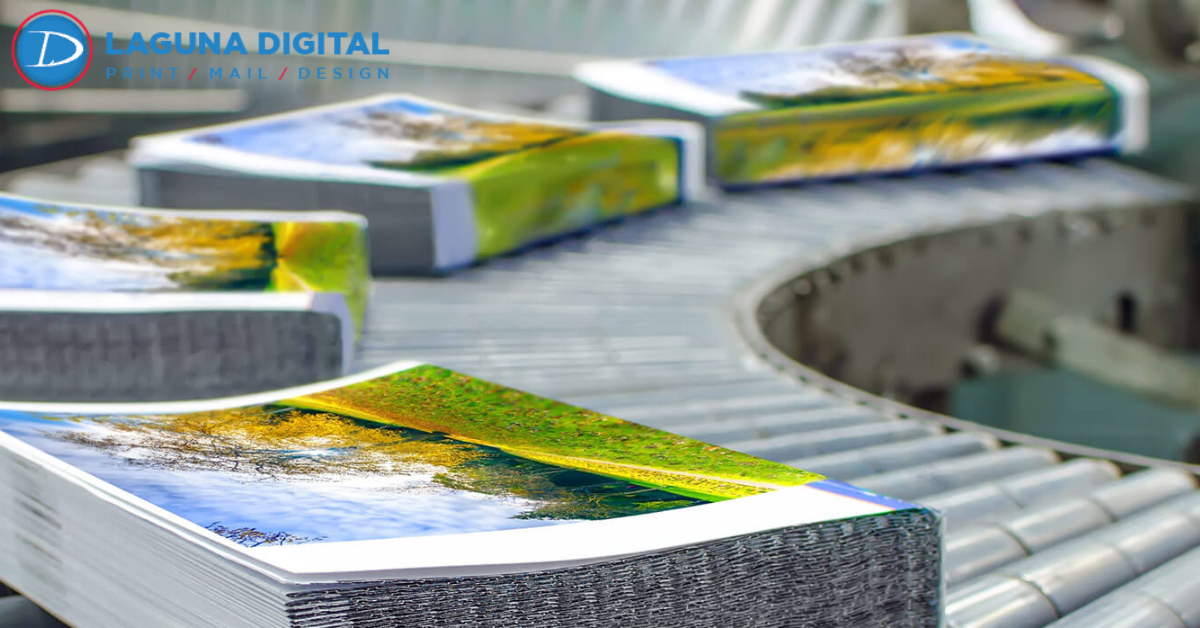
Paper weight is tactile psychology. A 50lb paper feels like a grocery store paperback good for reading, bad for photos. An 80lb or 100lb coated stock feels luxurious and sturdy. I once had a client print a luxury real estate brochure on thin paper to save money; they ended up reprinting the whole job because the flimsy paper made the multi-million dollar homes look cheap.
FAQs
How long does the professional book printing process take?
This varies wildly based on complexity. A simple digital run of softcover books might take 3-5 business days after proof approval. However, if you are adding special finishes like foil stamping, embossing, or hardcover binding, you should plan for 2-3 weeks. Always build a buffer into your schedule for the proofing process.
What is the difference between Perfect Binding and Saddle Stitch?
Saddle stitch involves folding sheets and stapling them through the spine; it is cost-effective and lies relatively flat, but is limited to lower page counts (usually under 64 pages). Perfect binding uses a strong adhesive to glue pages to a square spine, creating that classic paperback look. It requires a minimum page count (usually around 40) to have enough surface area for the glue to hold.
Do I really need a physical proof, or is a PDF proof enough?
For text-only books, a PDF proof is usually sufficient to check for typos and formatting. However, if your book contains photos, specific brand colors, or complex graphics, I highly recommend a hard proof (a physical copy). It is the only way to be 100% sure of how the images will resolve on the specific paper stock you chose.
Can you print just one book?
Technically, yes. Digital printing makes print-on-demand possible. However, the cost per unit for a single book is high because of the setup time involved. The sweet spot for pricing usually begins around 25 to 50 copies, where the unit price drops significantly.
Conclusion
Choosing a printing partner is a decision that impacts how your work is perceived by the world. You are not just buying paper and glue; you are buying the assurance that your vision will be respected and executed with care. Whether you are launching a self-published novel, creating a portfolio to win clients, or distributing a corporate manifesto, the physical quality of the book speaks as loudly as the words inside it.
Don’t settle for a faceless transaction. Look for a service provider who asks questions, offers advice, and treats your project with the seriousness it deserves. If you are looking for more insights on design, file preparation, or marketing your printed materials, feel free to explore our blog. We are here to help you turn that digital file into a legacy you can hold in your hands.