
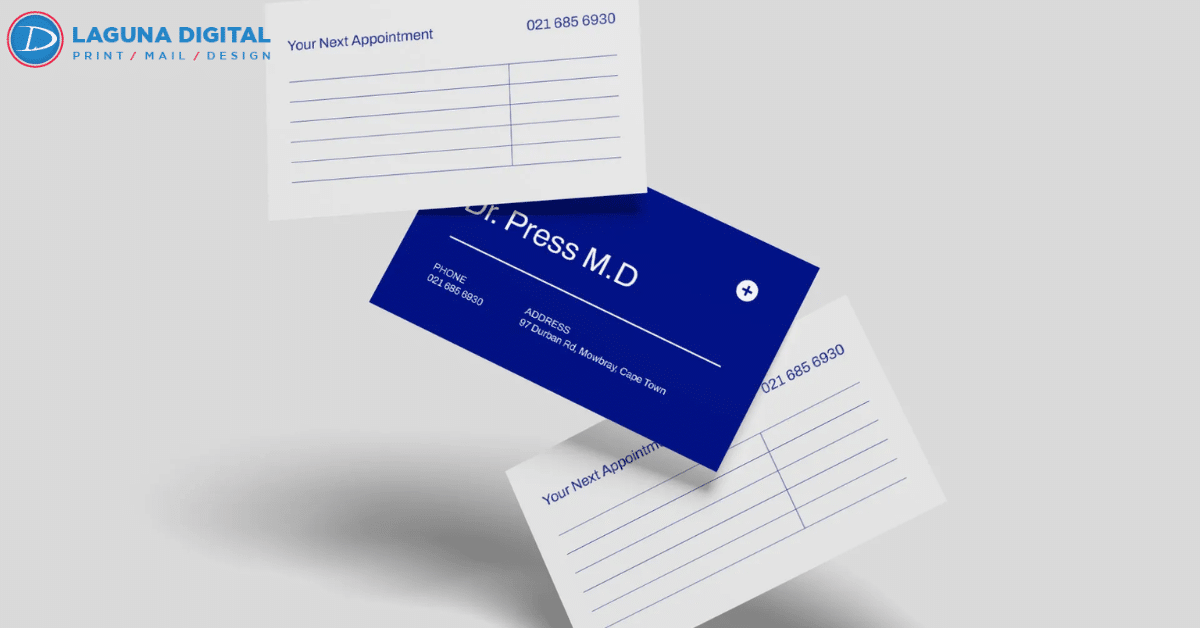
If you own a service-based business, you know that the most frustrating part of the week isn’t the long hours or the inventory management—it’s the “no-show.” I have sat down with countless salon owners, dental practice managers, and private consultants who tell me the same story: they are fully booked on paper, but when the time comes, the chair sits empty. In an era of automated texts and endless push notifications, you might think missing an appointment is impossible, yet it happens constantly.
The reality is that while digital tools are convenient, they are also easily ignored. A text message is just one of hundreds flashing on a screen daily, often swiped away and forgotten in seconds. This is where the physical world steps in to bridge the gap. At Laguna Digital, we have seen firsthand how reintroducing tangible, high-quality appointment cards can drastically reduce missed slots and improve overall customer flows. It is not just about writing down a date; it is about handing your client a physical commitment that sits in their wallet, reminding them of the value you provide.
The Hidden Cost of “No-Shows” on Business Revenue
When a client misses an appointment, the damage goes beyond that single hour of lost revenue. It disrupts your entire workflow, frustrates your staff, and denies another client the opportunity to book that slot. I often explain to business owners that an appointment card is an insurance policy against this disruption. By formalizing the booking process with a physical card, you are psychologically anchoring the commitment in the client’s mind.
The act of writing down a time and handing a card to a customer creates a ritual of agreement. It is a shared moment where both parties acknowledge the importance of the future meeting. Unlike a digital calendar invite that can be passively accepted and ignored, a card requires the client to take it, store it, and look at it. This small interaction significantly increases the “stickiness” of the appointment, protecting your bottom line and keeping your schedule predictable.

Why Tangible Reminders Beat Digital Noise
We are living in 2025, and digital fatigue is at an all-time high. Your clients are bombarded with emails, DMs, and app notifications from the moment they wake up. In this chaotic digital environment, a physical appointment card cuts through the noise. It doesn’t require a battery, it doesn’t get buried in a spam folder, and it doesn’t compete with social media for attention. It simply lives in their purse or on their refrigerator, providing a silent, constant reminder.
Beyond just the date and time, the card itself serves as a mini-billboard for your brand. When I advise clients on their print strategy, I remind them that high-quality paper stock and professional printing convey reliability. If you scribble a date on a scrap of paper, it feels disposable. If you hand them a professionally branded card, it feels like an official reservation. That difference in perception is often the deciding factor between a client showing up early or forgetting to show up at all.
Integrating Cards with Your Brand Identity
An appointment card should never just be a white square with a date on it; it needs to be an extension of your brand identity. Many of our most successful clients use a hybrid approach, designing their cards to function as business cards on one side and appointment reminders on the other. This dual-purpose strategy ensures that the client always has your contact information, website, and social media handles right at their fingertips.
This approach also reinforces professionalism. When the design of your appointment card matches your shop signage and marketing materials, it builds trust. Consistency creates a sense of stability. If your lobby looks high-end but your appointment slips look cheap, it creates a disconnect in the customer’s mind. Investing in quality design helps maintain the premium feel of your service long after the client has walked out your door.
Streamlining Front Desk Operations
Efficiency at the front desk is critical for customer management. Fumbling with digital systems while a line forms behind a client can cause unnecessary stress. Having a stack of business essentials like branded pens and appointment cards ready to go keeps the checkout process smooth and personal. It gives your receptionist a perfect closing interaction: confirming the service, booking the next one, and handing over the reminder with a smile.
Furthermore, these cards can be used as tools for inventory and workflow management. We have worked with clinics that use color-coded appointment cards for different practitioners or service types. This simple visual cue helps the client remember exactly who they are seeing and what for, reducing confusion when they call back to reschedule or ask questions. It is a low-tech solution that solves high-touch operational problems.

Creating a Cohesive Marketing Ecosystem
We previously discussed the importance of consistency in our main guide on Laguna Digital, where we highlighted that print and digital should work together, not against each other. Your appointment card is the bridge between the service they just received and the next interaction. But it shouldn’t exist in a vacuum. It should tie into your broader marketing campaigns.
For example, if you are currently distributing business flyers or have large banners, posters, and signs promoting a seasonal special, your appointment card can include a small note or stamp referencing that offer. “Bring this card back for 10% off your next visit” is a classic tactic because it works. It turns a simple reminder into a loyalty tool, giving the customer a financial incentive to keep the card safe and return for their next scheduled visit.
FAQs
Should I use a matte or glossy finish for appointment cards?
I almost always recommend a matte or uncoated finish for the side where the appointment details are written. Glossy coatings are beautiful for photos, but they are a nightmare to write on with standard ballpoint pens—the ink smears instantly. A practical setup is often a glossy front (for your logo) and a matte back (for writing).
What information is essential to include on an appointment card?
Keep it simple but functional. You absolutely need the date, day of the week, and time. Additionally, include your cancellation policy (e.g., “24-hour notice required”) and your phone number. Including the specific provider’s name is also helpful if your business has multiple staff members.
Can appointment cards really help with customer retention?
Yes, absolutely. Beyond the reminder aspect, they can double as loyalty cards. We often design cards with a grid on the back where clients get a stamp or initial for every visit. After ten stamps, they get a free product or service. This gamifies the process and encourages them to stick with your business.
Is it better to have separate business cards and appointment cards?
For most small businesses, combining them is more cost-effective and convenient for the client. It reduces clutter in their wallet. However, if you have a lot of legal disclaimers or specific medical instructions that need to be on the appointment card, keeping them separate might be necessary to avoid overcrowding the design.
How big should an appointment card be?
Standard business card size (3.5” x 2”) is the industry standard for a reason—it fits perfectly in wallets and cardholders. We have seen people try larger formats to stand out, but those often get folded, crumpled, or thrown away because they are inconvenient to carry.
Conclusion
In a world obsessed with automation, the personal touch of a physical appointment card carries more weight than ever. It is a symbol of professional respect—respect for your client’s time and respect for your own business standards. By reducing no-shows, streamlining your front desk, and reinforcing your brand identity, these small pieces of cardstock deliver a massive return on investment.
Improving customer management doesn’t always require expensive software or complex algorithms. Sometimes, it just requires a return to the basics of good service and clear communication. If you are ready to upgrade your customer experience with high-quality print materials, explore more insights on our blog. Let’s make sure your clients always know exactly when and where to find you.