
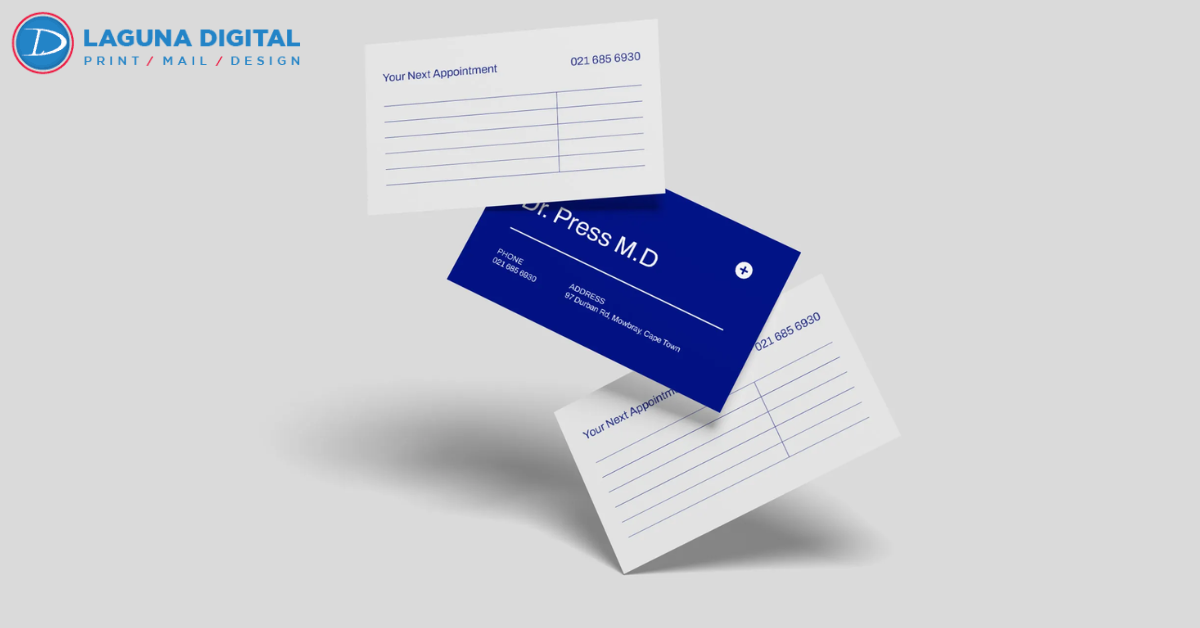
We know the sinking feeling of staring at an empty waiting room or a blank spot in the schedule. The clock ticks past the scheduled time, the phone goes to voicemail, and you realize the client isn’t coming. For service-based businesses like dental practices, salons, and consultancies, a no-show isn’t just an annoyance; it represents a direct loss of revenue that you cannot recover. While digital calendars are useful, we have found that they lack the physical permanence required to truly anchor a commitment in a client’s mind.
This is where tangible reminders bridge the gap between booking a slot and actually showing up. When you hand a client high-quality Appointment Cards, you provide them with a physical contract of their commitment. We see this dynamic play out constantly with our clients: businesses that rely solely on automated texts often see higher cancellation rates than those who reinforce the date with a physical card. A well-designed card sits in a wallet, sticks to a refrigerator, or lives on a dashboard, serving as a constant visual prompt that a digital notification simply cannot match.
The Psychology Behind Tangible Reminders
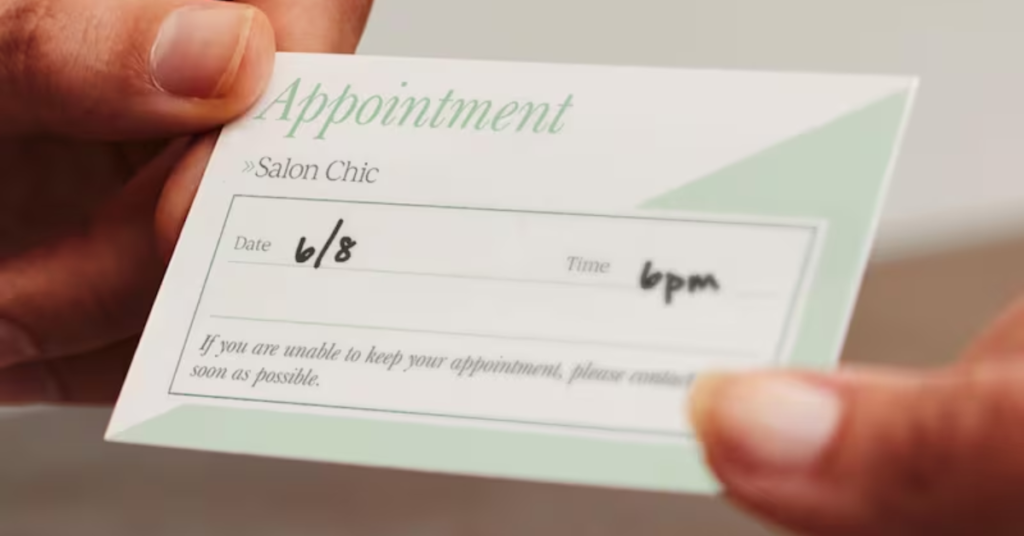
We live in an era of digital saturation where phone screens constantly bombard us with information. A text message or email reminder is easily swiped away, buried under social media notifications, or accidentally deleted. We believe the power of a printed card lies in its ability to occupy physical space in a client’s life. When a receptionist writes down a time and hands a card to a customer, the interaction creates a stronger memory trace than a click on a screen.
Overcoming Digital Notification Fatigue
Your clients likely receive hundreds of notifications daily, leading to what marketing experts call alert fatigue. They stop processing the pings and buzzes from their phones because there are simply too many of them. A physical card bypasses this digital noise entirely. We often advise clients that a card placed in a wallet acts as a quiet, persistent reminder every time the client reaches for their credit card or cash. It does not require a battery or a signal to work; it simply communicates the necessary information effectively.
Creating a Mutual Commitment
There is a subtle psychological contract formed when you write a date down for someone. By taking the time to fill out a card, your staff demonstrates that they value the appointment slot. This signals to the client that your time is professional and limited. We have observed that clients treat appointments with more respect when they perceive that the business takes scheduling seriously. The card serves as a physical symbol of that mutual agreement to meet at a specific time.
Designing Cards That Clients Actually Keep
We often see businesses treat appointment cards as an afterthought, using flimsy paper or generic templates that get thrown away immediately. This is a missed opportunity. To ensure the card does its job, we must treat it as a vital piece of your branding and operational strategy. A card that feels substantial and looks professional is far less likely to end up in the trash can outside your front door.
Prioritizing Clarity and Functionality
The primary goal of these cards is functional: the client must know where to be and when. We always recommend keeping the design clean and legible. We avoid using dark backgrounds where the writing area is located, as this makes the pen ink invisible. We also suggest using a matte finish for the writing surface to prevent ink from smearing. If the client cannot read the date three days later because the ink smudged, the card fails its primary purpose.
Leveraging the Reverse Side for Marketing
While the front of the card focuses on the date and time, the back offers valuable real estate for business growth. We encourage utilizing this space to encourage referrals or maintain brand consistency. Some of our clients use this space to align with their broader marketing strategies, such as building their business cards, by adding a QR code that leads to a newsletter sign-up or exclusive offer. This transforms a simple reminder tool into a multifunctional marketing asset that keeps your business top-of-mind.
Integrating Cards into Your Workflow
Printing the cards is only half the battle; how your team uses them matters just as much. We find that the physical hand-off is a crucial moment in the customer journey. If the receptionist slides the card across the counter without making eye contact, it holds less value. However, if they verbally confirm the date while writing it down and handing it over, the retention rate improves significantly.
The Hand-Off Ritual
We advise staff to read the date and time aloud as they write it. This engages both the visual and auditory senses of the client, doubling the likelihood that they will remember the information. It also provides a moment to clarify any pre-appointment instructions. This human interaction reinforces the relationship and makes the client feel personally attended to, rather than just another entry in a database.
Strengthening Client Retention
Consistency builds trust. When clients leave your office with a professional card every time, it reinforces the rhythm of your service. It creates a habit of booking the next visit before leaving the current one. For businesses looking to streamline their operations, this simple habit acts as one of our favorite customer management tips because it respects everyone’s time. A well-managed schedule allows you to serve more people effectively and reduces the stress of last-minute scrambling to fill empty slots.
Analyzing the ROI of Printed Appointment Cards
We frequently hear concerns about the cost of printing versus going 100% digital. However, when we break down the numbers, the return on investment becomes undeniable. The cost of a single missed appointment whether it is a dental cleaning, a hair coloring session, or a consultation often exceeds the cost of printing a thousand appointment cards. If a batch of cards prevents just one or two no-shows, the printing cost pays for itself immediately.
Calculating the Cost of Empty Slots
You must consider not only the lost revenue from the specific appointment but also the cost of paying staff to stand idle and the overhead expenses that continue to accrue. An empty chair is the most expensive item in your business. We view appointment cards not as an expense, but as an insurance policy against lost time. By investing pennies per card, you protect hundreds of dollars in service revenue.
Enhancing Professional Perception
Beyond the direct financial calculation, there is the value of your brand image. A business that relies solely on text messages can sometimes feel impersonal or casual. Providing a high-quality, branded card elevates the perceived value of your service. We find that clients associate the quality of your stationery with the quality of your work. A substantial card suggests a substantial, reliable business.
FAQs
Should we use appointment cards if we already send text reminders?
Absolutely. We recommend a belt and suspenders approach. Text messages are great for 24-hour reminders, but appointment cards serve as the long-term reference that lives in the client’s wallet or on their fridge between booking and the actual date.
What is the best paper stock for appointment cards?
We always suggest an uncoated or matte stock for the side that will be written on. Glossy finishes look great for logos, but they cause ballpoint pens to skip and gel pens to smear. A 14pt or 16pt cardstock provides a durable, high-quality feel that conveys professionalism.
What information must be included on the card?
Keep it essential. You need the date, day of the week, and time clearly visible. We also recommend including your phone number and your cancellation policy (e.g., “Please provide 24 hours notice for cancellations”). This protects your schedule and sets clear expectations.
Conclusion
Reducing missed appointments requires a strategy that combines communication, psychology, and practical tools. We believe that despite the digital advancements in scheduling software, the physical appointment card remains one of the most effective ways to secure a client’s commitment. It provides a visual anchor in a distracted world, reinforces your brand’s professionalism, and offers an incredible return on investment by protecting your revenue stream.
By designing clear, durable cards and integrating them into your daily checkout process, you take control of your schedule. At Laguna Digital, we understand the nuances of print marketing and how small details lead to big operational wins. Let’s work together to keep your appointment book full and your business running smoothly.