

Your printed asset goes from a thumbnail on a phone and into retail light, then the mail and through consumer touch. Its physical journey highlights why finishes are functional, not decorative. Deciding on which one to use in 2026, soft touch over gloss lamination, is influenced by color, legibility, hand-feel, brand equity, run size, and purpose.
The current industry discussion highlights three converging concerns, tangible finishes, nimble short-run delivery with digital, and increasing caution regarding environmental rhetoric. Buyers are now demanding facts, materials, and figures over general-purpose eco claims.
Why Finish Selection Matters in 2026?
Texture Creates Physical Distinction
Many customer experiences begin online, making physical texture more noticeable when a printed item reaches someone’s hands. Soft, raised, and reflective surfaces offer a quality that screens cannot reproduce. Tactile treatments continue to appear in 2026 print and packaging trend coverage for this reason.
For premium printing, texture should have a job. It may signal exclusivity, slow the viewing experience, or create contrast with foil, embossing, or spot effects. Adding several effects without a clear hierarchy usually weakens the result.
Shine Still Has a Commercial Purpose
Minimal design is growing, but shine has not disappeared. Gloss lamination remains effective for saturated artwork, food imagery, product catalogs, event promotions, and retail pieces that need fast attention. Its reflective surface can strengthen color and image clarity, although direct light may produce glare.
This makes it useful when custom printing needs an energetic, polished appearance without several specialty processes.
Soft Touch and Gloss Compared
Color and Visual Impact
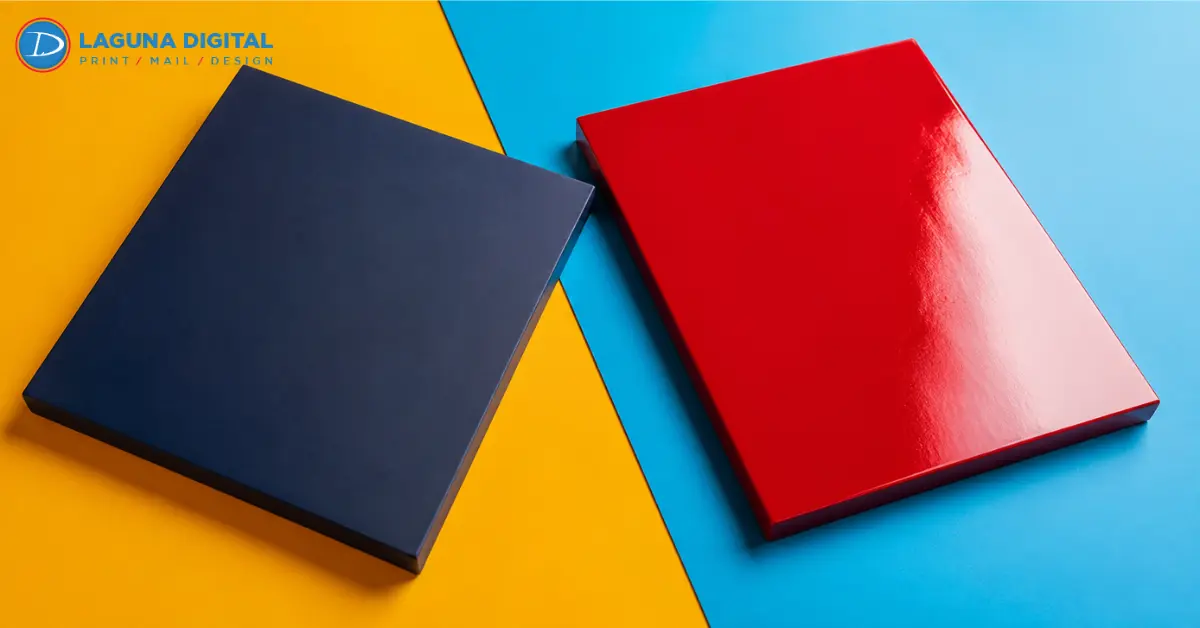
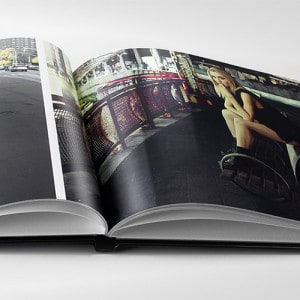
A glossy film reflects more light. This can increase the apparent depth of dark colors and the intensity of photography. Gloss lamination is therefore a strong match for image-led covers, bold promotions, menus with food photography, and display pieces built around color.
A soft-touch film produces a lower-sheen result. Colors may appear slightly calmer, while typography, negative space, and restrained palettes gain a controlled appearance. This finish works when the design relies on elegance rather than brightness.
Touch and Brand Positioning
Soft touch lamination’s most notable feature is the velvety and suede feeling that it gives. The “luxe” choice for business guides, packaging, cards, invites, books, and presentations. It’s also a good pairing for foil and spot UV because shiny effects jump out of the soft matt background better.
By comparison, gloss lamination feels smooth and slick. It communicates cleanliness, energy, and color intensity. The finish should match the brand personality instead of following a trend without context.
Readability and Lighting
Reflective surfaces are more likely to create glare under store lighting, conference lighting, or sunlight. Small type, long paragraphs, and QR codes will require significant contrast and plenty of clear space. Print a physical proof and compare it from various angles.
Low-glare surfaces tend to be easier to read in contrasting lighting. Print pieces with lots of text may opt for the softer alternative, which may offer a more relaxed experience, particularly on reports, luxe brochures, menus and presentation folders.
Handling and Durability
Each of the laminates provides some additional protection as a surface compared to an unprotected sheet, but results will be dependent upon the particular film, paper substrate, coverage of inks, adhesive, and usage. Gloss finish is typically used for high-touch items since it provides an attractive, slick surface and enhanced protection from normal dirt and moisture. Laminated products are not waterproof or indestructible.
For laminated printing that will be stacked, shipped, folded, or reused, request a production sample rather than judging from an online mockup.
Best Finish by Print Product
Packaging and Retail Pieces
Use a glossy surface for colorful consumer products, food photography, children’s products, and seasonal promotions that must stand out from a distance. In packaging printing, shine can strengthen contrast and create a clean retail appearance.
Use a soft-touch surface for cosmetics, wellness products, gifts, premium electronics, and restrained brand systems. Ask how the chosen film affects scoring, folding, glue areas, and recyclability. Film bonded to paper may complicate recovery, so environmental claims should be verified for the complete construction.
Business Cards
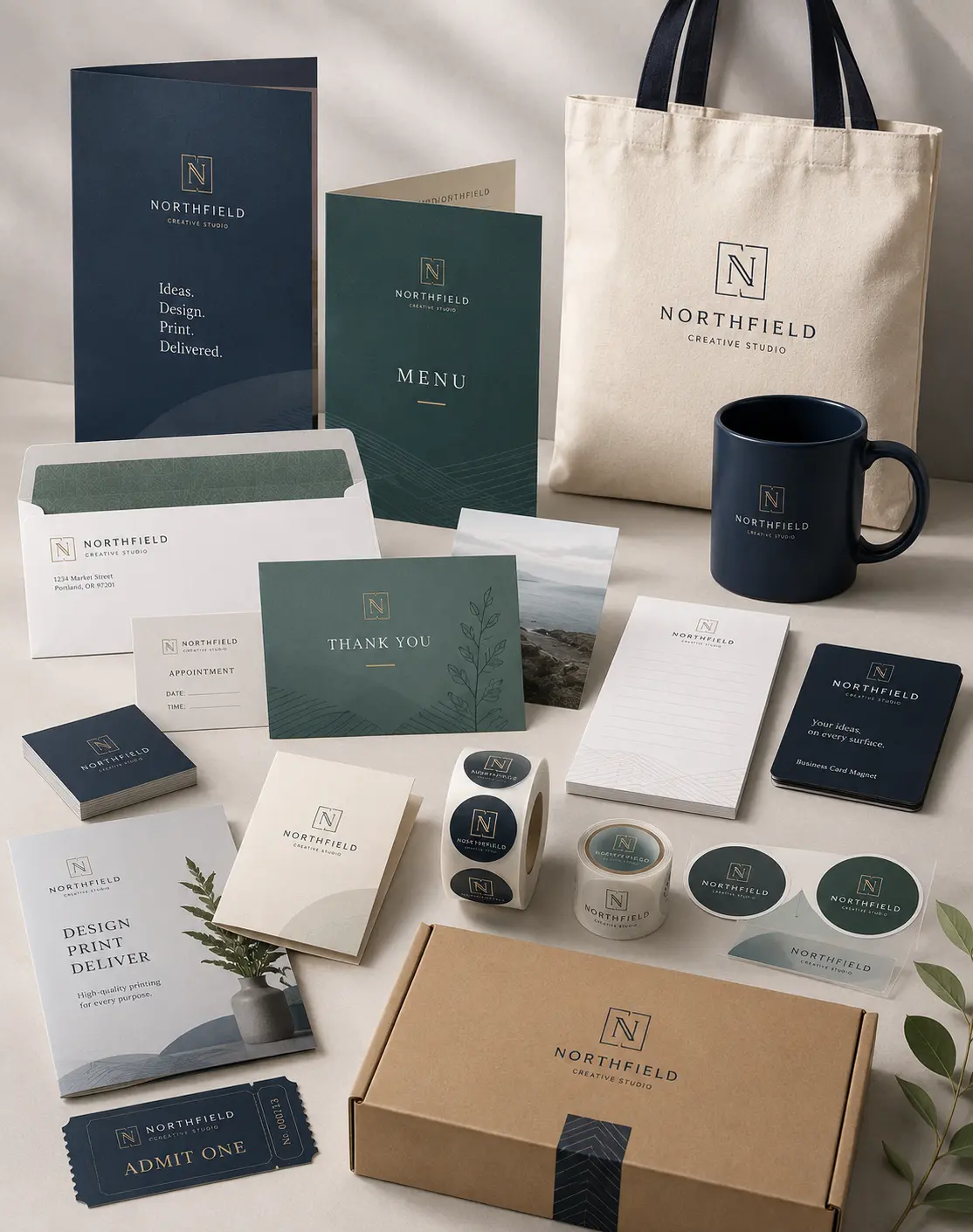
For business card printing, a glossy finish suits photography, vivid logos, automotive businesses, entertainment, and high-energy promotions. A soft-touch card better suits consultants, architects, real estate professionals, beauty brands, and luxury services.
Add foil or spot gloss only when it reinforces hierarchy. Too many effects can make a small design look crowded and reduce readability.
Brochures and Booklets
For brochure printing, use gloss lamination on covers with strong photography or bold product imagery. Keep interior pages less reflective when extended reading is required.
For booklet printing, consider how the cover will fold and how often it will be handled. A laminated cover can protect the outer surface, but scoring and grain direction remain important. Ask the provider to confirm compatibility before production.
Cost, Quantity, and Production Method
Cost depends on film type, sheet size, paper stock, run length, setup, and finishing steps. A reliable provider should quote the complete specification rather than label one finish as automatically expensive or economical.
Short runs produced through digital printing make it easier to test versions, personalize covers, or create event-specific pieces. For larger quantities, compare unit cost, setup requirements, spoilage allowance, and turnaround. The cheapest finish is not economical if it weakens the design or causes an early reprint.
Strong print services should confirm whether one-sided or two-sided print lamination is required. A cover may need protection only outside, while a frequently handled card may benefit from both sides. This choice affects feel, curl, folding, and cost.
Actionable Finish Selection Checklist
- Define the job: Decide whether the piece must attract attention, communicate luxury, improve handling, or protect a surface.
- Match finish to artwork: Select gloss lamination for vivid photography and high-impact color. Select a soft-touch surface for minimal layouts, deep tones, and refined typography.
- Test real lighting: View a physical proof under daylight, retail lights, and office lighting.
- Check the use environment. Consider mailing, stacking, moisture, fingerprints, repeated handling, and storage.
- Confirm compatibility: Ask how scoring, folding, foil, embossing, spot UV, and glue areas will perform.
- Record the specification: Keep the paper, film, adhesive, thickness, and side coverage used in the approved sample.
- Approve the finished sample: A color proof cannot show texture, glare, curl, or surface resistance.
Frequently Asked Questions
Is Gloss Better Than a Soft-Touch Finish?
Gloss is better for vivid color, photography, shine, and frequently handled promotional pieces. A soft-touch finish is better for low glare, tactile distinction, and understated luxury. The project goal determines the stronger option.
Does a Glossy Film Make Colors Look Brighter?
Yes. Gloss lamination reflects light and can make colors appear more saturated and images more defined. Test dark areas, skin tones, and small text on a physical proof because the result varies by stock and ink coverage.
Which Finish Works Best for Premium Business Cards?
A soft-touch surface often creates the stronger tactile impression. A glossy surface may be more suitable when the design depends on photos, bright gradients, or energetic branding. Stock thickness, trimming, and edge quality also affect perceived value.
Can Laminated Pieces Be Recycled?
Recyclability depends on the complete material structure and the local recovery system. Plastic film bonded to paper can make processing more difficult. Request a written material specification and avoid environmental statements that the supplier cannot support.
What Should Be Checked Before a Full Order?
Approve the paper stock, film, color, fold behavior, edge quality, glare, scuff resistance, and final size. For premium printing, evaluate the finished production sample rather than an uncoated color proof.
Conclusion
The 2026 trend is not a complete shift from shine to softness. It is a shift toward purposeful selection. A glossy surface remains effective for vivid graphics, product photography, durability, and immediate retail impact. A soft-touch surface remains effective when tactile quality, low glare, and restrained luxury matter most.
Prepare the final artwork, document how the piece will be handled, and request side-by-side samples on the intended stock. Choose experienced print services that can compare film options, verify print finishing requirements, and provide a clear print lamination specification. Submit the project details and request a production-ready recommendation and quote today.