An athleisure brand should begin with a right-sized physical pack and one useful digital action. The package must protect the garment, represent its price and purpose, and make the next step clear. That step might open care guidance, verify a limited release, or connect buyers with a training event.
Smart packaging makes this connection through a QR code, NFC tag, or serialized label. It works when the material, message, placement, and linked content support the same brand decision.
Athleisure moves between workouts, travel, work, and everyday wear. Effective packaging design should reflect that versatility without becoming overdecorated. Apparel packaging must also survive fulfillment, weather, handling, and possible returns.
What Smart Packaging Means for Athleisure Brands?
The term describes a pack that uses a digital identifier or embedded technology to provide information, interaction, authentication, or traceability. A dynamic QR code is a manageable entry point because its destination can be updated while the printed code remains unchanged.
The benefit should be specific to the garment. A leggings mailer could open washing guidance; a trail jacket tag could explain layering; a numbered collaboration could link to an authenticity record. These uses turn brand packaging into a service touchpoint.
One destination, one clear prompt, and one measurable action are enough for a first release. This controlled approach keeps custom packaging easier to prove and improve.
The Brand Promise Comes Before the Technology
Translate the Promise Into Visual Rules
Before choosing a mailer or code, define what the collection must communicate. A technical running line may need a precise, energetic presentation; a studio-to-street range may call for calmer color and softer typography.
Three positive attributes and three boundaries provide a useful review standard. “Durable, focused, and modern” might be paired with “not bulky, loud, or wasteful.” Those words can guide color, type, material weight, copy, and space.
Build Around the Folded Garment
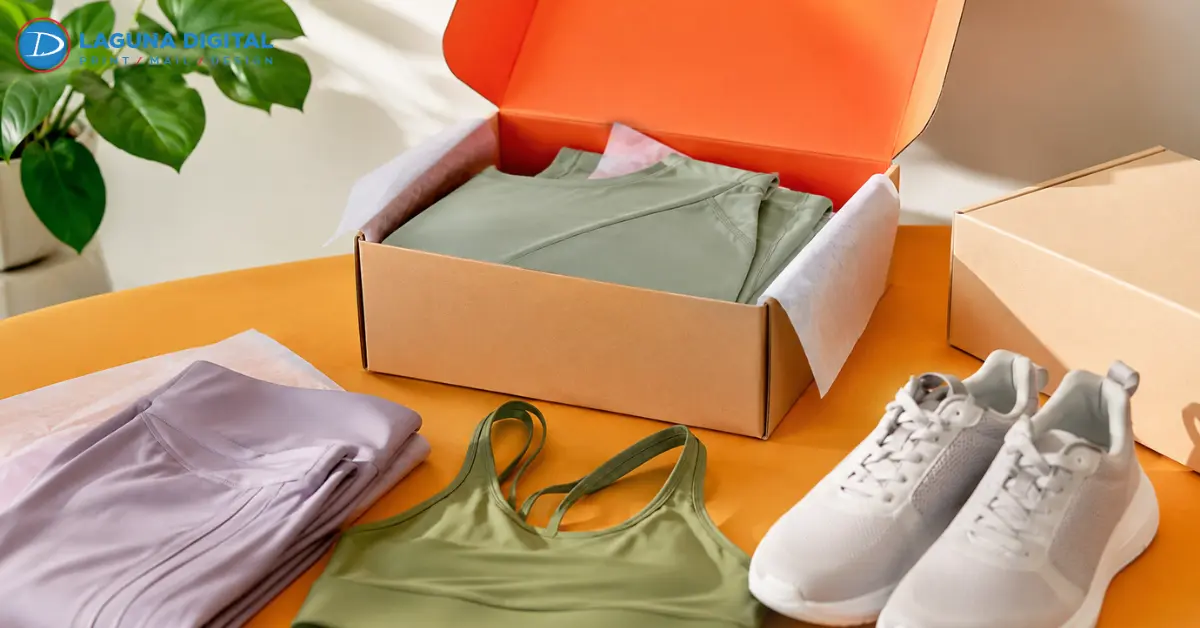
Once the promise is clear, build around the folded product. Smart packaging at this stage is still a protection system first. Moisture-sensitive pieces need a barrier, while structured accessories may need crush protection. Therefore, mailer envelopes offer compact shipping formats for soft goods.
One exterior mark, a clean fold, an interior color, and a short message can give branded packaging distinction without loose inserts. For store display, header cards can carry size, barcode, material, or handling details.
Right-sizing, removing unnecessary layers, and selecting components customers can sort are practical foundations for sustainable packaging. The U.S. Environmental Protection Agency notes that lightweight, efficient construction can reduce discarded material and save money.
Match the Format and Technology to the Order
Choose a Format for Each Sales Channel
Online and store orders share an identity but do different jobs. E-commerce packs face conveyors, weather, and last-mile handling. Retail packaging may need a hanging area, size information, tamper control, and compact display dimensions.
The garment and order mix should decide the format. Mailers suit low-risk soft goods, while corrugated boxes provide more control for shoes or mixed orders.
Luxury packaging earns its place when it supports the price, protects the item, or offers reuse value. Oversizing can increase cost because carriers may apply dimensional-weight pricing.
Before ordering custom product packaging, record every SKU’s folded dimensions and test common combinations. Two or three sizes are easier to purchase, store, and pack than a separate format for every garment.
Compare QR, NFC, and Serialized Codes
That physical decision narrows the technology choice:
| Option | Best Starting Use | Main Production Consideration |
| QR code | Care, fit, styling, rewards, or product information | Contrast, clear space, print quality, and a stable destination |
| NFC tag | Premium tap experiences or authentication | Unit cost, placement, phone compatibility, and tag durability |
| Serialized code | Warranty, resale, ownership, or limited releases | Unique records, data ownership, and fulfillment control |
For most launches, smart packaging works best with the simplest option that completes the task. A QR code is sufficient for a care page; NFC needs a stronger reason than novelty.
Make the Post-Scan Experience Worth the Action
A customer should understand the benefit before scanning. Replace “Scan for more” with “Scan for fabric-care steps” or “Tap to verify this numbered release.”
Smart packaging loses credibility when a tag opens a generic homepage, expired campaign, or desktop-only page. Product-level content is stronger: leggings may need drying guidance, while a running shell may need storage and layering advice.
The landing page should use the same colors, photography, typography, and tone as the physical apparel packaging. That continuity makes it part of brand packaging, not an unrelated promotion. For printed code labels and custom stickers, provide relevant formats.
Record who controls the domain, redirect, analytics, and renewal. A garment code may remain in use for years, so its destination must remain active.
Keep Environmental Information Clear and Verifiable
Smart packaging can provide disposal instructions, sourcing records, or repair guidance that will not fit on a small tag. It should not hide vague environmental language behind a scan.
Good sustainable packaging statements identify the material, verified recycled-content percentage, component removed, or disposal route. The FTC Green Guides advise marketers to qualify partial recycled-content claims and avoid misleading environmental messages.
Review supplier records before a claim reaches custom packaging, including the substrate, coating, adhesive, ink, liner, and realistic disposal conditions. A dated source page can preserve evidence and allow corrections.
Prototype the Complete Journey Before Scaling
Test the Physical Proof
A digital proof cannot show how a finished pack behaves. The prototype should contain the garment, use the intended closure, carry a shipping label, and open on the real landing page.
Before approving smart packaging, scan at several angles and light levels. Fold and rub the printed area, test on ordinary phones, and pack every garment size plus one for a mixed order. Record sealed dimensions, weight, packing time, unused space, and transit damage.
Compare Expectations With Real Results
The pilot should also test comprehension. Compare what testers expect from the prompt with what the page delivers, then revise any mismatch. However, digital printing services can support proofing once the format, artwork, and test requirements are documented.
After launch, review scans, completed actions, registrations, support questions, returns, packing time, damage, and shipping charges. This shows whether the packaging design improves customer value without adding operational waste.
A pilot keeps branded packaging decisions grounded in evidence. Retain useful elements, clarify weak prompts, and remove additions that add no measurable value.
FAQs
Is Smart Packaging Practical for a Small Athleisure Launch?
Yes. A dynamic QR code, one mobile page, and one useful action can test interest without NFC or item-level serialization. Compare cost with scan behavior and operational results before ordering custom product packaging at scale.
What Should an Athleisure QR Code Open?
Care instructions remain useful after purchase. Fit guidance, repair steps, training content, product records, registration, and rewards also work when they relate directly to the garment.
How Can a Package Feel Premium Without Excess Material?
Precise sizing, strong typography, controlled color, clean folding, and one tactile detail can communicate quality. Luxury packaging does not need multiple boxes or oversized inserts.
Should Store and Online Orders Use the Same Package?
They should share visual rules, but the structures may differ. Online formats prioritize transit and returns. Retail packaging also supports display, scanning, security, and quick size recognition.
Which Results Should Be Reviewed After Launch?
Review scans, completed actions, registrations, support questions, damage, returns, packing time, volume, and shipping charges. Separate results by SKU and sales channel.
Wrapping It Up
Strong athleisure presentation connects the garment, pack, printed message, and digital destination. Smart packaging earns attention when it protects the order, answers a real question, and gives the customer a worthwhile next step.
Prepare the garment dimensions, order combinations, brand guidelines, scan action, and quantity before requesting production advice.
Laguna Digital can review the printing, labels, mailer format, and artwork requirements. When the prototype is ready, request a custom quote and use the pilot results to refine the first full run.