


When there is predictable demand for products, the design of your product remains up to date, and you can buy more than what will be used in an order and get money back on those extra items (minus shipping costs), print on demand is no longer as appealing.
The warning signal is simply another order of the product, which does not change anything but the amount. A company can order the same sales materials over and over again each week; however, the text will remain the same for months. Every time they place an order, it will appear to be small.
The invoices, as a whole, can lead to a modified ordering process. Whether the company wants to buy the product now or wait for the next update is dependent upon how many products are sold prior to the next update, the expense associated with purchasing the products, and if the company has the financial means to purchase all the inventory at once.
The Limits Of Print On Demand
Small orders are sensible while a brochure is being tested. Feedback may expose unclear wording, an outdated offer, or missing contact details. Short run printing limits the number of copies affected by a correction.
Once the content is settled, frequent reorders offer less protection against those changes. Print on demand still keeps the initial bill small, but that convenience needs a price comparison.
Bulk printing means buying ahead of immediate demand. It does not automatically mean using an offset press. In commercial printing, digital and offset equipment serve different jobs and quantities.
Order Quantities Grounded In Actual Use
Distribution Records
For tri-fold brochures handed out at a sales counter, count copies distributed rather than copies delivered. A carton sent to another branch may spend weeks unopened.
Suppose records show that customers take 300 brochures a month. Three months of supply would be 900 copies. That forecast gives bulk printing services a meaningful quantity to price, with some allowance for fluctuations.
Avoid using a busy launch week as the basis for a full year’s order. Review ordinary weeks, seasonal demand, and any confirmed events separately.
Revision Dates
With custom printing, unused stock can become obsolete as soon as a price or offer changes. A price increase scheduled for six weeks from now puts a limit on how much of the current brochure can be used.
Remove fast-changing details where practical. A separate price sheet can be replaced without discarding the main brochure. If those details must remain inside, order only enough to reach the revision date.
The Cost Of Repeated Reprints
Compare the print on demand cost of repeated orders with the complete expense of one larger run. Both quotes need to cover the same specification. A wholesale printing rate that excludes freight cannot be compared fairly with a delivered price.
Delivered Costs
Consider these hypothetical U.S. dollar quotes for identical brochures. Small orders cost $0.90 per copy, including printing, folding, and delivery.
A batch of 1,000 costs $500 delivered, with another $50 allowed for storage. These figures illustrate the calculation. They are not current prices.
| Copies Used Before Revision | Small-Order Total | Batch Total |
| 300 | $270 | $550 |
| 600 | $540 | $550 |
| 900 | $810 | $550 |
At 600 copies, the larger purchase costs $10 more. At 900, it saves $260, even though 100 brochures remain unused. This is why printing costs need to be measured against useful copies.
The Usage Threshold
Dividing $550 by $0.90 gives 611.11. The batch becomes cheaper at 612 copies used. That threshold assumes a constant price for smaller orders. Sales tax and distribution to customers are excluded.
Separate shipment charges or quantity discounts require a revised calculation. Ask providers of bulk print services to price the expected order schedule.
Production Details That Change The Quote
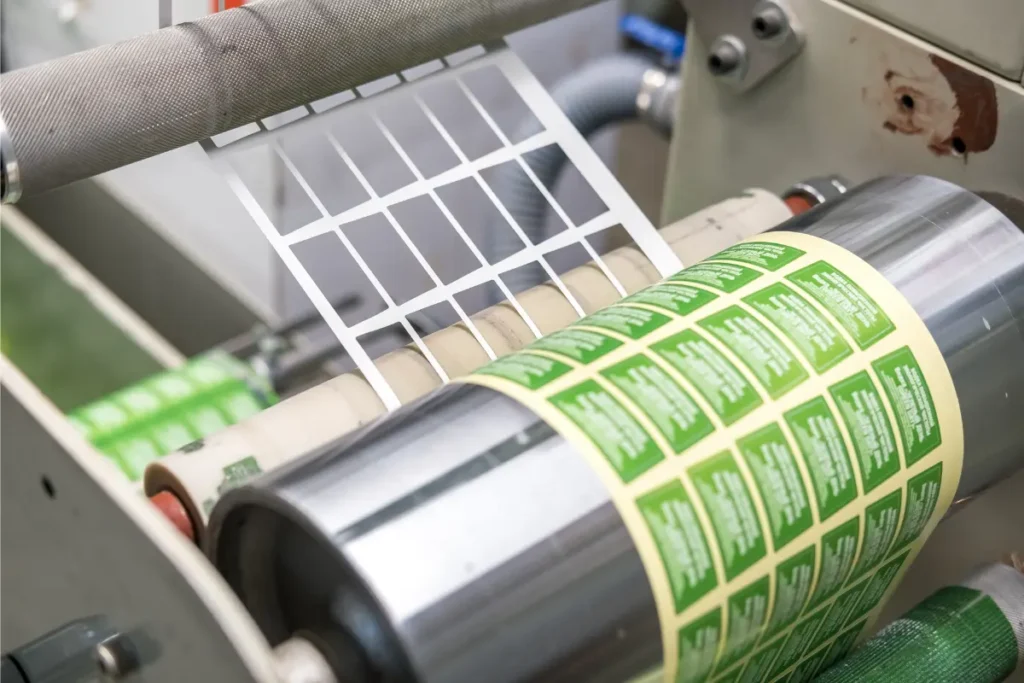
One estimate could utilize lighter paper, while a second could omit the step of folding. Both custom bulk printing quotes must represent the same end-product prior to the comparison of their pricing.
When ordering saddle-stitched booklets, make sure you know what is included in the quoted page count. A 24-page format has four cover pages and 20 inside pages. It is possible that the cover paper will be different than the interior paper.
Brochure dimensions need equal attention. The product page includes a useful reminder.
Give the bulk printing company the open size, finished size, paper stock, printed sides, coating, and fold. Otherwise, two apparently similar quotes may cover different products.
Proof Approval
With print on demand, a correction can be applied to the next small order. A mistake approved for a larger run affects more copies at once.
Check phone numbers, prices, page order, and fold positions before approval. Establish whether the proof covers layout only or also provides a basis for judging color. Retain the approved file and proof with the order.
The Practical Limits Of Buying Ahead
If your print order is delivered too late for your event, then you’ve wasted money on a low-cost wholesale print order. When you order printed products from us, we will provide you with a written estimated delivery date for each of your orders
That is part of your schedule. When you print a booklet, it might require additional work such as binding and/or packaging. Rather than waiting for a dispatch date, find out when the cartons are scheduled to be delivered.
The payment schedule also requires the same degree of focus. Low printing costs per unit can result in a higher initial expenditure and therefore less cash available to fund direct mail or promotional activities.
Before accepting bulk print services, check three practical points.
- The upfront payment fits the campaign budget.
- There is enough dry, protected storage for the order.
- Staff can distribute the stock before the artwork becomes outdated.
For commercial printing orders, request carton counts and packed dimensions if space is limited. Storage needs are easier to assess with those details than with a copy count alone.
A Mixed Schedule For Changing Materials

A business does not need one ordering method for every document. Keep an established service brochure in stock while printing dated offers in smaller quantities.
Custom bulk printing can cover the stable material. Recipients’ names, account references, or individual offer codes are a different requirement. Variable data printing allows those details to change between copies, so specify the data work when requesting a price.
Print on demand remains useful for revised inserts and low-volume materials. Bulk printing can cover recurring needs without forcing every item into the same schedule.
Reorder Timing
The amount of product remaining after each marketing effort has been completed, as well as how many products were either sold or distributed, should be recorded. A new revision date can now be set. You will need to allow sufficient time for your printer to print, proof, and ship additional products prior to placing an order for more products.
A 14-day replacement cycle will use 140 copies if you sell/distribute 10 copies per day. Placing an order for that same amount will provide you with zero buffer against any potential delays.
You should create a safety stock based on the average daily demand you have experienced, in addition to the printer’s estimated production timeline.
Frequently Asked Questions
When does Print on Demand become too expensive?
If you make many small purchases instead of ordering in bulk, it will be more costly in terms of total purchase price, as well as cost of storage and loss due to unsold product. To find out what your final costs are for each copy of the product you anticipate selling prior to an update of the design, calculate the complete print on demand cost for the number of units you plan to sell.
What is the smallest number of items that will make up a large run?
The quantity required to order bulk printing services varies depending on what type of product you need printed, as well as the supplier’s minimum quantity policy. You should ask for pricing at three different real-world quantities and compare your total spend on all three orders instead of just choosing the supplier with the lowest unit cost.
Does Ordering More Copies Improve Quality?
The quantity of products does not make them good. When you order custom printing, there are many factors that you need to take into consideration. These include the type of paper being used, the quality of your image/design (artwork), how the print will be produced (production method), and the final steps in the print process.
Is digital printing appropriate for large orders?
Yes. Digital printing can produce large orders as well as smaller, personalized ones. Ask your printer for estimates for which form of printing would be best (digital vs. traditional offset), depending upon what type of stock you use, and how many items you are having printed.
How Far Ahead Should An Order Be Placed?
Allow for files to be reviewed and approved, then produced and finished, and finally shipped. Lead times will vary based on the project. Get an agreement as to when your product will arrive at its destination prior to establishing a ship date.
Order Against The Forecast
When there’s a possibility that printing on demand can prevent waste or accommodate required modifications to existing materials, then I believe print on demand should be used. However, after you have made multiple orders for identical items, I think you need to request a new quote for each order as long as your use of those items remains constant.
Submit the artwork, the type of usage, the type of paper needed, and the ZIP Code for shipping to Laguna Digital; ask them to provide a comparison of three potential quantity options, each including proof charges, finishing costs, freight expenses, and taxes. Choose which option will meet both your revision deadline and budget requirements.