


The Role of Large Format Printing in Contractor Workflows and Planning
On busy construction sites across the United States, communication needs to be fast, clear, and impossible to misread. That is exactly why visual documentation still plays a major role in everyday project work. Even with advanced digital tools, teams still rely on printed materials to keep work moving smoothly from planning to execution.
Professionals often turn to large format printing services when they need documents that are easy to read from a distance and durable enough for outdoor conditions. These prints help reduce confusion and keep teams aligned on complex builds where every detail matters.
Many experienced project managers also prefer working with reliable printing companies because they understand the urgency and accuracy required in construction environments. When deadlines are tight, having physical plans on hand becomes more than convenience. It becomes a necessity for safety and coordination.
How Visual Printing Supports On Site Decision Making?
Construction Site Coordination Tools
On active job sites, teams need instant clarity when multiple crews are working at the same time. Construction drawings help supervisors communicate updates without delays. This is where construction printing becomes essential for maintaining a smooth workflow across different teams and phases of work.
Floor Plan Interpretation
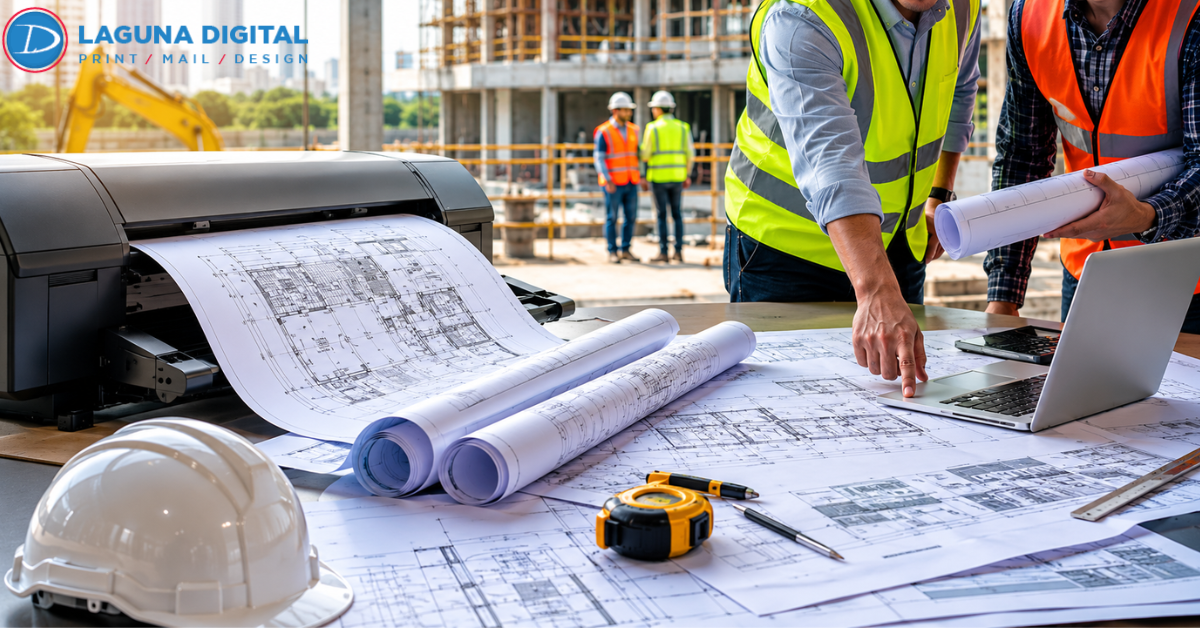
Workers often rely on printed floor layouts to understand structural changes as they happen. Blueprints provide a stable reference point when digital devices are not practical in dusty or outdoor environments. Printed plans ensure accuracy during fast paced decision making.
Visual Project Breakdown Boards
Large visual boards help break complex tasks into simple stages. These boards allow teams to track progress without needing constant digital access. They also improve accountability since everyone can physically see what stage the project is currently in.
Job Safety Communication Visuals
Safety reminders and hazard signs must be clearly visible at all times. Printed visuals placed around the site help reduce risks and reinforce compliance. This simple method continues to play a major role in preventing on site accidents.
Material and Schedule Display Charts
Project schedules and material lists are often displayed in common areas. These printed charts help workers stay aware of timelines and deliveries, ensuring that no step in the construction process is missed or delayed.
How Printed Materials Improve Project Accuracy and Workflow?
Drawing Clarity in Field Work
Blueprints printing are still a critical part of field engineering. Teams use them to verify measurements and structural alignment before making physical changes. This reduces costly mistakes and ensures that construction stays true to design intent.
Outdoor Durability in Project Environments
Weather resistant prints are essential when documents are exposed to sun, dust, or rain. Strong materials ensure that information remains readable throughout the entire project lifecycle, even under harsh conditions.
Project Teams Communication
Different contractors often need to interpret the same information quickly. Printed documents remove confusion that can happen with screen based viewing. This shared visual reference improves coordination across all teams involved.
Event and Site Awareness Displays
Site banners are often used to communicate project branding or key updates to visitors. Banner printing helps create large scale visuals that can be seen from a distance, improving visibility and professionalism on site.
Organized Project Documentation Systems
Keeping physical copies of drawings and schedules helps maintain an organized workflow. Teams can quickly reference older revisions without searching through digital folders, which saves time during fast moving project phases.
Frequently Ask Questions
Why is printed material still used in construction today?
Printed material is used because it is easy to access, does not depend on devices, and can be shared quickly among teams working in different areas of a site
How do contractors benefit from physical drawings?
Contractors benefit from physical drawings because they reduce confusion, improve accuracy, and allow quick referencing during on site decision making
Are printed visuals still better than digital screens?
Printed visuals are often preferred on site because they are visible in all lighting conditions and do not require power or connectivity
What types of prints are most common in construction work?
Common prints include safety signs, layouts, schedules, and large scale project boards that help teams stay aligned during construction phases
How do printing providers support large scale projects?
Many printing companies help contractors by delivering fast turnaround prints that support deadlines and ensure project information is always available when needed
To Sum Up
Even in a highly digital world, physical documentation continues to hold a strong place in construction workflows. From planning to execution, printed visuals help teams stay aligned and reduce costly misunderstandings on site.
Many professionals still rely on trusted partners like Laguna Digital to ensure their project materials are produced with accuracy, clarity, and consistency that field work demands.