

Anti scratch lamination is a thin plastic film with a cured hard coat on its outer face, bonded to the sheet with heat. The film guards the paper. The hard coat guards the film. That top layer is completely clear, so color and gloss level stay as approved. Polypropylene film suits anything that folds, while polyester stays stiffer under heavy card stock.
Film Thickness For Cards And Menus
Film is sold in mils, and one mil measures a thousandth of an inch.
- 1.2 mil to 1.7 mil for a card that lives in a wallet
- 3 mil for pocket folders, covers and rack cards
- 5 mil per side for a menu handled a few times a day
- 10 mil per side for busy menus and table tents
Paper Weight Under The Film
Anything lighter than roughly 105 gsm, about the weight of a heavy letterhead, curls once heat and film reach it. Film on both faces also keeps business cards flat through a humid week. Ask for the film type, thickness and coating in writing before approving a lamination order, because strong lamination services put all three on the quote unprompted.
Dark Card Designs Show Scuff Marks Long Before Light Ones Do
A scratch scatters light, and that turns the damaged spot into a pale line. On cream or pale gray the line hides. In navy or black it reads from across a desk. Surface hardness therefore matters more than the printing finishes on your proof.
Rich Blacks And Heavy Ink Coverage
Plain matte lamination burnishes under pressure, so a stack or a pocket polishes shiny patches into the flat surface. A glossy finish disguises fine scratches because it already throws light in every direction. It also takes a fingerprint the second somebody shakes your hand.
Gloss, Velvet And Hard Coated Matte
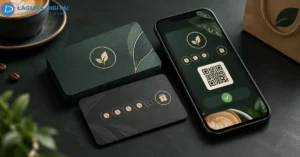
The velvet option is soft touch lamination, and it earns its following. The surface feels like suede, kills glare and resists fingerprints far longer than gloss. Wear appears where a card is handled hardest, as rubbing flattens the texture into a shiny track. A hard coat beneath the velvet removes that weak spot, which is why the pairing leads most comparisons of business card finishes for dark artwork.
A Business Card Order Needs Anti Scratch Lamination On The Spec Sheet
On a business card printing job, film has nowhere to hide. It is small, handled daily, and pressed against keys for weeks.
Card Thickness From 14pt To 32pt
At 16pt with film on both faces, laminated business cards land near credit card thickness and stay stiff enough to resist bending. A 14pt card gets the same face protection but flexes more, and its corners go first. On 32pt stock, custom business cards read as premium and take film without any curl. Most printers group these weights with letterhead and envelopes under business essentials.
Write-On Panels And Clean Trim Edges
Ink slides off a hard coat, so an appointment card needs one filmed face and one bare face. Good business card design also holds dark solids back from the trim line, because the blade can expose a hairline of white paper along a filmed edge. Rounded corners help too, since a square corner catches a pocket seam and starts the first mark.
Menus And Table Cards Take The Heaviest Handling In Print
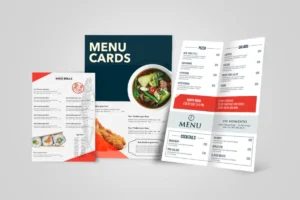
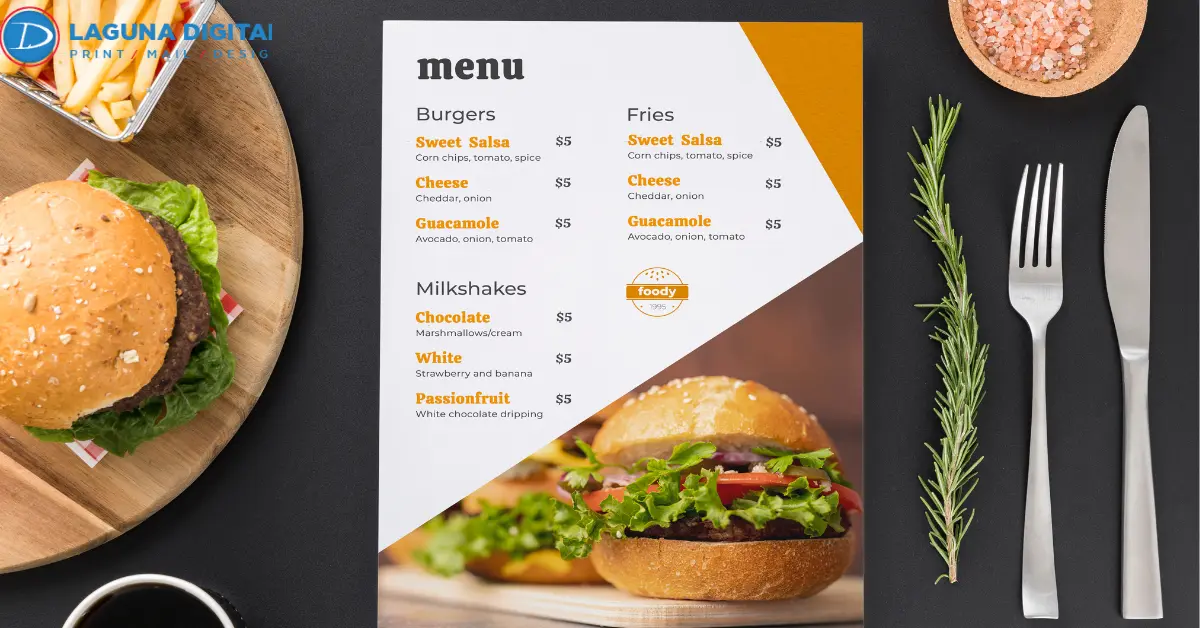
Nothing in a print shop gets abused the way restaurant work does. A menu is opened dozens of times a day, wiped with sanitizer between guests, stacked while damp and dragged across a host stand. Any shop offering menu card printing services without a hard coat is quietly selling a reprint. Anti scratch lamination separates a menu that survives a season from one that looks tired by week three.
Wipe Downs, Spills And Table Friction
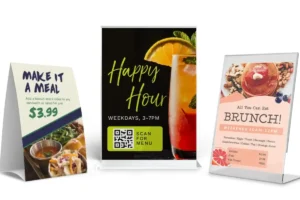
Sealing film past the paper edge stops liquid from wicking in and swelling the core. Custom menu printing for a high-turn room should pair that seal with a hard coat. Counter sanitizer dulls plain matte within weeks. Orange County dining rooms that push brunch through a full weekend see the gap by Monday. Tent cards and the other marketing materials on a table earn the same build.
Run Size And Reorder Costs
A hard coat adds cents per sheet. A reprint costs the whole run again, plus a week of servers apologizing for a hazy panel. Anti scratch lamination pays for itself the first time a reprint never happens. That gap is why bulk menu printing almost always justifies the upgrade. Rooms that reprice quarterly tend to split the job, ordering wholesale menu printing quantities for the core list and short digital runs for inserts.
Two Desk Tests Prove Scuff Resistance Before The Full Run Prints
Any printer can call a film durable. Checking the claim takes five minutes. ASTM International, the standards body most American printers work from, publishes Practice D5264, which measures how print survives rubbing on a Sutherland Rub Tester.
The Thirty Stroke Rub Test
Ask for two finished samples on the final stock, never a house sheet. Rub them face to face thirty times under light pressure. The printing finishes that pass leave dark areas clean, with no pale lines through them. Matte lamination and hard coated matte look identical on screen, so this is the only honest comparison.
Cure Time Before Cutting
The second test is a question. Film needs rest before a sheet is trimmed, folded or die cut, and cutting a warm stack drags film across ink. Write anti scratch lamination on the ticket by name, then ask how long laminated sheets sit before finishing. Careful lamination services log the film lot and the rest time, and even a one-sheet business card printing order deserves the question.
Finishing Trends That Shape Card Durability In 2026
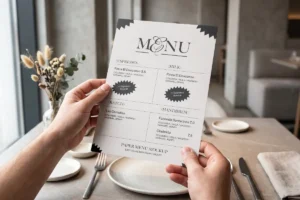
Hard coated matte now sits on many trade price lists as the standard matte option rather than a paid extra, so buyers get the harder surface without asking. Designers keep pairing spot UV with matte laminated printing, since the shine against a flat coat reads as luxury while the flat area no longer scuffs. Custom menu printing has followed the same path on table pieces.
Direct mail drove the other change. The U.S. Postal Service reports that its Advanced Facer Canceller System faces and postmarks letter mail at 36,000 pieces an hour, and every card in that stream rubs metal and other mail. Card decks that once shipped with a glossy finish alone now leave with a hard coat, which is worth pricing into a direct mailing budget.
Frequently Asked Questions About Scuff-Resistant Card Finishes
Does Anti Scratch Lamination Change Color Or Gloss Level?
No. The hard coat is clear, so a matte version matches standard matte and a gloss version matches standard gloss. What changes is hardness. Two samples look alike until you rub them. Then only one shows a line.
Which Business Card Finishes Resist Scuffs On Black Stock?
Hard coated matte holds up best on solid black. Plain matte marks first, gloss hides scratches but shows fingerprints, and soft touch lamination sits between them. Dark laminated business cards also age better on a rich black build than on 100 percent black.
Can Laminated Cards Still Take Foil, Spot UV Or Embossing?
Yes, provided the order of work is right. Foil and spot UV go on after the film, and the finisher should test adhesion first. Business card design files need each effect on its own spot layer. Custom business cards with deep embossing need a film chosen for stretch.
How Thick Should Menu Lamination Be?
Five mil per side carries a menu handled a few times a day. Ten mil suits a room that turns tables all evening. Menu card printing services should seal a border past the paper edge so wiping cannot lift a corner. On bulk menu printing runs, request two spare samples and rub one yourself.
Do Business Cards Need Film On Both Sides?
Film on both faces is the safer default, because a single filmed side curls the card as humidity changes. Leave one face open only when somebody has to write on it.
To Sum Up
Nobody reports a scuffed card. They glance at the hazy panel or the gray lines across a logo and file the company under carelessness. Put the film type and thickness in writing, ask for a sample on final stock, rub it hard, then hold the shop to that spec on every reprint.
For matte laminated printing, wholesale menu printing quantities or anti scratch lamination under one roof, send the files and request a quote this week.