



Posters almost never curl because something went wrong at the press. They curl because paper keeps trading moisture with the air for days after the ink dries. A print that left the shop flat can lift at all four corners within days. Treat printed paper curling as a moisture problem rather than a printing fault, and the fix becomes a paper spec.
Posters Curl Because Paper Keeps Trading Moisture With The Air
Paper takes in water vapor when the air is damp and gives it back when the air is dry. Its fibers also grow fatter across their width than along their length. When one face holds more water than the other, the two sides sit at different lengths and the paper bends toward the drier one.
Two Faces On Every Sheet
The face formed against the wire belt in the mill has fibers lined up tightly in one direction, while the top face dries rougher. Those two sides never react to moisture at the same speed, and that gap causes most curl in coated stock. It is why good poster printing begins with a paper spec.
Humidity Swings In The Room
Print shops keep paper near 72 degrees Fahrenheit and 50 percent relative humidity, the conditions the paper industry tests under in TAPPI T 402. Tape that print to drywall in August, or hang it over a heating vent in January, and the front face gains or loses water faster than the back. Corners react first because they carry the most exposed edge.
Ink Load And Dryer Heat Add A Second Kind Of Movement

Room conditions cause slow background movement. Printing adds a faster kind that hits one face at a time.
Heavy Ink Coverage
Water-based, latex, and dye inks put real liquid onto the printed side. A dark full-bleed background carries several times the ink of a light design. That face swells while wet and shrinks as the liquid leaves, while the dry margins barely move. The sheet bows to settle the difference. Posters printing paper with a decent coating copes better than uncoated stock.
Dryer And Fuser Heat
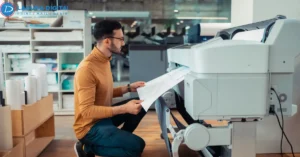
Wide-format printers push heat through the sheet to set the ink, and digital presses run it through a hot fuser. Paper leaves drier and smaller than it went in, then pulls moisture back from the room over a few hours. The dried ink film will not grow with it, and the piece tips toward the print.
Three Paper Specs Decide How Much A Sheet Moves
Paper that does not want to move costs far less than a reprint.
Paper Weight And Thickness
A stiffer sheet resists bending, which makes posters paper weight the strongest thing a buyer controls. An 80 lb gloss text sheet is cheap and flexible, and it suits wall work in quantity. A 100 lb gloss cover, or a 10 mil photo stock near 260 gsm, holds its shape far better. On large format posters at 24 by 36 inches and above, the heavier base pays for itself, because a thin sheet sags under its own weight. Check what the posters you are pricing use.
Matte Versus Glossy Coating
Matte poster paper has a thinner coating and a more open surface, which lets moisture pass evenly and kills glare. Glossy poster paper carries a heavier coating on the image side, which deepens blacks but leaves the two faces unbalanced when the back is bare. A sheet coated on both sides, listed as C2S, evens out that pull.
Grain Direction
Fibers stretch more across the grain than along it, which sets the axis a curl forms around. On a tall piece, grain running with the long edge turns the leftover curve into a soft bow, not two rolled corners. To find the grain, bend a strip both ways without creasing it, and the side that gives way more easily runs with the grain. Most large format poster printing comes off a roll, where grain follows the roll.
Shipping And Storage Habits That Keep A Print Flat
Even the right paper turns up curled if it travels badly.
Tube Width And Roll Direction
Paper remembers the shape it was held in. A print stored two weeks in a 2 inch tube comes out far tighter than one shipped in a 4 inch tube. Ask for the widest tube available, rolled image side outward, which keeps the printed face under tension. Anyone ordering custom posters printing should name the tube width.
The First Day On The Wall
Lay a shipped print flat in the room where it will hang for a day before any tape touches it. Pressrooms do the same with incoming paper, keeping skids wrapped until the stock reaches room temperature. The prints that come back curled are nearly always the ones taken off a cold truck and hung on a warm wall. A poster printing company that mentions this in its notes is telling you how it treats paper. Spare posters belong flat in a portfolio, not loose in a tube.
Ways To Flatten A Print That Has Already Curled?
Most curled prints can be saved, starting with the gentlest method.
Gentle Fixes First
Roll the print loosely against the curl, hold it a minute, then release and repeat twice. If movement remains, weigh it down evenly under a cover sheet with books overnight. When you hang it, anchor the midpoint of every edge, not just the corners, because unsupported edge centers lift first.
Permanent Fixes
Neither method above stops the paper breathing, so both wear off in a humid room. Bonding the print to a rigid board through mounting removes its freedom to move. Avoid steam and spray bottles, because water on one face recreates the imbalance that caused the printed paper curling.
An old pressroom saying still covers it. “Flat paper in, flat paper out.”
Details Worth Confirming Before You Place The Order

The Five Point Spec Check
Bring these five things to the quote and flat delivery gets far likelier.
- Stock name, coating, and posters paper weight in pounds or gsm, not “thick” or “heavy”.
- Whether the sheet is coated one side or both, since C2S holds its shape unframed.
- Grain direction against the finished size, which matters most on large format posters.
- Tube width and the roll direction for shipped work, or flat packing for counter pickup.
- Finishing such as board mounting or a protective film, quoted alongside the run rather than added afterwards.
Rush Jobs And Online Orders
Ordering posters printed online removes the counter conversation, so the product page has to answer those five points in writing. A rush job deserves one more question, because same day poster printing shortens the cooling time a warm sheet normally gets. If the piece will live under shop lighting or outdoors, price lamination is at the same stage.
Frequently Asked Questions
Why Do Posters Curl More In Winter Than In Summer?
Heating dries indoor air far more than people expect. Outside air at 40 degrees and 50 percent relative humidity falls to roughly 15 percent once warmed to 75 degrees indoors, and paper tightens as it gives up that moisture. A humidifier near 45 percent settles every print in the room.
Does Matte Or Glossy Paper Curl Less?
Matte poster paper moves less, because its lighter coating lets moisture pass evenly. Glossy poster paper gives richer blacks and finer detail. Choose the finish the image needs, then order it coated on both sides.
Can A Curled Poster Be Flattened Permanently?
Only by taking away the paper’s freedom to move. Reverse rolling and weighting work on lighter posters printing paper, but both fade in a humid room. Bonding it to a rigid board ends the cycle, which is why mounted posters stay flat.
Is Curling Covered By A Printer’s Reprint Policy?
Usually not, because mild curls develop after delivery and depend on where the print hangs. A poster printing company will reprint for coating faults, cracked ink, or an unapproved stock swap. Check the wording before a large custom posters printing order.
How Long Should A Shipped Poster Rest Before Hanging?
A full day flat in the room where it will hang suits most prints, and two days after cold weather. A rush job from a same day poster printing service needs that rest too, since transit matters more than press speed.
Bottom Lines
Curl is predictable, and that is what makes it preventable. Pick a stock coated on both sides, run the grain with the long edge, ship in the widest tube available, and give the print a day to settle. Those four choices keep most posters flat. Whether you are comparing posters printing online for one event or planning a large format poster printing run for a season, the paper spec matters as much as the design.
Send your size, quantity, and where the print will hang to Laguna Digital and ask for a stock recommendation with the quote. Name the finishing in the same message, and your posters will arrive ready to hang, not ready to fight.