
Header cards create a rigid printed panel above a clear or plain bag. The product stays visible while the card carries the brand, product name, barcode, price, or short instructions. That makes it practical for lightweight retail packaging on peg hooks.
A supplier offering header cards may provide different stocks, coatings, folds, and hanger options. Choose those specifications around the filled package. A bulky item can make a narrow topper curl, while a poorly placed hanger hole can make the finished pack lean on display.
Product Visibility
Clear packaging bags let shoppers see the product before buying. For craft supplies, bath items, accessories, toys, and small hardware, that visibility can matter more than extra artwork.
The format keeps the product in view while adding a defined branding area. Header cards printing also makes SKU updates easier because the printed piece can change without replacing every bag in storage.
Brand Coverage
Custom printed bags put the artwork on the bag. Printed bags provide more room for illustrations, instructions, logos, and repeat patterns, which can suit products that need a stronger branded surface.
More print area helps only when it has a purpose. If the extra space does not improve recognition, information hierarchy, or handling, the added custom packaging may increase cost without improving the buying experience.
Total Packed Cost Matters More Than Print Price
The lowest print quote is not always the lowest-cost package. Compare the bag, printed component, folding, fastening, labor, waste, freight, storage, and the chance that artwork will change before inventory is used.
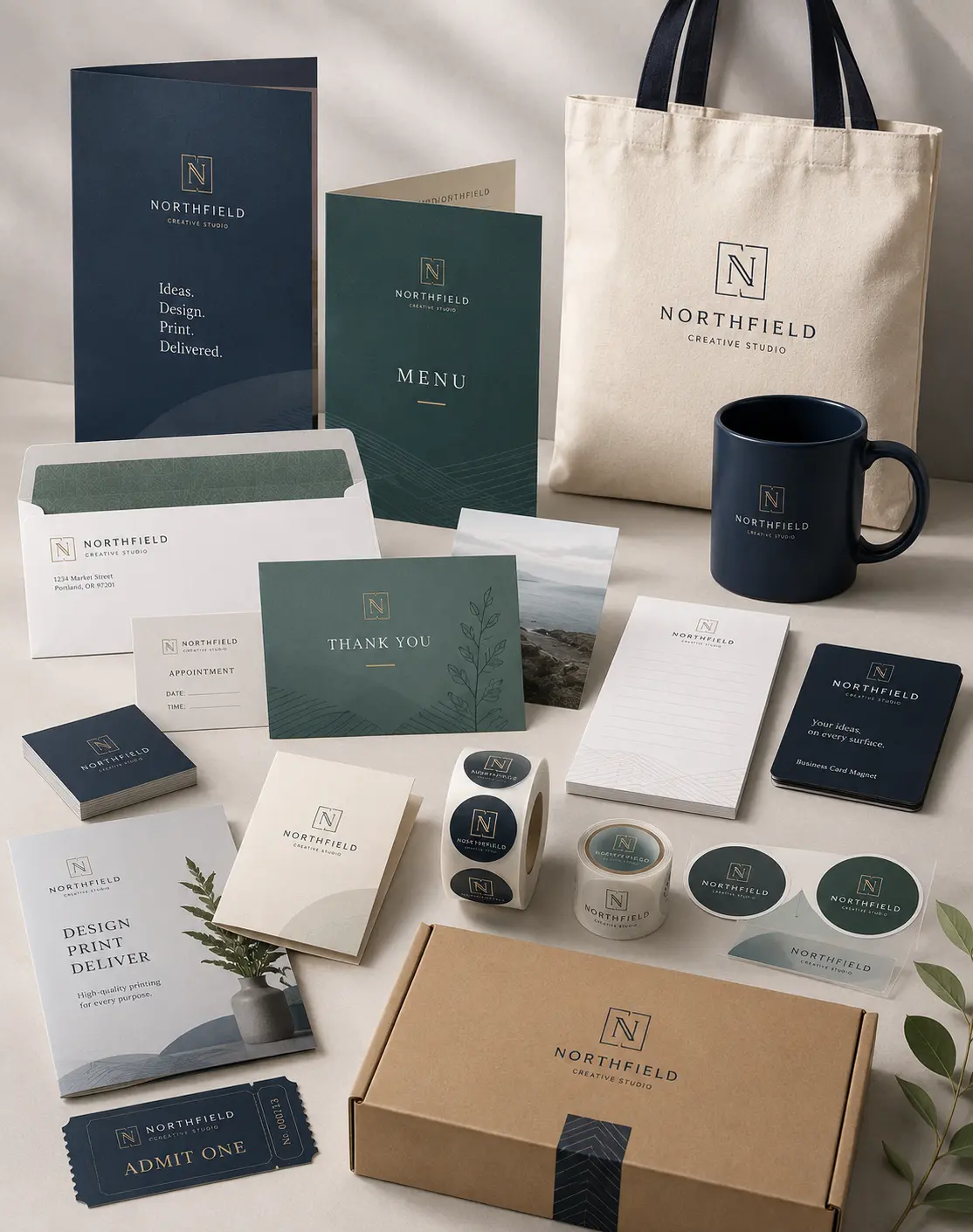
The same thinking should guide custom packaging design. Packaging design should solve a sales or handling problem, not simply fill available space with more graphics.
Short Run Economics
Short runs often favor separate components. One stock bag can serve several SKUs while only the topper changes. Bag topper printing is useful when demand is still being tested or when colors, barcodes, and seasonal details change frequently.
Custom bag printing becomes easier to justify when volume is stable. A dedicated bag creates more inventory commitment, but predictable reorders lower the risk of unused stock.
Packing Labor
A topper may need folding, alignment, fastening, inspection, and final packing. Those seconds are minor at a few hundred pieces and important at several thousand.
Time a batch of 100 sale-ready units. Then compare that labor with printed packaging bags that arrive ready for filling. Packaging printing services should be judged on finished cost per packed unit rather than printing price alone.
Retail Display Reveals Weak Packaging Quickly
Retail packaging can look balanced on screen and still perform badly on a store fixture. Filled weight can pull the card sideways, a bag can sag below neighboring products, or a barcode can disappear behind a fold.
That is why testing belongs before a bulk order. The guide to testing product labels before a bulk order follows the same principle. Test the printed piece on the actual package under real handling conditions.
Peg Hook Performance
Cardstock gives a hanging pack more structure than thin film alone. The hanger hole still needs to match the fixture and the weight distribution of the product.
Hang several finished samples together. Check whether the cards stay level, the closure holds, and one package can be removed without catching the next.
Shipping Protection
Retail-ready packaging and shipping packaging have different jobs. A neat peg-ready pack may still need an outer layer to protect the card from bending during parcel delivery.
For smaller goods, mailer envelopes can protect the retail pack in transit while leaving the primary package focused on shelf presentation.
Packaging Design Must Leave Room for Required Information
Good product packaging makes important information easy to find. The front should establish the product, brand, and main differentiator quickly. Supporting copy can move to the back or another panel instead of competing for attention.
Information Hierarchy
Keep type readable at the actual printed size. Avoid filling every open area simply because custom packaging printing gives you room.
Header cards are particularly useful when the product itself should remain the main visual. A fully printed bag is stronger when the brand needs more surface area, or when instructions would overwhelm a small card.
Compliance Space
For covered U.S. household consumer commodities, the Federal Trade Commission states that packages may need the identity of the commodity, net quantity of contents, and the name and place of business of the manufacturer, packer, or distributor. Other rules can apply by product category.
Reserve that space before artwork approval. Packaging printing services can reproduce supplied files, but compliance details should be settled before production.
SKU Growth Changes Packaging Inventory Risk
One package design may be easy to manage. Six colors and four sizes can create dozens of packaging combinations that must be ordered, stored, and eventually used.
That commitment drops when several variants can share the same bag. Header card printing keeps changing information on the smaller printed component while the common bag remains useful.
Shared Components
A stock bag or neutral container can support several variants when SKU-specific details sit on a replaceable piece. Bag topper printing gives that flexibility without making the final package look unfinished.
When a hanging panel is unnecessary, round stickers can identify a size, flavor, batch, or short-run promotion while the underlying packaging stays the same.
Stable High Volume SKUs
The economics change when one SKU sells consistently. Custom printed bags can reduce separate assembly work and create a more unified appearance. Custom bag printing becomes more practical when artwork changes are rare and reorder volume is predictable.
Printed packaging bags still need inventory planning. Lead time, storage capacity, and reorder points should be decided before a large order is placed.
Matching Quote Specifications Prevents False Savings
Two supplier quotes cannot be compared fairly when one uses a different material, coating, finish, or freight assumption. Build one specification sheet and send the same requirements to every vendor.
For custom packaging printing, record the finished size, filled weight, material, print coverage, coating, closure, hanger style, barcode position, quantity, proofing method, turnaround, freight, and expected reorder volume.
Custom printed packaging should be reviewed as a complete system, not as artwork alone. Custom packaging boxes deserve the same review. They can add protection, stacking strength, and presentation, but they also add material and shipping volume. Custom packaging boxes make sense when the product benefits from that structure.
Production Checklist
Before approving custom printed packaging, complete these checks.
- Measure the product after packing.
- Test the package on the intended retail fixture.
- Scan the barcode after printing and assembly.
- Time a representative packing batch.
- Separate permanent branding from information likely to change.
- Compare storage needs at the quoted quantity.
- Confirm proofing, freight, lead time, and reorder terms.
Are Header Cards Cheaper Than Custom Printed Bags?
They often suit short runs because the bag can remain standard while the printed topper changes. At higher volumes, compare attachment labor with the cost of custom printed bags before deciding.
Which Products Work Best With Header Cards?
They are well suited to lightweight products that benefit from visibility and peg display. Bath items, craft supplies, accessories, toys, and small hardware are common examples.
When Do Printed Bags Make More Sense?
Printed bags become more attractive when demand is predictable, artwork is stable, and removing a separate topper saves meaningful packing time.
Can One Packaging System Support Several SKUs?
Yes. Shared packaging bags can be paired with SKU-specific toppers, labels, or stickers. This keeps the common component usable while the variable information changes.
What Should a Packaging Quote Include?
A useful quote should identify dimensions, material, stock or thickness, print coverage, finishing, quantity, proofing, freight, and lead time. Missing specifications can make supplier comparisons misleading.
Conclusion
The stronger product packaging choice is the one that still works after labor, retail handling, inventory, artwork changes, and reorders are included. Header cards favor flexibility and product visibility, while fully printed formats can become more efficient once volume is stable.
Build one finished sample, test it on the intended fixture, scan the barcode, time the packing process, and compare total cost at several volumes. For help turning those specifications into production-ready packaging, contact Laguna Digital with the finished size, quantity, material, display method, and artwork requirements.