
A sign may look rich and sharp when it goes up, then lose some of that punch after months in the sun. Sometimes the board is still perfectly sound. What has changed is the printed face.
That is the practical issue behind outdoor sign printing. Sunlight, heat, moisture, dirt, and installation angle all affect the graphic differently. A storefront panel facing hard afternoon sun should not be specified the same way as a six-week promotion under an awning. Good results start with the site, not with a material name.
How UV Exposure Changes Outdoor Sign Printing
Ultraviolet radiation gradually breaks down pigments and polymers. On a sign, the change may show up as weaker color, lower gloss, or a face that looks dull beside a newer panel.
Orientation matters too. Avery Dennison lists up to seven years of vertical durability and up to two years of horizontal durability for specific DOL Max overlaminate systems.
Those figures belong to that product system, not every sign, but the difference is useful. Near-horizontal graphics take more direct exposure and tend to hold dirt and water longer.
For outdoor sign printing, that is a better starting point than a vague promise that a material is simply “weatherproof.”
The Installation Site Comes First
Before choosing aluminum, PVC, vinyl, or corrugated plastic, look at where the sign will sit. A west-facing wall in Phoenix, a shaded storefront in Seattle, and a coastal property in Florida create very different demands.
Long-term exterior displays usually deserve more protection than a short promotion. The same is true across several business locations. If one site gets strong sun and another sits under cover, using the same build everywhere may not be the best use of budget.
For rigid storefront, parking, and directional work, aluminum signs can provide a stable face with coating and mounting options.
An outdoor signs printing shop should be able to discuss exposure before recommending a material. If the conversation starts and ends with size and price, an important part of the job is missing.
Ink Alone Does Not Decide Outdoor Life
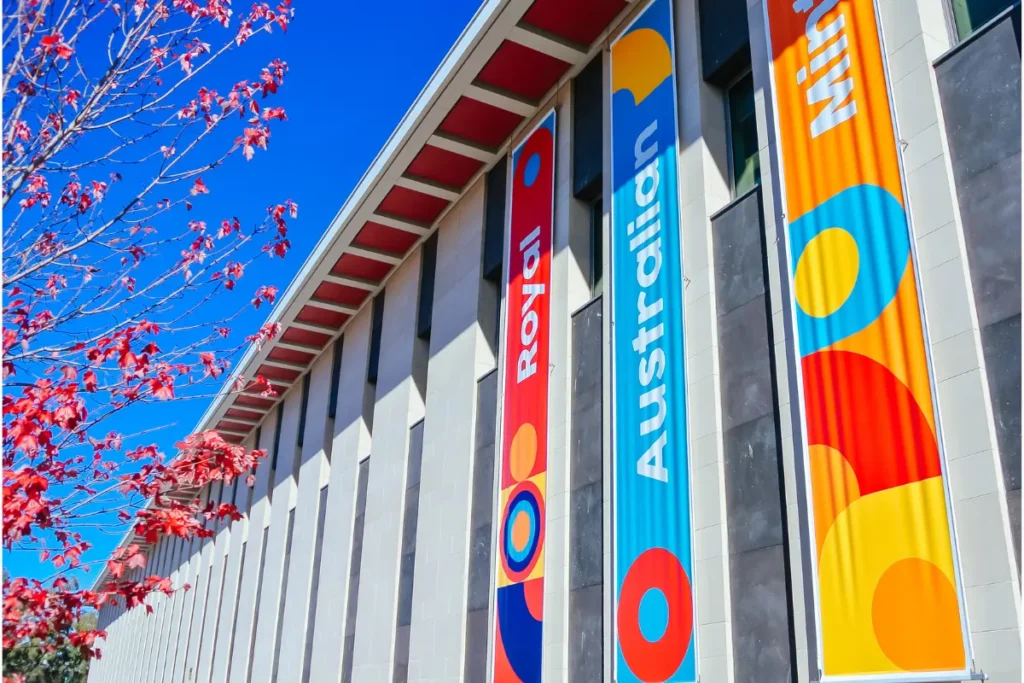
“UV-cured” and “UV resistant” are easy terms to confuse. UV curing describes how certain inks harden during production. It does not mean the finished graphic cannot fade.
UV-resistant ink still relies on the material beneath it and, when used, the protective film above it. Avery Dennison’s current range separates short-term, medium-term, and longer-life overlaminates, while 3M states that selected sign overlaminates protect against environmental factors including ultraviolet light.
That is what UV-resistant printing should mean in practice: compatible components chosen for the same service period.
The same caution applies to UV-resistant signs. A strong laminate over a low-grade film does not turn the entire graphic into a premium exterior system.
Match The Material To The Job Length
There is no single best substrate for every exterior project. Aluminum and aluminum composite suit many rigid, longer-term applications. Corrugated plastic is useful when low weight and short campaign life matter. Flexible vinyl fits banners and applied graphics when the film and finishing match the exposure.
Custom signage printing works best when those choices have a reason behind them. A temporary real-estate sign does not need the same build as a permanent property marker.
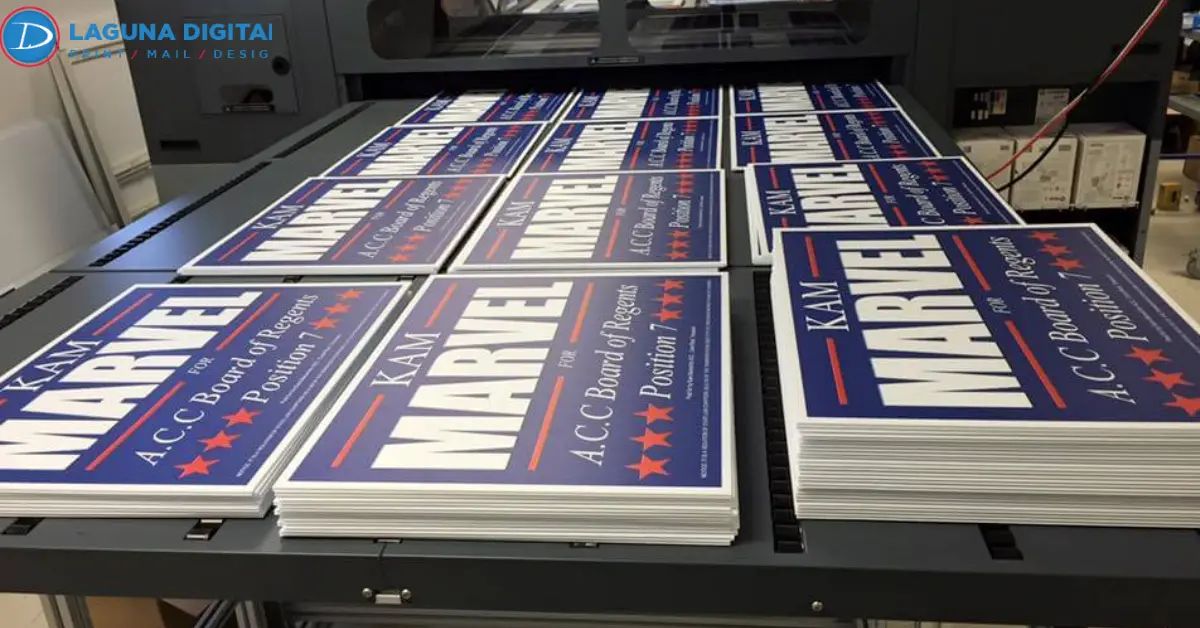
For short campaigns, yard signs are often a more sensible fit than a heavy panel.
Outdoor business sign printing usually deserves a more detailed specification because a premature replacement affects both cost and brand consistency. With outdoor sign printing, expected service life should be stated before the material is approved.
Heat, Wind, And Moisture Matter Too
Sunlight gets most of the attention, but exterior graphics also deal with heat, water, grime, salt, and movement. Adhesives and films expand and contract as temperatures change. Coastal air can be harder on exposed hardware and edges.
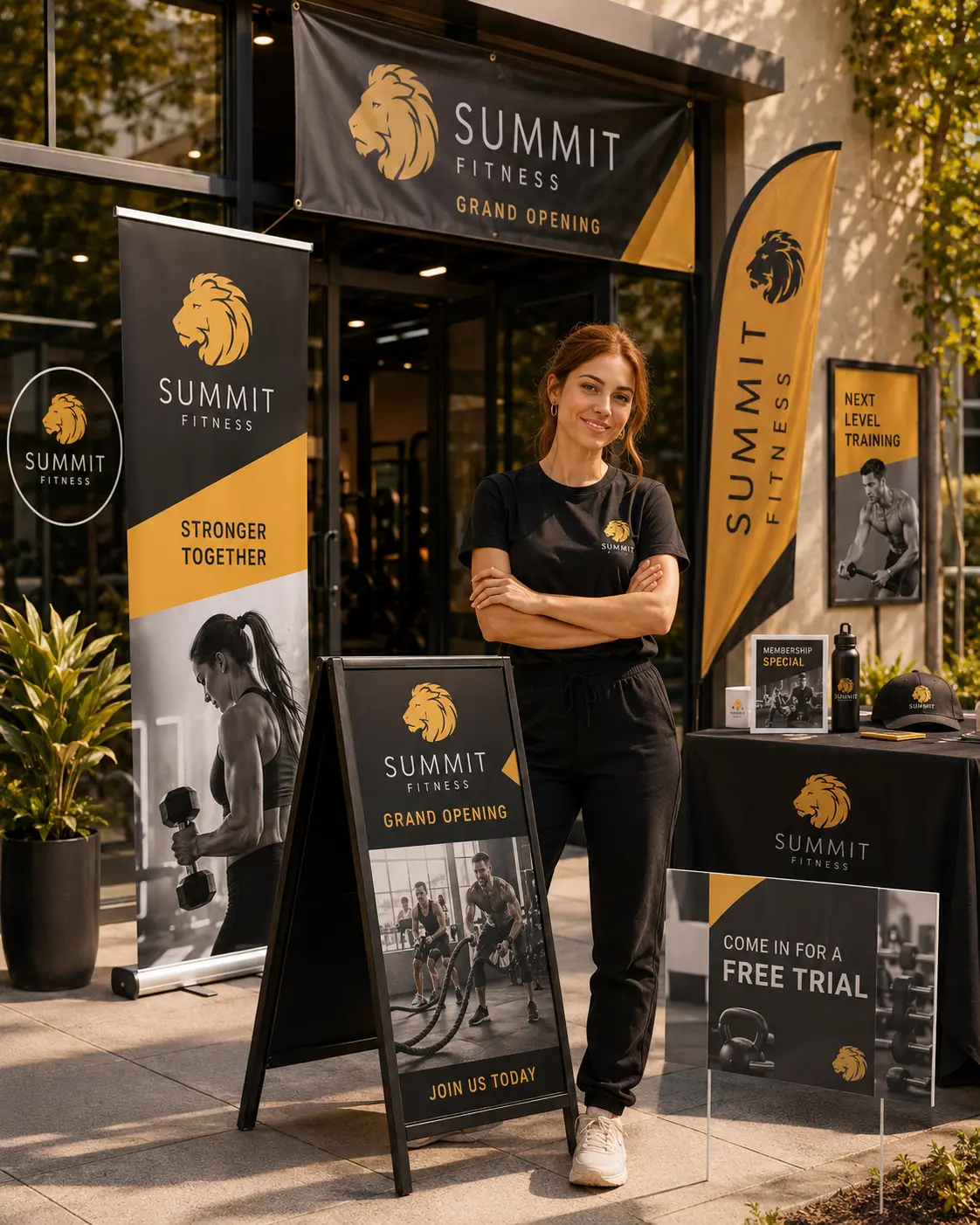
Wind changes the choice for large flexible graphics. A solid banner across an open fence catches much more air than a perforated one. In exposed locations, mesh banners allow air to pass through the material and can be better suited to fences, construction areas, and open sites.
This is where large format printing needs more thought than simply enlarging artwork. The support, finishing, and installation have to suit the size.
Weather resistant signs should be specified for the actual climate, not just placed in a broad “outdoor” category.
Keep Reorders Consistent
Outdoor color change is not always visually even. A replacement panel can make an older neighboring panel look more faded than it seemed the day before.
For repeat custom signs, keep the substrate, print method, finish, and color reference with the artwork. That record becomes useful when one panel is damaged months later.
It also helps with fade-resistant signs across multiple locations. Reordering from artwork alone leaves room for a different film, finish, or board to enter the job.
A reliable outdoor signage printing store should be able to document the specification clearly enough for a future reorder.
Compare Quotes By Construction
Two quotes for the same dimensions may describe very different signs. One might include laminate, drilled holes, and a heavier board. Another may cover only a basic printed face.
For outdoor sign printing, compare substrate, thickness, ink system, protective finish, mounting, orientation, and expected service period. Warranty terms matter too, but only when the covered conditions are clear.
An outdoor sign printing shop should be willing to put the main construction details in writing. The same applies to outdoor business sign printing. A lower price is useful only when the products being compared are genuinely similar.
For buyers who need several formats, the signs and displays collection brings rigid signs, banners, and portable options together without forcing one material to handle every job.
Maintenance Can Preserve A Good Print
Even well-made exterior graphics benefit from simple care. Dust, road film, salt residue, and bird droppings can make a surface look older than it is. Clean with a soft cloth or sponge and a product suitable for the face material. Strong solvents can damage films and protective finishes.
Check corners, fasteners, seams, and exposed edges at the same time. A small lifted edge is easier to deal with before wind or water gets underneath it.
Portable exterior signs should come indoors when they are not needed. Reducing unnecessary exposure is one of the simplest ways to extend the useful life of a temporary graphic.
Durable Outdoor Signs Need A Realistic Target
They do not have to be the heaviest products available. They need to remain presentable for the period the message is expected to work.
A three-month event sign that still looks good when the event ends has done its job. A permanent storefront panel that deteriorates far ahead of schedule has not. That distinction is more useful than chasing the longest durability number on a product page.
A practical outdoor sign printing specification should state where the sign is going, how it will be mounted, what exposure it will receive, and how long it needs to stay in service.
The goal is not permanence. It is predictable performance.
Common Asking Questions
How Long Does Outdoor Sign Printing Last In Direct Sun?
There is no universal lifespan. Outdoor sign printing life depends on the ink, substrate, laminate, orientation, climate, installation, and maintenance. Manufacturer figures are most useful when the exact media system and exposure conditions are known.
Are UV Resistant Signs Completely Fade-Proof?
No. UV-resistant products are made to slow color change and material degradation. Continuous sunlight will still affect printed materials over time.
Does Every Outdoor Sign Need Lamination?
No. Short-term exterior graphics may not justify the added cost. Lamination becomes more useful when a graphic needs longer exterior life or extra resistance to sunlight, abrasion, moisture, and cleaning.
What Makes Fade-Resistant Signs Last Longer?
A suitable substrate, UV-resistant ink, compatible protective film, correct installation, and realistic exposure expectations all matter. Good UV-resistant printing comes from the combination, not one coating alone.
What Should Buyers Ask An Outdoor Signage Printing Store?
Ask about substrate, print method, protective finish, mounting, orientation, expected service life, and cleaning. For large format printing, also discuss wind exposure and how the finished graphic will be supported.
To Sum Up
The strongest outdoor sign printing decisions are made before production. Start with the site, expected life, mounting, and exposure. Once those are clear, the material and finishing choices are easier to defend and compare.
For custom signage printing, include those details in the quote request rather than asking only for the cheapest exterior option. Laguna Digital can then match the format to the installation, whether the job calls for custom signs, weather-resistant signs, or iuaq-fzcw durable outdoor signs.