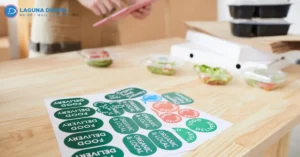



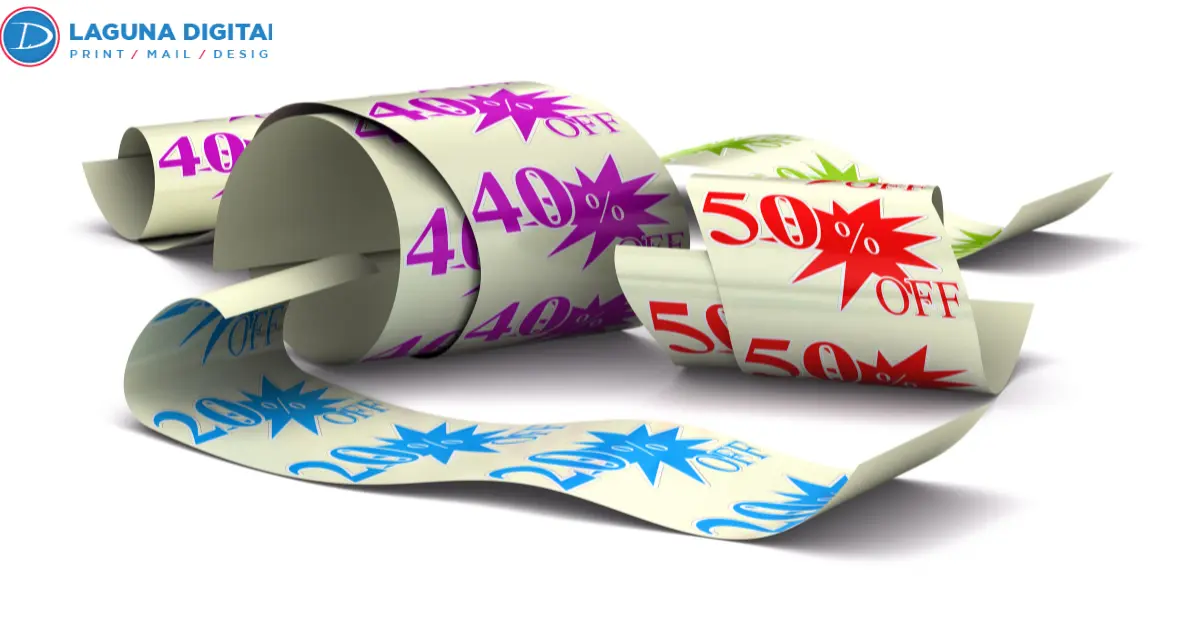
The first few labels peel clean, then the corners start lifting off the bottle before the glue can grab. Curl is the top complaint in short-run label printing, and the ink is almost never the reason. A roll sticker is four materials glued into one web.
Each layer reacts to heat and moisture at its own speed. When one layer moves more than the layer next to it, the whole sandwich bends. Most buyers ordering custom roll stickers blame the press. The way the label bends tells you what really happened.
What Curling In A Roll Sticker Actually Means
Curl is a balance problem, not a print defect. Every roll sticker has four parts. A printable facestock, adhesive, a silicone-coated release liner, and often a topcoat. Paper fibers grow when they take in water and shrink when they give it up. Film layers hold their size.
Roll labels with a paper face on a paper liner cope best, because both halves breathe at the same rate. A film face on a paper liner bonds two materials that want different things. The label and sticker range you order from matters as much as the artwork.
Curl, Flagging, And Tunneling
Three faults get called curling. Curl is the whole roll sticker bending while it still sits on the liner. Flagging is the edge of an applied label lifting off the container. Resource Label Group ties it to a label that is too large or the wrong shape for a curved surface. Tunneling is a bubble trapped under the face after application. Naming the fault saves a reprint.
Face Curl Versus Back Curl
The bend names the guilty layer. Cupping toward the print side means the facestock shrank or the liner grew, usually from shop humidity. Cupping toward the adhesive side means the liner dried out and pulled in. Hold one roll sticker against a flat edge before you call your supplier.
How Press Heat Dries The Liner And Builds Curl Later
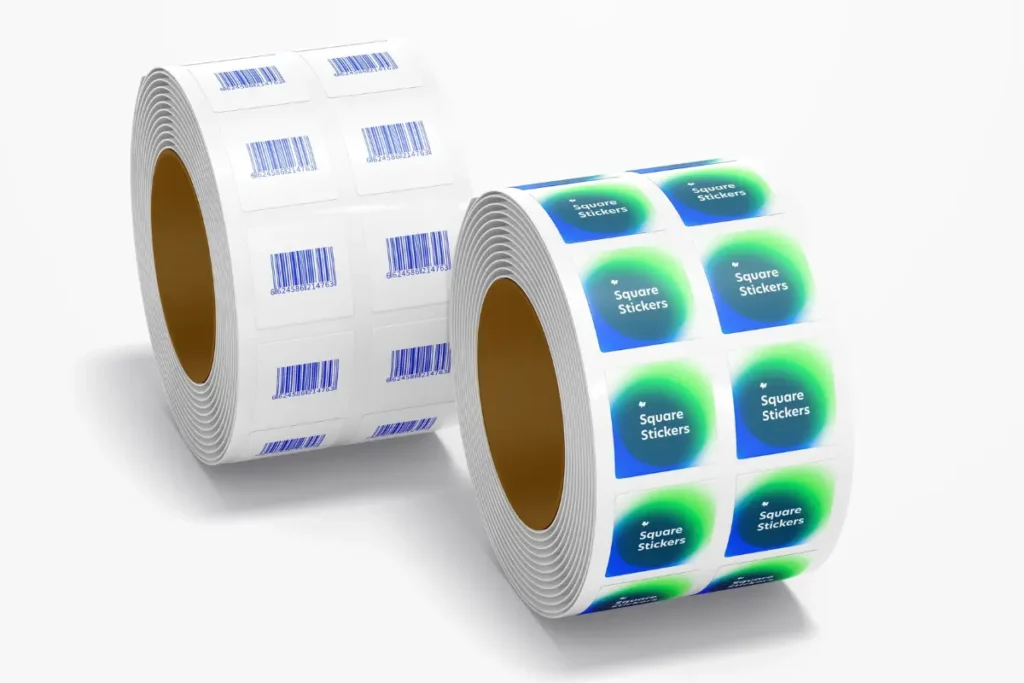
Heat is where most curl begins. On a UV or LED flexo line, curing lamps pull moisture out of the liner in seconds. A toner press fuser does the same. The liner comes off shorter than it went on. Back in shop air, it takes moisture up and grows again, while the film face never changes size. Material makers add water back into liners for this reason. It also explains why a roll sticker looks flat at the printer and cups two days later on your bench.
High-build UV varnish and UV-curable adhesives add a second pull, shrinking as they cross-link and dragging the label edges inward. Shops running sticker printing on short-run digital printing equipment should let the job rest before shipping. Ask for lower rewind tension and an overnight settlement. Finished rolls should feel soft in the hand, never drum tight.
Why Storage Humidity Decides How Flat A Roll Stays?
Paper is hygroscopic. The room your stock sits in is part of the spec. Avery Dennison’s storage bulletin tells converters to keep roll stock in an environment that is “clean and dry”. It sets the target at 72 degrees Fahrenheit, or 22 degrees Celsius, and 50 percent relative humidity. Most pressure-sensitive stock holds its shape between 55 and 85 degrees Fahrenheit at 40 to 50 percent humidity.
Storage is the last step of the print job, not a warehouse chore, and it decides whether the work holds its shape.
Four habits beat any material upgrade.
- Keep rolls in the original poly wrap until you need them.
- Store cartons on pallets or shelving, never bare concrete, which wicks moisture through cardboard.
- Lay rolls on their sides. Standing them on the core lets gravity drag adhesive toward one edge.
- Give every roll 24 to 48 hours in the room where it will be used.
A roll sticker is only as stable as the space it waits in. Custom labels parked beside a dock door or under an air vent will curl anyway.
Which Material And Liner Choices Cut Curl Before Printing Starts?
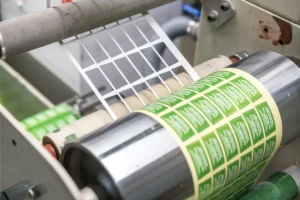
The liner decides layflat behavior more than the face material does. Standard glassine is cheap and prints well, but it trades moisture freely with the air. A polyethylene-coated or PET liner acts as a moisture barrier and keeps the fibers behind the adhesive from reacting to the room.
For product labels bound for a refrigerated case or a humid kitchen, that upgrade fixes the cause. Custom label printing quotes rarely name the liner. Ask for it in writing.
Face Material And Caliper
Thin stock bends easily and keeps its shape. Heavy caliper resists bending but turns stiff, and stiff labels fight curved containers. Vinyl stickers and white BOPP film hold their dimensions well, which suits bottles and squeeze packs. Match the face to the container, not the thickest option on the price list.
Coatings And Laminate Tension
Film laminate stretches a little as it goes on, then pulls back toward its original length. That pull bows the label. Laminate also stiffens the face, which works against wrap-around packaging labels on narrow bottles. Lamination still earns its place for abrasion and moisture resistance. On anything under two inches across, ask for a thinner film or a varnish topcoat.
How Do Core Size And Rewind Tension Build Curl Into The Last Labels?
Roll geometry explains why the final third of a roll misbehaves. Labels near the core sit at the tightest radius the longest and keep that shape as curl memory. Anything over five inches long shows it first. Three-inch cores are the trade standard, with one-inch cores on request. Ask for the bigger core once label length passes four inches.
Two more details belong on every order for roll labels. Confirm the wind direction, the edge of the design that leaves the roll first. An applicator built for a different unwind fights every label. Keep the outside diameter sensible. Two medium rolls of sticker labels run better through a hand dispenser than one oversized roll left half used for a month.
What To Do When A Roll Sticker Has Already Curled?
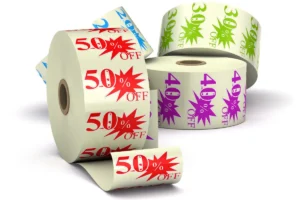
Existing curls are usually fixable at your own bench, and this is one label printing problem that rarely needs a reprint. Unwind the affected length, roll it the other way around a wider tube for a minute, then release. Vinyl stickers and other film faces respond well to back-rolling. Paper product labels flatten better face to face under an even weight for a day.
Technique counts as much as material. Peel the liner away from the label. Lifting the label off the liner stretches the face fibers past their limit and locks in a curve. Peel parallel to the fiber direction, never across it. Work from the center outward on curved surfaces. Warm the label and the container first.
Consolidated Label puts the minimum application window at 40 to 50 degrees Fahrenheit, and adhesives stiffen below it. Square corners lift sooner than rounded ones, and a small radius in the die line is cheap insurance. Strong label design answers to the container shape, not only the artwork.
How To Spec An Order So Flat Rolls Arrive Every Time?
Buyers who hand over these four details rarely file a curl claim.
- Container material, diameter, and whether it is rigid, squeezable, flat, or curved.
- Application method, with core size and unwind position for any applicator.
- Where the roll will be stored and applied.
- The face and liner you want, plus any finish.
Ask for a sample roll next. Leave it in that environment for 48 hours before releasing the full run. Any serious roll stickers printing service will supply one. Experienced label printing services read a container spec before recommending a stock. Custom label printing works best as a conversation about the package. Insist on a written quote that names the liner, the core, and the wind direction.
Frequently Asked Questions
Is Label Curl A Printing Fault Or A Material Fault?
Nearly always material and environment, not a press error. Ink and toner add almost no dimensional change. Liner moisture loss, humidity swings, and laminate tension explain most curl in sticker printing.
How Long Should A Roll Rest Before Labels Are Applied?
Give it 24 to 48 hours in the room where it will be used, still wrapped. The liner reaches equilibrium, and the sticker labels stop moving.
Can Lamination Stop A Roll Sticker From Curling?
Not reliably. It guards the print surface, but adds stiffness and leftover stretch, which can worsen edge lift on packaging labels for small or curved containers. The better tool is a barrier liner.
What Humidity Level Keeps Label Rolls Flat?
Aim for about 50 percent relative humidity near 72 degrees Fahrenheit. Avoid long spells above 60 percent. Custom labels held outside that band gain or lose moisture unevenly.
Why Do The Last Labels On A Roll Curl The Most?
They sat at the smallest radius the longest and kept the shape. A three-inch core, shorter rolls, or back-rolling the tail section clears it. Good label design with rounded corners helps, and careful label printing services flag the risk at quoting.
Bottom Line
Curl is predictable, which makes it preventable. A flat roll sticker starts with the spec, not with the press. Pick a barrier liner, match the face to the container, insist on a loose rewind, and give every roll a day to settle. A pressure-sensitive adhesive keeps building strength for 24 to 72 hours, so judge the job the next day. Roll stickers ordered this way behave on the line.
Send your container details and artwork to Laguna Digital and ask for a sample roll of custom roll stickers on the stock you plan to run. Test it on your own bottle, in your own storage room, for 48 hours. Then place the full run with a roll sticker printing service that puts those details in writing.