How Hand Sanitizer Stickers Help in Consumer Awareness

We’ve all seen it happen. You walk into a coffee shop, a bank, or a retail store, and the first thing you look for isn’t the product—it’s the hand sanitizer. In the last few years, our collective “hygiene radar” has sharpened. We don’t just casually sanitize anymore; we look for it, we expect it, and consciously or not, we judge a business by how they present it.
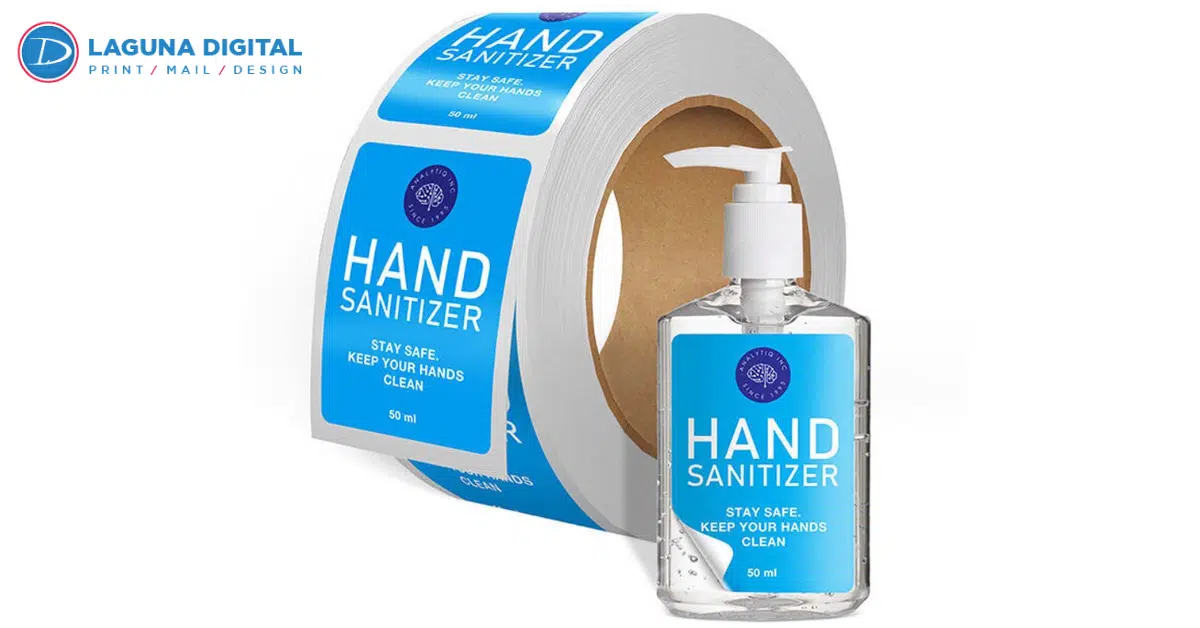
As a printing and marketing professional, I’ve worked with countless business owners who treat hand sanitizer as just another expense—a generic bottle thrown on a counter. But I’ve also worked with smart brands that see that bottle as prime real estate. They understand that a custom hand sanitizer sticker isn’t just a label; it’s a handshake. It’s a way to say, “We care about your safety,” while reinforcing their brand identity in a split second.
At Laguna Digital, we’ve seen firsthand how a simple adhesive label can transform a commodity product into a powerful consumer awareness tool. Let’s dive into why these small stickers make such a massive impact and how you can use them to elevate your brand.
The Psychology of Safety and Branding
When a customer reaches for a sanitizer bottle, they are in a vulnerable moment. They are thinking about germs, safety, and cleanliness. If they see a generic, peeling label or a suspicious unbranded bottle, their trust wavers.
However, when they see a crisp, professionally printed sticker featuring your logo and clear safety information, the psychological response shifts. It signals competence.
In marketing, we call this “signaling.” A high-quality sticker signals that you haven’t cut corners. If you care enough to brand your safety measures, the customer assumes you care enough to deliver a quality service or product. This is where consumer awareness starts—not with a billboard on the highway, but with the small, tactile interactions inside your space.
Turning “Dead Space” into Mobile Billboards
One of the most overlooked opportunities in physical marketing is the concept of “mobile inventory.” If you are giving away pocket-sized sanitizers at a trade show or corporate event, those bottles act as mobile billboards.
I once worked with a real estate agent who struggled to stay “top of mind” with her clients. We swapped her usual business cards for travel-sized sanitizers with custom hand sanitizer stickers.
The result? People didn’t throw them away. They kept them in their cars, purses, and desks. Every time they cleaned their hands (which is multiple times a day), they saw her face and logo. That is the definition of high-frequency consumer awareness.
For businesses looking to implement this, checking out our range of labels and stickers is a great place to start brainstorming how your brand can travel with your customers.
Regulatory Compliance: The Trust Factor
Here is a common mistake I see often: businesses designing stickers that look pretty but fail to meet legal standards. Consumer awareness isn’t just about knowing your brand exists; it’s about knowing your product is safe.
If you are labeling hand sanitizer, you are technically labeling an Over-the-Counter (OTC) drug regulated by the FDA. Your sticker needs to do more than just look good. It often requires:
-
A “Drug Facts” panel: Listing active ingredients (usually Ethyl Alcohol).
-
Usage directions: Clear instructions on how to apply.
-
Warnings: Flammability and “Keep out of reach of children” notices.
When a consumer reads a label that is compliant and informative, they trust the product. If the text is blurry or information is missing, it feels like a “garage-made” concoction. Using professional digital printing ensures that even the fine print on the back of a small bottle is legible and sharp, maintaining that crucial trust.
Design Best Practices for Maximum Impact
So, how do you design a sticker that pops but remains professional? Over the years, we’ve identified a few “golden rules” for safety labels.
1. Material Matters More Than You Think
Hand sanitizer bottles get wet. They get squeezed, tossed in bags, and handled by sticky hands. If you print on standard paper, that label will disintegrate in two days. You need durable, water-resistant materials like vinyl or BOPP (polypropylene).
We often recommend printing a stickers sheet for smaller runs, allowing you to test different durable materials before committing to a massive roll.
2. High Contrast for Readability
Don’t use yellow text on a white background. Safety implies clarity. Use high-contrast colors—dark text on light backgrounds or vice versa. This is especially important for the ingredient list.
3. Don’t Overcrowd the Logo
A common design error is making the logo so big that it pushes the safety info off the edge. Balance is key. Your logo should be the “hero” of the front panel, while the regulatory info sits neatly on the side or back.
For brands that have high-resolution imagery or complex logos, our photo printing services ensure that your branding doesn’t lose its luster when shrunk down to a sanitizer label size.
Integrating Sanitizer Stickers into a Broader Campaign
A sticker on a bottle shouldn’t live in isolation. It works best when it echoes the message of your other marketing materials.
Imagine walking into a conference. You see a large banner at the entrance welcoming you. You check in at a booth that matches that banner. Then, you’re handed a sanitizer bottle that matches the booth. That consistency builds a cohesive memory.
When we help clients plan events, we often bundle their sticker printing with other marketing materials like flyers or brochures. It creates a unified visual language. If you have a physical location, ensure your banners, posters, and signs communicate the same safety and brand values as the bottle on your counter.
The Versatility of Custom Stickers
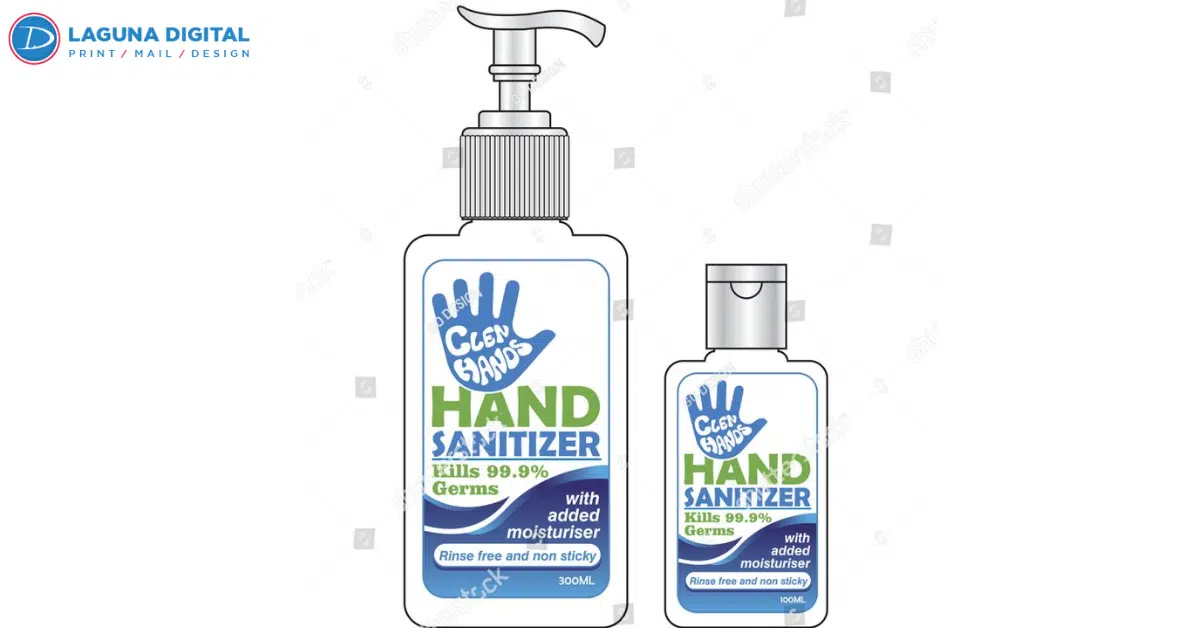
One practical insight I’ve shared with many restaurant owners is the versatility of these stickers. You don’t always need to buy pre-branded sanitizer. You can buy bulk generic bottles and brand them yourself in-house using high-quality custom stickers.
This is often more cost-effective and allows for rapid changes. Did you change your seasonal menu? Update the sanitizer sticker to feature a QR code linking to it. Did you launch a new service? Put a “Ask us about X” teaser on the bottle.
For businesses that publish physical content, such as manuals or guides, linking this strategy with book printing can be a unique angle—imagine a branded bookmark and a flat sanitizer spray included as a “reading kit.”
FAQs
What is the best material for hand sanitizer labels?
Vinyl or BOPP (Biaxially Oriented Polypropylene) is best. These materials are waterproof, oil-resistant, and won’t peel or smudge when exposed to the alcohol in the sanitizer.
Do I need to include a Drug Facts panel on my custom sticker?
Yes, if you are manufacturing or re-labeling sanitizer for sale or public distribution, you generally need to comply with FDA labeling regulations, which includes a Drug Facts panel.
Can I print these stickers on a home printer?
Technically, yes, but it is not recommended. Home printers usually use ink that smears when wet. For a trustworthy look, professional digital printing with UV-cured or solvent inks is essential.
What is the standard size for a pocket sanitizer label?
Common sizes are 1.25″ x 2.25″ for small 2oz bottles, but it varies by bottle shape (oval vs. round). Always measure the flat surface of your specific bottle before ordering.
How do stickers improve consumer awareness?
They act as a “repeated impression.” Every time a user interacts with the bottle, they engage with your brand. It’s a high-frequency, low-cost touchpoint that builds familiarity.
Can I put a QR code on a sanitizer sticker?
Absolutely. It’s a great strategy. Since the user is holding the bottle for a few seconds to let their hands dry, they have a moment to scan a code for a menu, a discount, or a website.
Conclusion
Hand sanitizer stickers might seem like a minor detail in the grand scheme of business, but in a world that values hygiene and transparency, they are a major asset. They bridge the gap between safety compliance and brand storytelling.
Whether you are a local cafe looking to reassure diners or a corporate entity distributing thousands of bottles at an expo, the quality of your label reflects the quality of your brand. Don’t let a peeling, generic sticker tell the wrong story.
If you’re ready to elevate your brand’s safety standards with professional printing, we’re here to help. Explore more insights on our Laguna Digital Blog or reach out to us to start your next project. Your customers are reaching for safety—make sure they’re reaching for your brand, too.