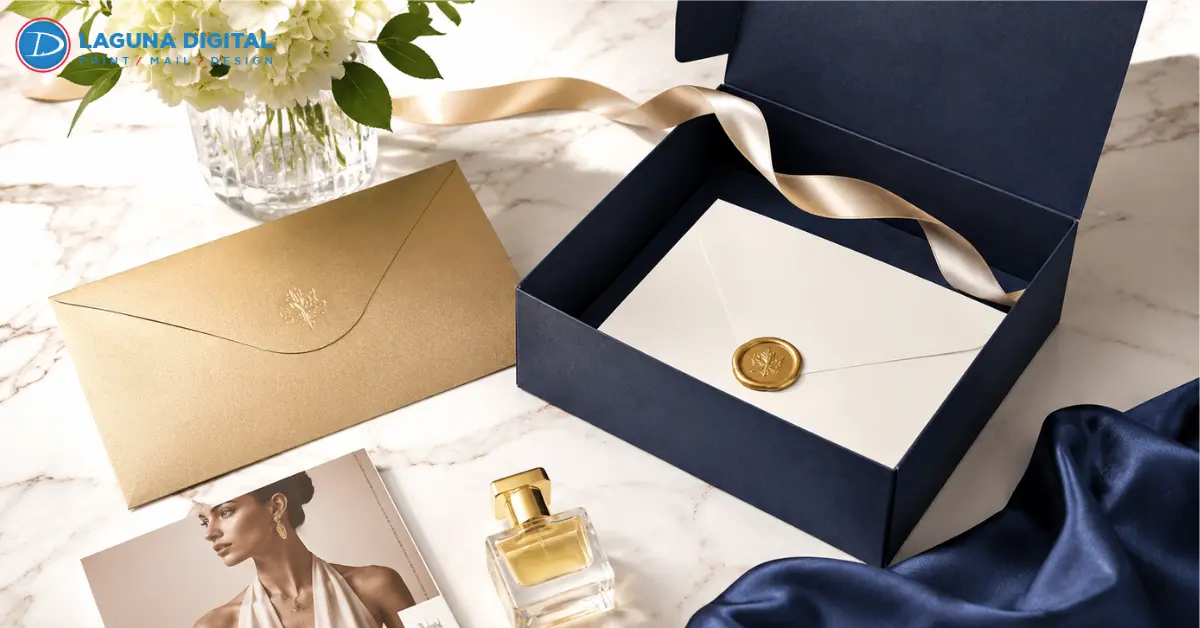
Luxury brands continue to use premium direct mail because physical presentation can express quality before a recipient reads the first sentence. Paper weight, texture, color accuracy, and finishing create signals that are difficult to reproduce on a screen. With a carefully selected audience and one clear response path, the format can support appointments, launches, events, and customer reactivation.
The value does not come from expensive paper alone. It comes from the connection between the audience, offer, design, and delivery moment. A restrained piece sent to a valued customer can feel personal; one sent to the wrong household is wasteful.
Physical Presentation Gives Luxury a Tangible Form
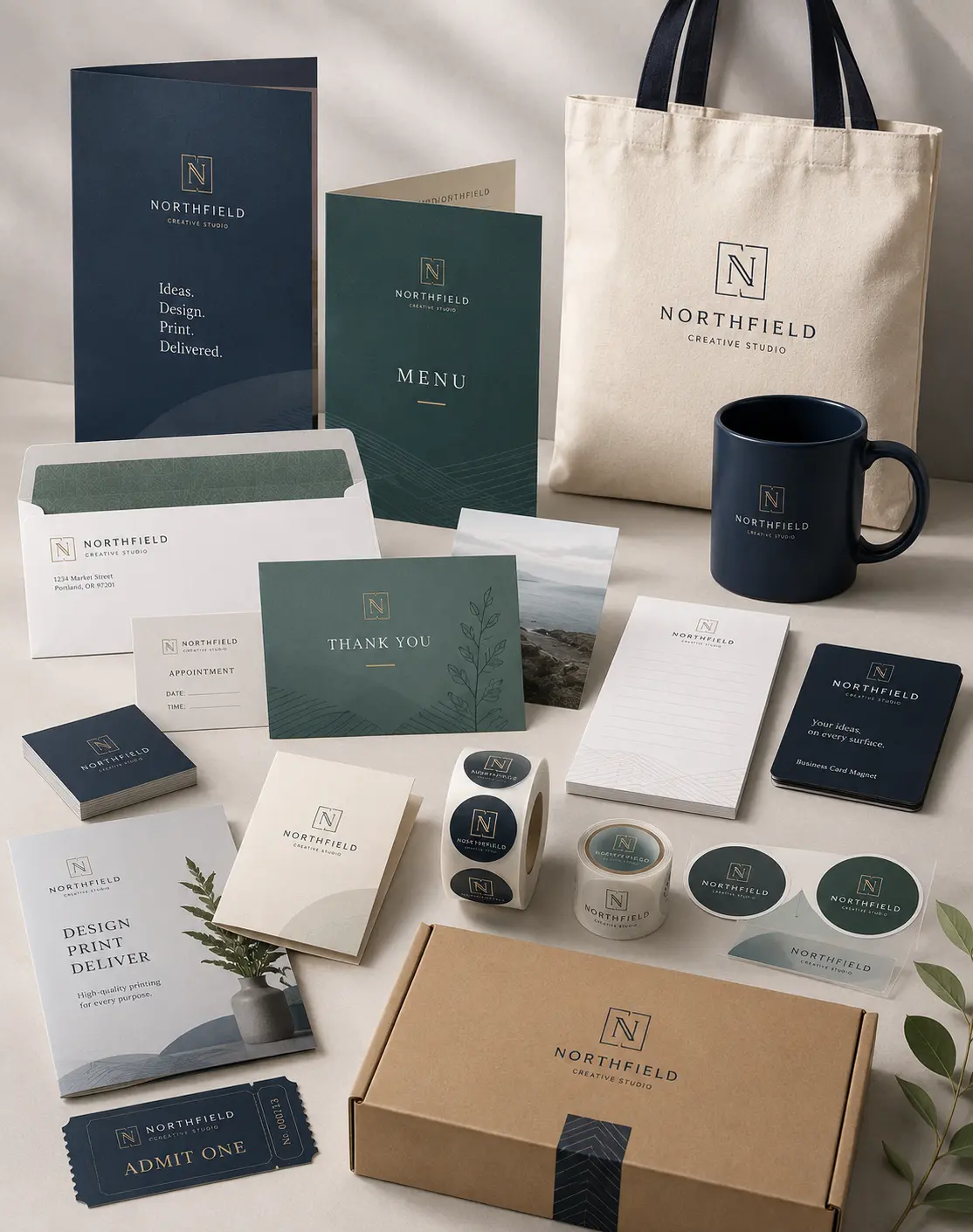
Luxury is often judged through details. The resistance of a thick envelope, the clean edge of a card, or a subtle embossed mark can shape an impression before the product is shown. Premium direct mail gives the brand control over that first physical encounter.
This is where print marketing has an advantage. A screen can display photography, but it cannot recreate texture, weight, folding, or an intentional reveal. Jewelry may suit precise photography and metallic detail, while skincare may favor softer finishes.
Begin the design brief with three intended impressions, such as discreet, modern, and collectible. Every production choice should reinforce them. Anything that distracts from the message should be removed.
Exclusivity Depends on Who Receives the Piece
A luxury message feels exclusive only when the recipient understands why it was sent. Premium direct mail marketing performs best when the audience is built around relationship value, category interest, timing, and location rather than broad demographic assumptions.
Useful segments include high-value customers, inactive private clients, category collectors, or nearby guests. A mailing list provider can supplement first-party records, but external data still requires suppression rules, address hygiene, and privacy controls.
Segmentation should change the message. Recent buyers may receive early access. Lapsed customers may receive a service-led invitation instead of a discount. This form of personalized marketing respects the customer’s history.
Premium Presentation Protects Price Perception
Luxury brands cannot rely on constant discounts without weakening their prices. Premium direct mail creates room to lead with access, expertise, provenance, limited availability, or personal service.
A private viewing, appointment, reservation window, or invitation-only preview can create urgency without sounding desperate. That distinction matters in direct mail marketing because the offer must generate action while preserving perceived value.
The call to action should be restrained and specific. “Reserve a private viewing” is stronger than “Shop now.” “Request a curated selection” suits a considered purchase better than a generic discount code.
Personalization Should Change More Than a Name
A first name at the top of a letter is not enough. Effective premium direct mail may change the product selection, imagery, location, offer, language, or appointment details according to the recipient.
Variable data printing enables those changes at scale, but the logic matters more. A repeat buyer in one category should not receive a generic assortment. A local event invitation should not lead to a national homepage.
Good personalized marketing removes irrelevant choices and gives the recipient a clearer reason to respond.
Print and Digital Must Continue the Same Experience
Offline marketing works best when the physical piece begins a journey that the digital destination completes. A QR code, personalized URL, appointment form, or response code can connect a mailer with measurable action.
The transition must feel seamless. Premium direct mail with refined photography should not lead to a cluttered page filled with unrelated offers. The page should repeat the same product, imagery, deadline, and service promise.
Choose one conversion goal before production: an RSVP, consultation, store visit, private purchase link, or sample request. Conversion attribution becomes clearer when every piece supports one action.
Operational Accuracy Is Part of the Brand Experience
A campaign can fail because of a misspelled name, outdated address, damaged envelope, broken QR code, or late delivery. Each error contradicts the intended sense of care.
A professional mail sorting service can support barcoding, presorting, address preparation, and production flow. A mailing lists provider can improve prospect data quality, but the brand should still define who qualifies, who is excluded, and how records are updated.
Before release, approve the physical proof, envelope fit, fold sequence, insert order, color, personalization fields, and digital destination. The finished piece should be treated as a complete customer experience.
A Practical Framework for Planning the Campaign
1. Define One Outcome
Choose the result that matters most: event attendance, reactivation, private appointments, collection discovery, or qualified inquiries.
2. Set Narrow Audience Rules
Document purchase history, customer value, geography, timing, category interest, exclusions, and list sources.
3. Match the Format to the Message
A postcard suits a concise announcement. A folded invitation creates anticipation. A letter carries a personal message. A catalog supports deeper discovery.
4. Select One Memorable Detail
A textured stock, numbered insert, unusual fold, edge finish, or distinctive envelope can create recognition. Using every available effect usually creates noise.
5. Build the Response System Before Printing
Prepare the landing page, tracking, confirmation message, CRM fields, and sales follow-up before production. Direct mail marketing becomes easier to measure when the response process is ready before delivery.
6. Confirm the Production Timeline
Specialty stocks, custom envelopes, finishing, personalization, and postal preparation require time. Event-led marketing campaigns should allow for proofing, production, delivery, and follow-up.
7. Test Before Expanding
A controlled test can compare audiences, offers, creative treatments, or response paths for a specific segment.
Match the Format to the Business Goal
| Campaign Objective | Suitable Format | Primary Action | Main Measure |
| Private event | Formal invitation | Confirm attendance | RSVP rate |
| Client reactivation | Personalized letter | Book a consultation | Reactivated customers |
| Collection launch | Lookbook or catalog | Explore collection | Visits and purchases |
| Local appointments | Premium postcard | Reserve a viewing | Appointments booked |
Mistakes That Make a Luxury Mailer Feel Ordinary
The first mistake is assuming cost automatically creates quality. Heavy stock, foil, embossing, coatings, and die cutting can work, but crowded composition or poor typography will still feel unrefined.
The second is writing too much. The piece needs enough information to establish relevance and direct the next step, not explain every product feature.
The third is broad distribution. A smaller, better-qualified audience usually gives the creative work a stronger chance to perform. A mail sorting service can improve execution, but it cannot repair weak targeting.
Sustainability claims also require care. Sustainable paper sourcing and reduced packaging can support responsible print marketing, but environmental statements should be specific and verifiable.
Measure Response Quality, Not Only Immediate Sales
Offline marketing often influences decisions completed through another channel. A recipient may scan a code, visit a store, call an advisor, or return later through branded search. Measurement should include direct and assisted responses.
Track scans, landing-page visits, consultations, RSVPs, purchases, reactivated customers, and attributed revenue. Store teams should record whether customers mention or bring the piece to an appointment.
For higher-value marketing campaigns, compare immediate revenue with gross profit, customer lifetime value, and audience importance. Premium direct mail should be judged against response quality and relationship value, not only short-term orders.
Frequently Asked Questions
Why Is Direct Mail Effective for Luxury Brands?
Direct mail gives luxury brands control over material quality, presentation, timing, and audience selection while supporting measurable appointments, events, or purchases.
What Makes a Luxury Mailer Feel Premium?
Suitable stock, accurate color, disciplined typography, relevant personalization, restrained finishing, and flawless production create a coherent premium result.
Which Formats Work Best for High-End Campaigns?
Invitations, letters, refined postcards, lookbooks, catalogs, and dimensional packages can work. The right choice depends on the audience, response goal, and production timeline.
How Should a Luxury Brand Personalize a Campaign?
Use purchase history, category interest, location, or relationship status to change the offer, imagery, product selection, or service message.
How Can Response Be Measured Accurately?
Use dedicated pages, QR codes, personalized URLs, response codes, CRM tracking, matched audience analysis, attribution windows, and recorded offline responses.
Conclusion
Luxury communication succeeds when every detail supports the value of the offer. Premium direct mail can create attention, privacy, anticipation, and sensory control, but only when the audience, message, production, delivery, and response path work together.
Prepare a campaign brief defining the audience, objective, format, personalization rules, production detail, tracking method, and delivery date. Then request a coordinated review covering creative, printing, data preparation, sorting, and mailing.
A full-service partner can identify production risks early, protect brand marketing, and turn a strong concept into a measurable customer experience.