

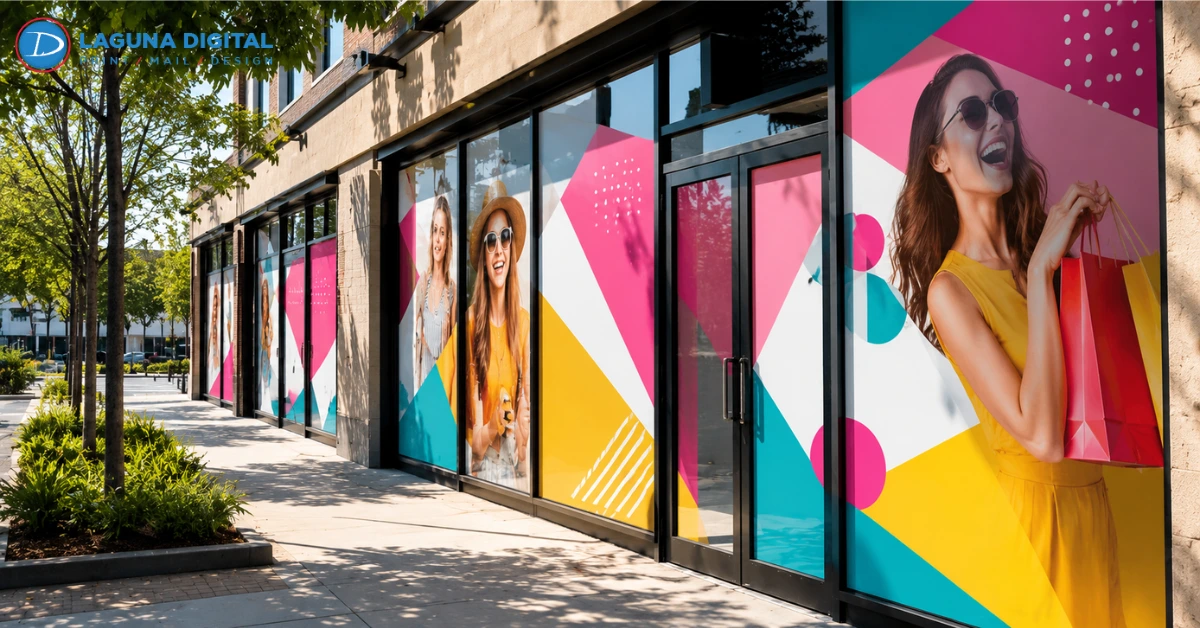
A blank storefront does not explain what is available or why someone should enter. Printed glass graphics give that space a clear purpose, from introducing a seasonal offer to directing customers toward a featured product.
The strongest display presents one message, supports it with relevant products, and makes the next step obvious before a passerby reaches the door.
Choose one promotion per viewing area, keep essential wording large, select a material suited to the display period, and track one response such as redemptions, featured-item sales, or campaign-page visits.
Give Every Pane a Clear Job
Before choosing colors or photographs, decide what the glass needs to accomplish. Window clings can announce an opening, promote a short sale, introduce a service, or support a recurring event. Each pane should contribute to that purpose instead of competing for attention.
Start with three questions:
- What should people notice first?
- Which detail explains the offer?
- What action should happen next?
For an apparel store, the sequence might be “New Summer Arrivals,” “Lightweight Styles for Women and Men,” and “Shop the Collection Inside.”
Keep permanent retail signage separate from temporary campaign copy. Store hours, accessibility information, and entrance directions need consistent placement. A promotion can then change without disturbing essential details.
This planning keeps storefront marketing tied to one goal: walk-ins, inquiries, appointments, or sales of a featured category.
Match the Product to the Campaign
The display period should guide the product choice. Custom clings can suit temporary messages, but removability and reuse depend on product specifications, surface condition, handling, and storage.
Window decals may use adhesive and can suit information that must stay in place longer. Vinyl graphics cover a broader group of products, including clear, opaque, perforated, removable, and more durable films. The correct option depends on visibility, mounting position, sunlight, weather exposure, and glass condition.
Ask the printer to confirm:
- Inside or outside mounting
- Clear, white, or opaque background
- Correct reading direction
- Repositioning or reuse limits
- Recommended installation method
- Removal and storage instructions
Custom decals can support pickup instructions or payment details. Keep them secondary, and ensure essential business signage remains readable nearby.
Some specialty films support first- or second-surface application, while perforated products can preserve some outward visibility. Check compatibility before production.
Design for the Sidewalk View
A layout that looks polished on a laptop may fail at full size. Glare, frames, handles, parked vehicles, and reflections can interrupt the message. Custom clings should be judged at the storefront.
Use a simple hierarchy:
- Lead message: the product, event, or offer
- Supporting detail: the most useful condition or benefit
- Action: enter, scan, call, book, or shop
Strong window graphics use contrast and spacing to separate these levels. Thin lettering, long sentences, and low-contrast combinations become difficult to read outside. Storefront graphics should also account for frames and gaps so an important word is not split between panes.
Effective visual marketing guides the eye in order. When the layout feels crowded, remove the least important item and test again.
Place a reduced proof in position and view it from the sidewalk, parking area, and main approach. Ask someone unfamiliar with the campaign to explain the offer after a brief look.
Connect the Window to the Store Interior
The printed message and the products behind it should tell the same story. If the glass promotes summer clothing, heavy outerwear should not dominate the scene. Coordinated retail displays make the promise feel credible.
Use promotional graphics to support one collection, service, event, or price point. Props and lighting should strengthen that focus. Store signs just inside the entrance can continue the message by directing customers toward the promoted area.
Window advertising creates interest, but the store must complete the experience. The promoted product should be easy to find.
Map the journey before installation:
- Outside: the reason to stop
- At the door: the reason to enter
- Inside: the promoted item’s location
- At checkout: the offer confirmation
A coordinated set of custom clings helps turn storefront marketing into a connected customer journey.
Measure and Proof Before Ordering
Measure the visible glass area, then note frames, handles, locks, seals, and existing stickers. Photograph each pane straight on and label its dimensions.
When ordering custom clings, state whether the dimensions refer to the full pane or the intended printed area. Do not expect the production team to guess how much clear space should remain.
Review the proof at actual size whenever possible. Check phone numbers, dates, discount conditions, spelling, reading direction, and panel order. For multi-pane window graphics, verify that every section aligns correctly after installation.
Treat proofing as a production checkpoint. An incorrect date shortens the campaign; a reversed panel makes an inside-mounted message unreadable.
Install for a Clean Final Appearance
Dust, oil, adhesive residue, and small particles can remain visible beneath the finished piece. Industry installation guidance calls for thoroughly cleaned glass and careful positioning before final application.
Install custom clings according to the supplier’s instructions. Large pieces are harder to align and may benefit from an experienced installer.
Inspect the result from outside. Confirm that storefront graphics align across panes and that vinyl graphics do not block necessary sightlines. Check the display in daylight and after interior lights are on.
Review the display weekly. Replace damaged window decals, remove expired dates, and update retail signage when hours or access details change.
Track What the Display Produces
A polished display still needs a business purpose. Assign one trackable action to each campaign.
Useful measures include:
- A campaign-specific offer code
- A QR code linked to a dedicated page
- Sales of the featured item during the display period
- Appointments mentioning the storefront offer
- A checkout question about how the customer heard about it
Use window advertising data carefully because weather, inventory, online promotions, and local events can affect results. Record the offer, placement, duration, and response.
Reviewing each campaign this way strengthens future visual marketing by showing which message, pane, or custom decals produced the clearest response.
FAQs
What Are Custom Clings for Store Windows?
They are printed pieces made for application to glass. Product construction varies, so buyers should confirm whether a specific option uses static hold, low-tack adhesive, or another mounting method. They are commonly selected for temporary promotions, seasonal messages, and changing campaigns.
Are Printed Window Pieces Reusable?
Some custom clings, including reusable window clings, can be repositioned or stored, while others are intended for one campaign. Reuse depends on the material, glass cleanliness, removal method, backing sheet, and storage conditions. Follow the supplier’s instructions.
What Is the Difference Between a Cling and a Decal?
A cling is generally considered when easy changeability matters. A decal commonly uses adhesive and may suit a longer display period. Product names vary, so compare the adhesive, mounting surface, expected duration, and removal instructions.
Should a Printed Window Piece Go Inside or Outside?
Inside mounting can protect the print, but reflections or tinted glass may reduce visibility. Outside mounting may improve direct visibility, provided the product suits exterior exposure.
How Much Text Should Appear on a Store Window?
Use only the words needed to explain the offer and next step. A lead message, one supporting detail, and one action are usually enough.
Put the Next Campaign to Work
Empty windows cannot introduce an offer or guide a shopper inside. A connected display can. Effective custom clings begin with one business goal, continue through the right material and readable design, and finish with a measurable action.
Photograph the storefront, measure each pane, choose the message, and define what customers should do after seeing it. Request a professional quote and artwork review today. Clear specifications lead to a cleaner installation, fewer production problems, and a storefront that actively supports the next sales opportunity.
Inside the store, keep retail displays aligned with the promise outside, use promotional graphics only where they strengthen the campaign, and place store signs where shoppers need direction. Consistent business signage completes the experience from sidewalk to checkout.