


Choosing a photograph for celebration of life signs is rarely as simple as picking the newest picture on a phone. Families often have dozens of images that matter for different reasons. One may be sharper. Another may capture the expression everyone remembers.
For the main display, the strongest image is usually the one people recognize immediately.
Start With the Photograph That Feels Most Like Them
A formal portrait can work beautifully, but it should not win by default.
Look through albums, camera rolls, printed snapshots, and photos from relatives. Set aside anything where the face is too small or partly hidden. Compare the remaining memorial photos for expression rather than perfection.
A 4 x 6 birthday snapshot may carry more meaning than a studio portrait. A grandfather in his fishing hat or a mother in her garden can make celebration of life signs feel personal without extra text.
The image should bring the person to mind before anyone reads the name. That is what gives celebration of life signs their emotional pull.
One Main Image Usually Gives the Sign More Presence
A collage can be moving, but it is not always right for the first sign guests see.
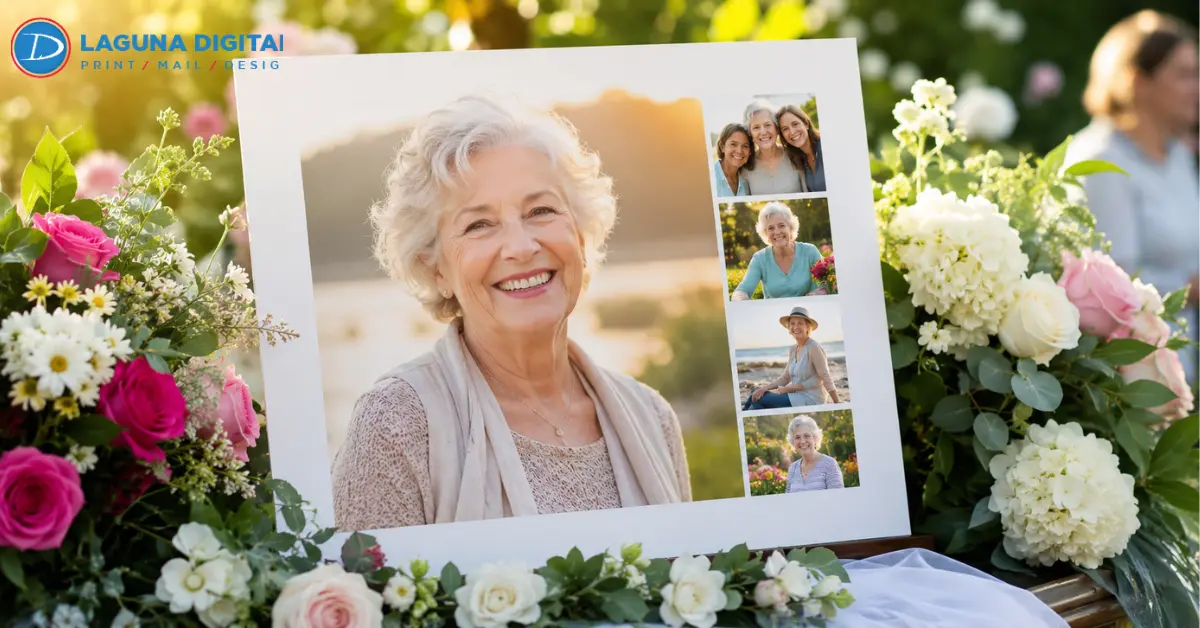
When five or six photographs share one layout, each face becomes smaller. Across a chapel or entryway, the piece can look busy. A single portrait gives memorial signs a clearer focal point and leaves room for the name and dates.
Use the collage elsewhere. A memory board, table display, or second piece of memorial signage is a better place to show childhood, travel, family, hobbies, and later years.
That keeps the main memorial tribute from feeling crowded.
A Good Photo Does Not Have to Be Formal
Some of the most useful celebration of life ideas come from ordinary moments.
A candid image can show personality better than a posed portrait. The subject still needs to be easy to recognize.
If a photograph includes several people, check whether it can be cropped without making the composition awkward. If not, keep it for framed funeral decorations or a memory table instead of forcing it into the main design.
With personalized memorials, different photographs can do different jobs.
Check the File Before Falling in Love With the Crop
A photo that looks sharp on a phone screen can disappoint once it is enlarged.
Open the original image and look closely at the eyes, hairline, clothing edges, and small facial details. If those areas already look smeared or blocky, a larger print will make the weakness easier to see.
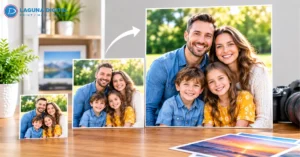
Whenever possible, use the original camera file rather than a screenshot, social media download, or image that has been forwarded several times. The photo enlargement guide explains why the source file matters when preparing larger prints.
For celebration of life signs, do this before the layout is built. A weak source file is much harder to fix after the design is approved.
Old Printed Photos Can Still Work Very Well
Many meaningful memorial photos were taken long before smartphones.
If the only copy is a printed photograph, scanning it is usually better than taking a quick phone picture of the frame. Glass can create glare. Room lighting can shift the color. A phone held at a slight angle can also distort the face.
A flat scan gives the designer a cleaner file. If the picture is faded or fragile, the photo, slide, and film scanning service can help create a usable digital version.
Restoration should stay conservative. Dust, scratches, and faded contrast can often be improved. Familiar facial features should not be changed just to make the image look newer.
That matters with funeral photo signs because relatives know the face better than any editing tool does.
Crop for the Finished Piece, Not the Phone Screen
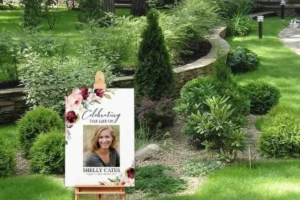
The crop should be judged in the shape of the actual sign.
A vertical 24 x 36 layout needs more room above the head and around the shoulders than a square social media crop. Hats, uniforms, jewelry, flowers, or other meaningful details should not be cut off without a reason.
For celebration of life signs, leave enough open space for the name without placing text across the face. If the person is standing beside something important, such as a motorcycle, instrument, pet, or military flag, decide whether that detail belongs in the final image before tightening the crop.
A little breathing room keeps the portrait from feeling boxed in.
The Setting Changes What Looks Appropriate
A church service and a backyard life celebration do not need the same visual tone.
For traditional funeral signs, a centered portrait with a simple type may feel right. A beach memorial or garden life celebration may suit a brighter image taken outdoors. Neither approach is automatically better. The image should fit the person and the place.
Memorial decorations can carry color and personal details while the main board stays clear.
Keep the Words Short Enough to Let the Photograph Lead
The main sign does not need to explain an entire life.
For most celebration of life signs, a full name, optional birth and death dates, and one short phrase are enough. Longer poems, prayers, or family messages usually work better in a program or on a separate display.
This keeps funeral photo signs readable from a distance and prevents the portrait from becoming a background element.
It also helps funeral decorations feel calmer. The sign identifies the person. Memorial decorations elsewhere in the room can carry the stories.
Do Not Throw Away a Meaningful Photo Just Because It Is Soft
Sometimes the family favorite is not technically strong.
A slightly soft picture may still work at a smaller size in a collage, even if it is not suitable for a large portrait. A small printed photo can feel intimate. Stretching the same file across a large board can make every weakness obvious.
This is one reason personalized memorials benefit from sorting pictures by use before design begins.
The guide to digitizing printed photographs also helps when the family wants to preserve an older original.
Review the Proof Like a Guest Will See It
Before approving the celebration of life signs, move away from the screen for a moment.
Check the spelling of the name and every date. Look at the crop again. Make sure no line of text touches the face or an important detail. If possible, view the design at a size that gives some sense of the finished piece.
Then look at the image, not the typography.
Does it still feel like the person?
That question is often more useful than deciding whether every decorative element is perfect. Good remembrance signs are remembered for the face and the feeling they create, not for how many design elements fit on the board.
The same applies to memorial signs and memorial signage elsewhere in the room. A second display can show different pictures instead of duplicating the main portrait.
What kind of photo works best for a celebration of life?
Choose a clear photograph where the person is easy to recognize and looks natural. The original digital file is usually preferable, but a well-scanned printed photo can also work very well.
Should celebration of life signs have one photo or several?
For the main welcome display, one strong portrait usually has more impact. Several images are better suited to a memory board or collage where guests can stand closer and spend more time looking.
Can old photos be used on funeral signs?
Yes. Old prints can often be scanned and prepared for enlargement. Avoid photographing them through glass if possible because glare and distortion can reduce quality.
What photos should be avoided for a memorial tribute?
Very small screenshots, heavily filtered pictures, distant group shots, and badly blurred images are risky for large prints. A meaningful but weak image can still be used at a smaller size.
What wording should go on remembrance signs?
Keep it simple. A name, dates if the family wants them, and one short phrase are usually enough. Longer messages can be placed elsewhere so the portrait remains the focus.
To Sum Up
Good celebration of life signs begin with a photograph that feels familiar before anything else is added. Start with the strongest original file or scan, decide how large the image needs to be, and judge the crop in the shape of the finished sign.
The rest of the design should support that choice. The best celebration of life ideas come from the person, not from adding more decoration.
When the photograph is ready, Laguna Digital can help turn it into a finished printed display that keeps the person at the center of the tribute.