

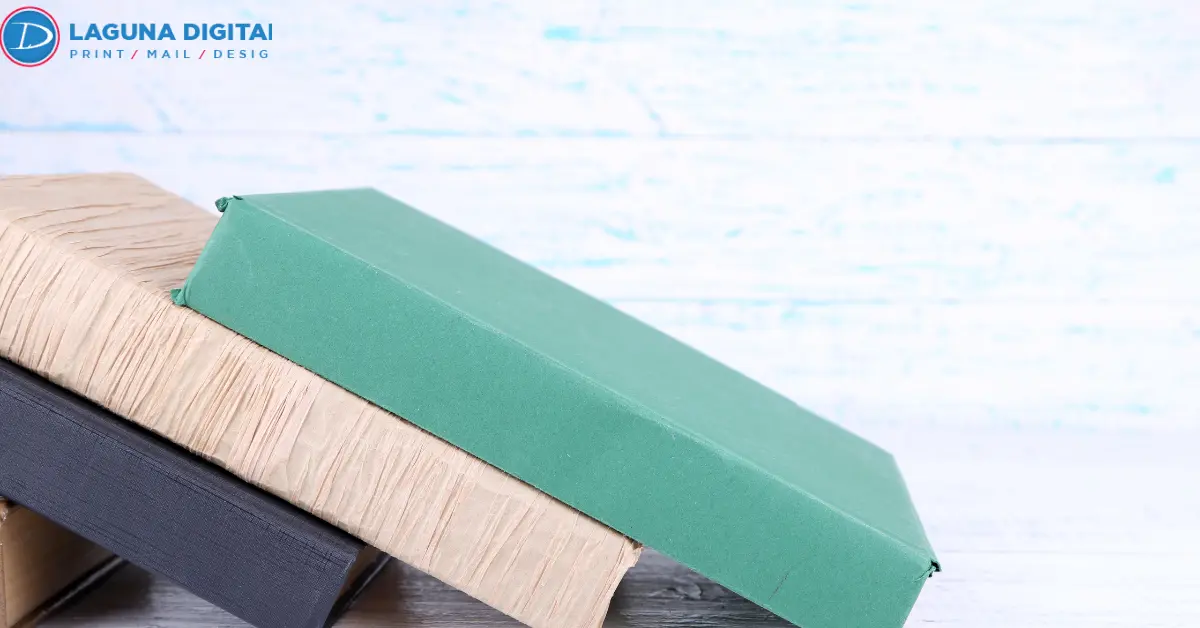
A perfect bound book is a softcover title with a square, glued spine. It is the format behind almost every paperback on a bookstore shelf. The pages are stacked into a block, the spine edge is ground rough, glue is spread across it, and a wraparound cover is clamped on. The other three sides are then trimmed square.
Printers call this adhesive binding, though most buyers know it as the usual book binding style for softcover work. The format still sells hard.
Paperback sales reached $8.0 billion, and print held 50.6 percent of publisher revenue, according to the Association of American Publishers.
How A Perfect Bound Book Is Made From Start To Finish?
Almost every visible fault in a finished copy comes from one of five steps, so the sequence is worth knowing. The work is mechanical and repeatable, which is why book printing services quote the same job at 25 copies or 25,000.
The Five Production Stages
- Printed sheets, or folded signatures, are gathered into a book block in page order.
- The spine edge is milled so the paper fibers open and take glue.
- Glue is laid along the spine, with a thin side strip holding the outer pages to the cover.
- A pre-scored cover wraps the block and is clamped until the glue sets.
- A three-knife trimmer cuts head, foot and face, leaving the square edges the format is named for.
That last trim has one catch. Foldouts and gatefolds cannot survive it, so when a layout opens outward, settle the binding method with your printer while the design is still open.
EVA Versus PUR Adhesive
The glue picked at stage three decides how long the book lasts. EVA hot-melt is older and cheaper, and it works well on uncoated stock kept indoors. PUR cures by reacting with moisture in the air, which gives a tougher, more flexible film. The difference shows on gloss stock, where the clay coating acts like a release layer under EVA and lets pages work loose. Past roughly 400 pages, or for stock that will sit in a hot van, ask your perfect binding service to quote PUR.
Which Books Need Perfect Binding And Which Do Not?
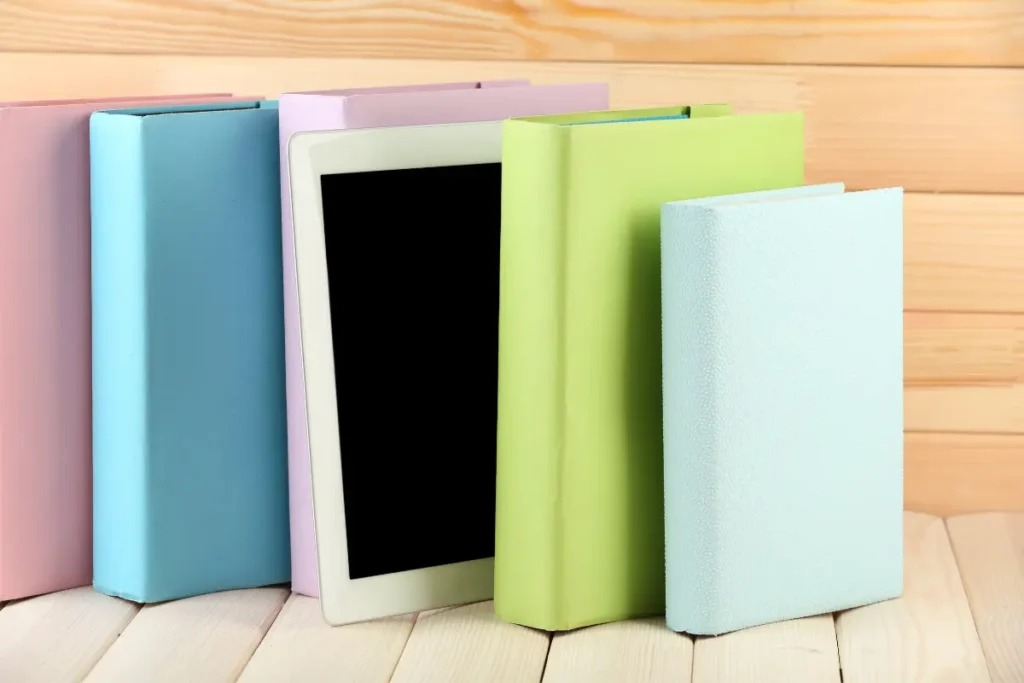
Format comes next, and page count settles it far more often than budget. A perfect bound book earns its cost when the spine faces outward and has to be read without pulling the book down.
Best Fits For A Square Spine
- Novels, memoirs and business titles from 100 to 400 pages, the core of commercial paperback printing
- Product catalogs and line sheets that need a readable title on the spine
- Annual reports, investor summaries and board packets
- Training manuals, course packets and employee handbooks
- Magazines, yearbooks, conference programs and gallery catalogs
Thick sales brochures sit on the boundary, and most switch to a glued spine past fifty pages.
Poor Fits And Better Options
- Anything under about 48 pages, where saddle stitching or booklet printing costs less and looks tidier
- Cookbooks, lab guides and workbooks that have to lie flat, which spiral or wire binding handles better
- Heirloom copies meant to last generations, where case binding earns its premium
- Layouts built around foldout maps, charts or posters
Getting this wrong is costly, since format drives paper, cover and price at once. Matching format to real use is the first decision worth making when printing books of any kind.
Binding Methods Compared
| Method | Practical Page Range | Printed Spine | Opens Flat | Relative Cost |
| Perfect binding | 48 to 800 | Yes | Partly, PUR opens widest | Moderate |
| Saddle stitching | 8 to 48 | No | Yes | Lowest |
| Spiral or wire | 8 to 400 | No | Fully | Moderate |
| Case binding | 48 and up | Yes | Partly | Highest |
Demand keeps rising. US book output passed 4 million ISBNs in 2025, and self-published titles rose 38.7 percent to more than 3.5 million, according to Bowker figures in publishers weekly. Short runs and print on demand drive much of that book production.
How To Calculate Spine Width Before You Design The Cover?
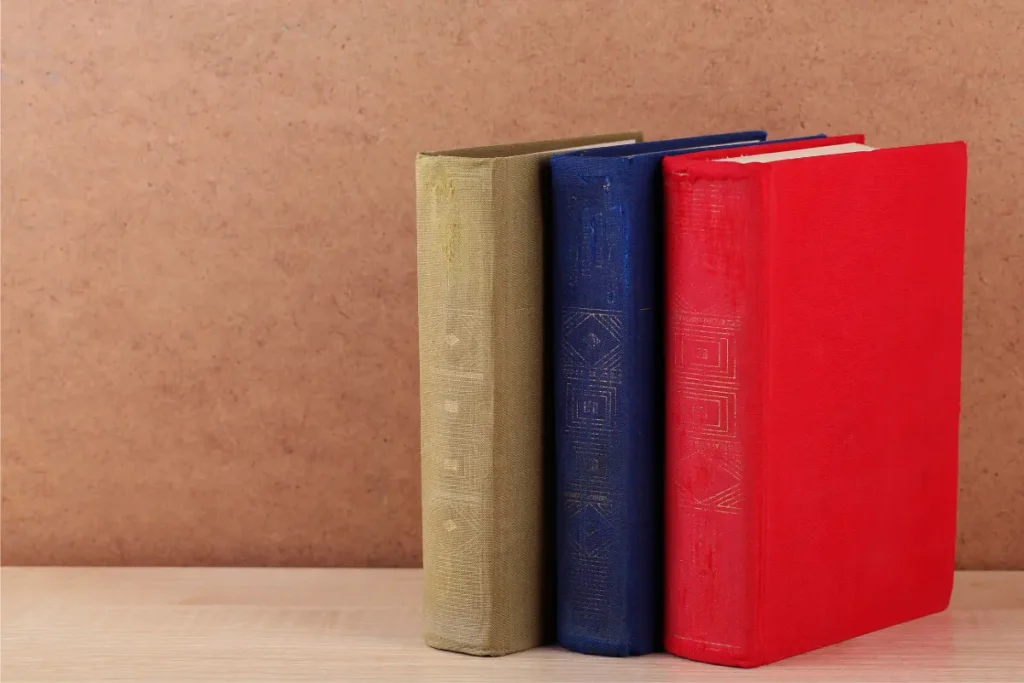
With the format fixed, the spine becomes the number everything else rests on. The cover of a perfect bound book prints as one flat sheet of back panel, spine and front panel, and all three must be right before the job goes to press.
The Caliper Formula
Ask your printer for the caliper of your interior stock in inches per page, then multiply that by the total page count. Three hundred pages of 60 lb uncoated text at about 0.00225 inch per page gives a spine close to 0.34 inch. Change the paper and the figure moves, so custom book printing quotes start with stock choice rather than design. Miss by a millimeter and the title drifts off center, with no fix once the cover has run.
Minimum And Readable Spine Widths
Two numbers are worth memorizing. Glue needs about 0.125 inch of spine surface to bond well, and printed type needs closer to 0.25 inch to read across a shelf. Most titles reach 40 to 64 pages before a perfect bound book clears the first one. An experienced book printing company checks these figures against your real paper, so send the file to a book printing specialist and ask for the calculation in writing.
How To Pick Paper And Covers That Stop Spine Cracking?
Spine width sets the size of the cover. Paper decides whether that cover survives its first month, and paper is where most book binding trouble starts. Interior text between 60 lb and 100 lb suits nearly every job, since lighter sheets show print from the reverse while heavier ones strain the glue line. Cover stock usually runs 80 lb to 120 lb.
Grain Direction
Paper fibers line up in one direction as the sheet is made. That direction should run parallel to the spine of a perfect bound book, on the cover and the interior alike. Cross-grain stock fights the fold, cracks along the hinge and works pages loose inside a year. One test settles it. Tear a scrap sheet both ways, and the smoother tear follows the grain.
Cover Scoring And Coating
Any cover above roughly 170 gsm should be scored before folding, because the clay layer on coated stock splits at the fold and shows raw fiber. Two hinge scores, placed 0.125 inch out from each spine fold, let the cover swing open without straining the joint. A gloss or matte film lamination then guards that surface against scuffing in transit.
Chip Kidd, the Knopf designer behind the Jurassic Park jacket, put the cover’s job plainly. “A book cover is a distillation. It is a haiku of the story.” On a crowded shelf the spine carries that job alone, and in paperback book printing it is often the only panel a buyer sees.
How To Prepare Print Files For A Perfect Bound Book
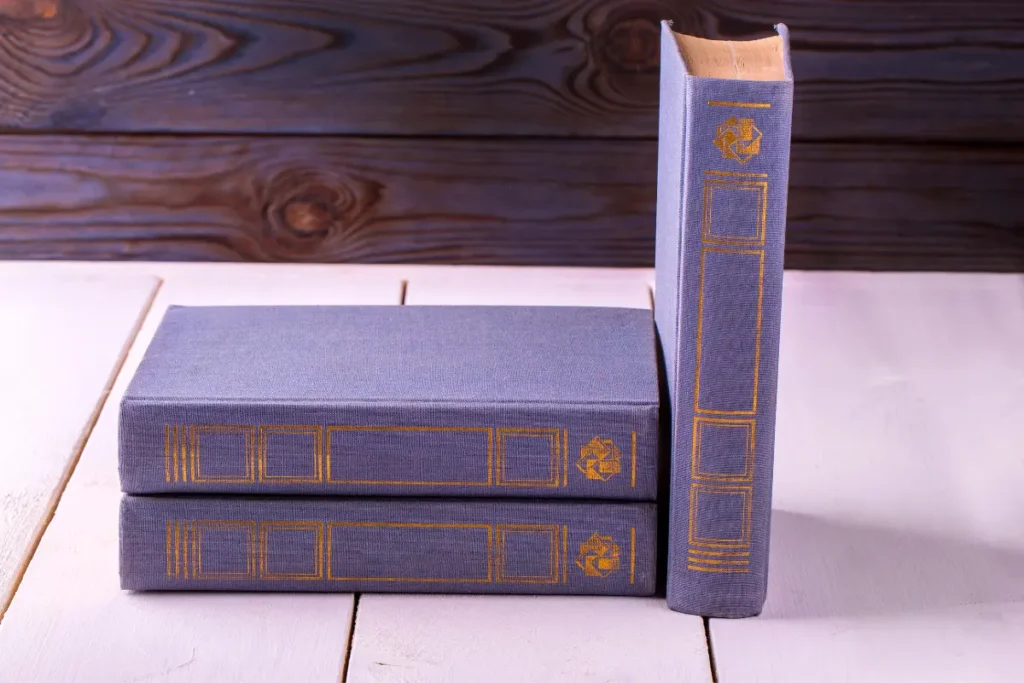
Good specs still fail when the artwork arrives wrong, and four rules remove most of that risk.
Bleed, Margins And Gutter
- Add 0.125 inch of bleed on all four sides of the interior pages and the cover flat
- Build every file in CMYK at 300 dpi
- Set the inside margin to 0.5 inch on thin titles and 0.625 inch above 250 pages, since a glued spine swallows part of the gutter
- Supply the interior as a single-page PDF in reading order, with the cover as one flat spread
Those rules hold for any paperback printing job. Teams without in-house layout staff pass this stage to a graphic design partner, which costs a fraction of a reprint.
Dummy And Proof Checks
Two checks catch nearly everything else. A bound blank dummy on the exact stock confirms bulk and spine width in your hand, and a printed proof confirms color, trim and margin on the page. Almost every custom book printing order that arrives wrong skipped one of them, and most book printing services already build both into the schedule.
Frequently Asked Questions
How Many Pages Does A Perfect Bound Book Need?
No fixed number applies, since thickness rather than page count decides it. The spine has to reach about 0.125 inch for the glue to hold, which usually falls between 40 and 64 pages. Below that, booklet printing with saddle-stitched booklets is cheaper, and your perfect binding service can confirm the threshold from a bulk sample.
Does A Glued Spine Lie Flat When Open?
Not completely. EVA-bound titles resist opening past roughly 150 to 160 degrees, which hides content close to the gutter. PUR opens noticeably wider, so any paperback book printing layout with images crossing the spread should specify it.
How Long Does Perfect Binding Last?
Decades under normal handling. Dictionaries and back-issue magazines bound this way have survived years of heavy use. Glue choice, grain direction and storage matter more than age, which is why book production quality varies so widely between suppliers.
Is Perfect Binding Cheaper Than Hardcover Binding?
Yes, by a wide margin. It costs a little more than saddle stitching because of the extra grinding, gluing and trimming, yet stays well below case binding.
Can A Book Title Be Printed On The Spine?
Yes, and that is the main reason buyers pick it over stapling. Allow at least 0.25 inch so the type stays legible, then confirm the width with your book printing company once the paper is locked.
Bottom Lines
Four decisions carry the job, and all of them happen before press. Match the format to how the book will be used. Lock the paper before cover design starts. Run the grain parallel to the spine. Approve a physical dummy rather than a screen proof. Handle those four and printing books stays predictable at any quantity, from a short-run book printing job to a full production run.
Send your page count, trim size and paper preference to Laguna Digital and you will have a written price, plus a free file check, inside 24 hours.