


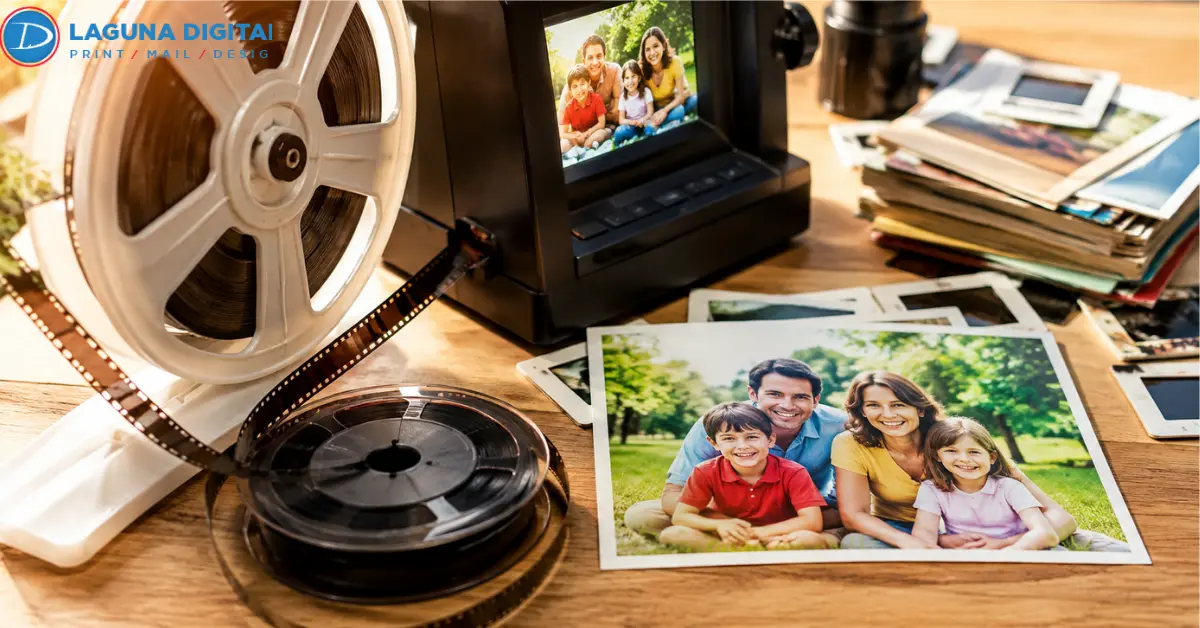
Reel can sit in a box for forty years and look no different on the outside. The film inside tells another story. Color drifts. Contrast goes flat. The base stiffens until it no longer wants to bend.
Old film transfer catches what is still on the reel before more of it disappears. Nobody is trying to make 1968 look like it was shot last week. The work is about keeping the picture that survived, correcting what can honestly be corrected, and leaving the footage looking like itself.
What Happens to Home Movies as Film Gets Older?
Most home movies were stored wherever there was room. A hall closet. A garage shelf. An attic that hits 110 degrees every August. Heat, humidity, and the swing between them work slowly, and nobody notices until the can comes open.
Color film fades unevenly because the dye layers give out at different rates. That is why so many old reels look washed in red or magenta. Splices loosen. Perforations tear. The film base itself turns brittle.
A Red or Magenta Picture Does Not Always Mean the Film Is Lost
A heavy red cast makes a reel look finished. Often it is not. There can still be plenty of usable images underneath, and film restoration can rebalance the color that remains and pull the contrast back into shape.
The source sets the ceiling, though. Dye that has physically faded is gone, and pushing saturation will not conjure it back. Good old film restoration improves what survived without turning the footage into something it never was.
Physical Damage Can Be More Serious Than Color Fading
Color problems are usually fixable. Broken film is not.
Loose splices, torn sprocket holes, mold, brittle stock. Any one of these can turn a projection run into a tearing incident. A strong vinegar odor or visible warping is reason enough to leave the projector alone. When film is fragile, old film transfer starts with handling, not scanning.
What Can Actually Be Improved During a Film Transfer?
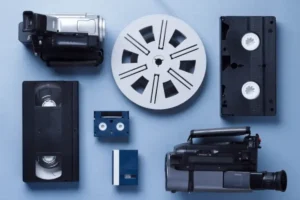
Resolution gets most of the attention in a quote and deserves very little of it. Focus, exposure, cleanliness, and the condition of the original decide how the finished file looks.
If the archive is a mix of formats, the guide to transferring old videos and films to digital is a useful place to start sorting.
Frame-by-Frame Scanning Gives Each Image More Attention
Older conversion methods pointed a camera at a projected image. It worked, more or less, but it brought along flicker, uneven brightness, cropped edges, and soft focus.
Modern old film transfer captures one frame at a time, directly, which gives far more control over framing and exposure.
A professional film transfer service should be able to explain what happens before the scanner runs. Dust, weak splices, loose leaders, and chewed perforations all affect the result long before anyone touches color correction.
Color Correction Works Best After a Clean, Stable Scan
Film digitization creates the digital image. Restoration happens afterward, on whatever the scan captured.
Film restoration solutions can include color balancing, contrast and exposure adjustment, image stabilization, and flicker reduction. What any given reel needs depends entirely on what survived on it.
A film digitization service should list what is actually included rather than folding everything into one vague word like “enhanced.” Ask the same of a video scanning service handling tapes, slides, and film together, because those three need different machines and different care.
8mm and 16mm Film Should Not Be Treated the Same
An 8mm reel and a 16mm reel might hold the same wedding, but frame size, sound, and typical condition push the transfer in different directions.
Knowing the gauge and the condition first makes every decision after it easier.
8mm and Super 8 Need Precise Focus and Stable Framing
Regular 8 and Super 8 work with a very small image area. There is no room to hide dirt, soft focus, or a frame that wanders.
For an 8mm film transfer, ask three things: does the scanner capture frame by frame, how much of the usable image area is kept, and what happens when perforations are damaged. Worth checking for a magnetic sound stripe too, since some Super 8 reels carry one.
For collections that mix reels and tapes, why old memories need VHS and 8mm film digitizing covers how the two differ.
16mm Film Can Hold More Image Information
A 16mm frame is considerably larger, so a well-shot reel can hold real detail. Sound turns up more often on 16mm as well.
For 16mm film transfer, confirm that sound is captured, and ask directly whether warped or slightly shrunken film can be run safely. If you are comparing quotes, the question that separates a good 16mm film transfer from a cheap one is usually what master file you walk away with.
Check the Reels Before You Pack Them for Transfer
Write down whatever the cans and labels tell you first. Dates, names, places, reel numbers, someone’s handwriting on masking tape. Then look the reel over without pulling film off it.
Watch for:
- Loose or broken film near the leader
- Mold or powder-like residue
- Rust or moisture inside metal cans
- Torn or stretched perforations
- Warping, curling, or unusual stiffness
- A clear vinegar-like smell
Put the irreplaceable material at the front of the queue. Weddings, childhood footage, relatives who have passed, anything that happened once.
When a reel is already deteriorating, old film transfer stops being a convenience and becomes a preservation decision.
How to Tell Whether a Transfer Service Will Handle Your Film Properly
Price per reel is an easy comparison. How the film gets handled is the harder one, and it matters more.
Ask How the Film Is Prepared Before Scanning
Ask whether reels are inspected and cleaned before anything runs, and what happens to a damaged leader, a failing splice, or a torn sprocket hole.
The movie film transfer service page is a good example of the details worth looking for: supported formats, frame-by-frame scanning, sound options, and delivery choices.
Ask Exactly What Restoration Is Included
Do not assume a scan comes with full old film restoration. Plenty of jobs include basic color and exposure work and price heavier cleanup separately.
Ask what the quote covers. Providers who spell out their film restoration solutions are easier to compare, because color correction, stabilization, scratch cleanup, and a plain scan are four different things sold under one word too often.
Ask What Digital Files You Will Receive
MP4 is fine for sharing with family. A higher-quality master is what you want for editing, or for a future restoration that has better tools than today’s.
If there are videotapes in the same box, send them to a dedicated VHS and Betamax transfer service instead of assuming tape and movie film run through the same workflow.
A film digitization service should tell you how the finished files arrive and how they are organized. A video scanning service juggling mixed media should be even clearer about it.
The Digital File Needs a Preservation Plan Too
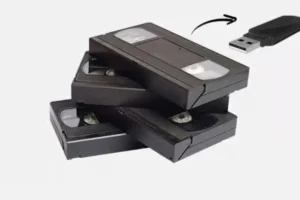
One USB drive is not a plan. It is a single point of failure sitting in a drawer.
After the transfer, leave the best master alone and make separate copies for watching and sharing. Name things so they can be found later. 1971_Grandparents_Wedding_Reel_02.mp4 beats MOV_0043.mp4 every time.
Once the film conversion is done, keep a second copy on another device and a third somewhere else entirely, whether that is a relative’s house or a cloud account.
The Library of Congress recommends cool, stable storage for motion-picture film, with relative humidity somewhere around 30 to 50 percent.
Family archives rarely hold film alone. There are usually prints and negatives in the same box, and those belong with a photo and art scanning service rather than the reel workflow.
Frequently Asked Questions About Saving Old Film
Can Faded 8mm Film Really Be Restored?
Usually, yes. An 8mm film transfer captures whatever image remains, and correction can improve color, contrast, exposure, and stability from there. What is physically gone from the film cannot be brought back accurately.
Should I Watch My Old Reels Before Having Them Transferred?
Only if the film is clearly stable. A reel that smells of vinegar, feels brittle, has damaged perforations, or shows mold should never go through a home projector just to find out what is on it.
Is 4K Always Better Than HD for Old Film?
No. Resolution is one variable among several. Focus, exposure, frame stability, cleanliness, and the state of the original reel carry just as much weight.
What Is the Difference Between Film Digitization and Film Restoration?
Film digitization turns physical frames into digital image data. Film restoration works on that data afterward to address fading, exposure, contrast, flicker, scratches, and unsteady movement.
Should I Keep the Original Reels After They Have Been Digitized?
Yes, when you have the space. Digital files are easier to watch and copy, but the reel is still the original. Store it properly and keep the best digital master somewhere separate.
Wrapping It Up
Old film transfer is worth the most while a reel can still be handled safely and enough of the picture is left to scan well. That window does not stay open forever.
Start with the reels that matter most to your family. Pull anything showing mold, brittleness, warping, or a vinegar smell into its own pile. Compare providers on handling, scanning method, correction, sound support, and file delivery, and treat price and resolution as the last two questions rather than the first.
A careful film conversion saves more than moving pictures. It keeps faces, houses, birthdays, voices, and ordinary weeknights available long after the projector stopped working.
If the reels that matter are still in storage, Laguna Digital can turn them into digital files that are easy to watch, share, back up, and keep.